Badges Won't Save Us from Ghost Kitchens, but It's a Start
Chowdeck just shipped vendor verification badges after a wild security exploit. Let's talk about the fine line between low-friction onboarding and absolute chaos.
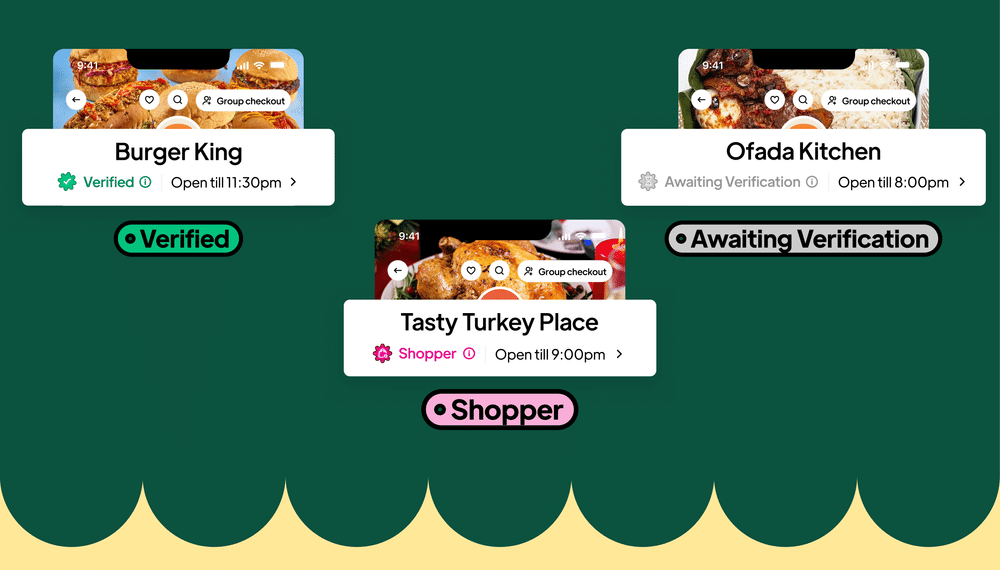
My stomach actually churned a bit when the news broke a few weeks back. Someone managed to register a completely fake restaurant on Chowdeck and successfully fulfilled an order.
As a developer, my first thought wasn't even about the food safety risk—it was, "Who let that database schema pass without a mandatory verification check?"
We've all been there. You're sitting in a humid workstation in Gbagada, fuel price is keeping you awake, and the PM is breathing down your neck to "reduce onboarding friction." They want vendors to sign up in under sixty seconds. So, you build a beautiful, frictionless flow. You skip the tedious physical checks, maybe defer the KYC to "later," and push to production.
Then, reality hits. Because if there is one thing about the Nigerian market, if you leave a digital gap open, someone will find a creative way to squeeze through it.

Shifting the Cognitive Load to the User
So, Chowdeck’s engineering and product teams had to scramble. Their response? A new system of badges: Verified, Pending, and Shopper-listed.
On paper, this is a clean frontend fix. It tells the user exactly who they are dealing with. If you buy from a "Pending" kitchen, you know you're playing gastro-roulette.
But as someone who builds products, this feels like shifting the cognitive load. Instead of the platform doing the heavy lifting of making sure every single meal is safe, they've pushed the responsibility to the hungry guy in Akure who just wants some fast food at 10 PM. Now, that user has to check the badge, weigh the risks, and decide if they trust the system's "pending" status.
It is a classic "hotfix" move. You can't manually verify thousands of restaurants overnight, so you ship a UI update to buy your operations team some time.

The Real Cost of "Moving Fast" in Africa
When you are building software for markets like the US or Europe, you can often rely on third-party APIs to verify business registries instantly. Over here, executing that is a different beast.
Physical address verification in Nigeria is hard. CAC checks can be slow or unreliable. You actually need boots on the ground to confirm that "Mama Put Premium" isn't just a guy with a gas cylinder in his bedroom.
This update shows how quickly food-tech platforms have to mature. When you're small, you can get away with loose onboarding. But when you become the default way millions of people eat, your slack code becomes a public health hazard.
I hope the team at Chowdeck treats these badges as a temporary band-aid rather than the final destination. A badge is nice, but a platform where every single vendor is actually vetted is the only real way to keep the trust.
For now, keep an eye on those yellow icons before you order that next plate of jollof. Your stomach will thank you.
Related from Nigeria
Let's build your next big product.
Accepting project-based freelance, remote engineering roles, and hybrid positions.