Stop Gluing My Batteries and Calling it 'Green'
The annual parade of green logos is back, but the numbers behind our AI-driven data centers tell a much darker story. Let's talk about real sustainability vs. corporate theatre.
I spent all night debugging a deployment issue on a server that’s probably melting a glacier somewhere, only to wake up and see my entire feed covered in green logos. It’s Earth Week 2026, and the corporate theatre is at an all-time high.
Look, I’m a builder. I love new tech as much as the next guy, but the gap between "Earth-friendly" marketing and the actual hardware we’re shipping is getting ridiculous. While we’re out here celebrating recycled cardboard boxes, our industry’s carbon footprint is growing faster than a Gbagada startup's burn rate.
The AI Energy Debt
Let’s be honest about the stack we’re running. Every time we spin up a new AI-powered feature or run a heavy LLM prompt, we’re hitting data centers that are absolutely devouring electricity. The numbers from TechCity are wild: Google’s emissions are up 50% over the last five years. Meta? Over 60%.
As developers, we talk a lot about "optimization," but we usually mean latency or memory usage. We rarely talk about the literal heat generated by our code. When data centers are predicted to triple their energy consumption by 2028, "eco-friendly" UI themes don't really move the needle. It's like trying to put out a forest fire with a sachet of water.

Computer Village vs. The Disposable Economy
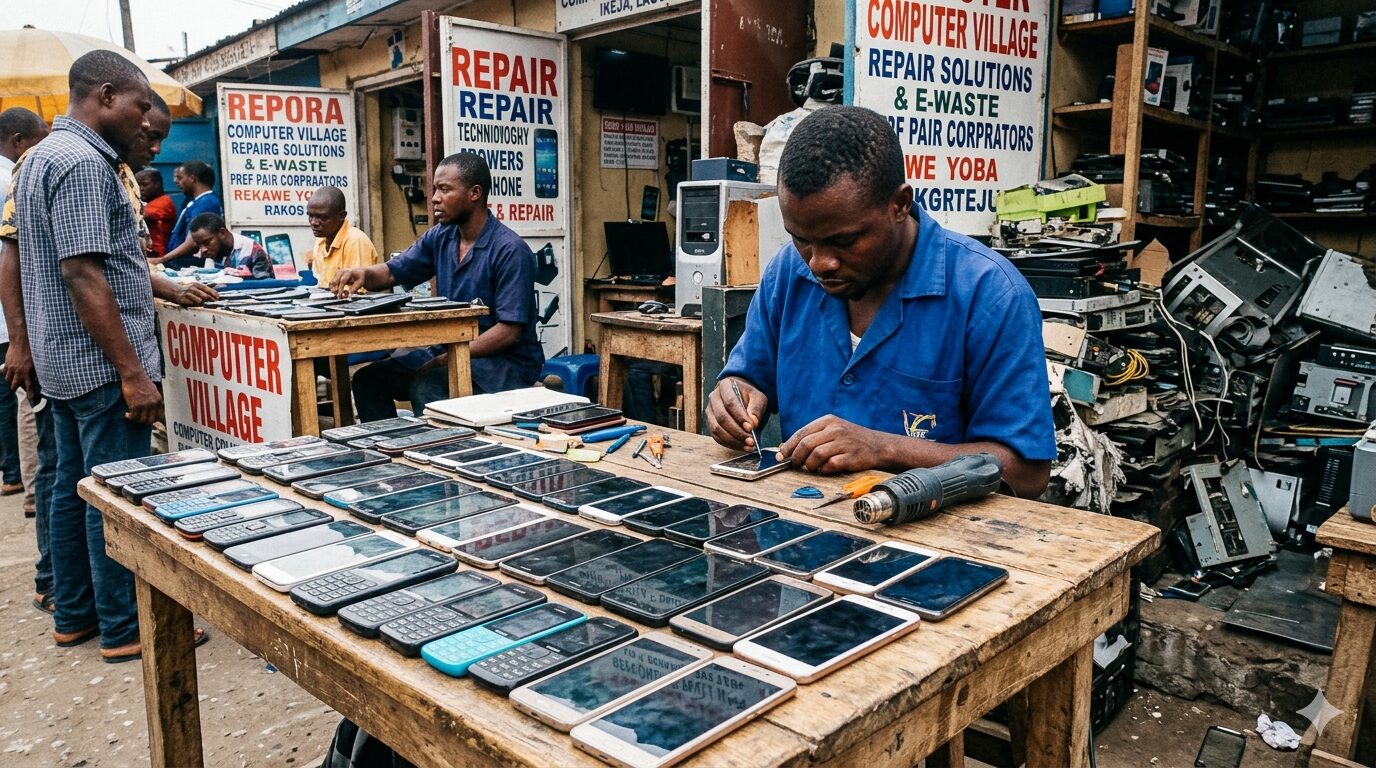
The real sustainability hero isn’t some CEO in a turtleneck; it’s the guy in Computer Village or Alaba International Market who can take three dead MacBooks and build one "Frankenstein" machine that works perfectly.
In Nigeria, we have a culture of "No gree for anybody," and that applies to our gadgets too. If a screen cracks, we fix it. If a battery dies, we find a way to swap it. But big tech brands are making this harder by the day. They glue batteries into the chassis and use proprietary screws that require a specialized kit just to open.
Calling a phone "sustainable" because the box is made of cornstarch while the battery is intentionally non-replaceable is the ultimate greenwashing. It’s "Sapa" for the environment—making us pay more for things that are designed to fail just so we can buy the next version.

Africa’s Data Center Boom
We’re seeing a massive boom in data center capacity across Africa right now. On one hand, it’s great—lower latency for our local apps and more sovereignty over our data. But our power grids are already gasping for air.
If we’re going to build these "server warehouses" in our backyard, we can’t just copy-paste the energy-heavy models from the West. We need to be more creative. Maybe it's utilizing the cold mornings in Jos for natural cooling or being aggressive about solar-integrated infrastructure from day one.
How to Actually "No Gree" for Greenwashing
If you’re looking to support tech that actually gives a damn, stop reading the press releases and start looking at the hardware:
- Can you open it? If it’s held together by more glue than a primary school project, it’s e-waste waiting to happen.
- Where are the parts? If a brand doesn't sell official spare parts to independent shops, they don't want your device to last.
- The AI Tax: Be skeptical of any "AI-first" solution that doesn't explain how they're handling the compute load. Efficiency in the backend matters more than a green logo on the landing page.
I’m tired of the performative stuff. As builders, we should be pushing for code that’s lean and hardware that’s robust. Anything else is just noise.
Anyway, my laptop fan is currently sounding like a jet engine taking off from Muritala Muhammed Airport, so I should probably go optimize that function I wrote at 3 AM. Stay grounded.
Related from Nigeria
Let's build your next big product.
Accepting project-based freelance, remote engineering roles, and hybrid positions.