01Self-Serve Onboarding
A Store, Live in Minutes
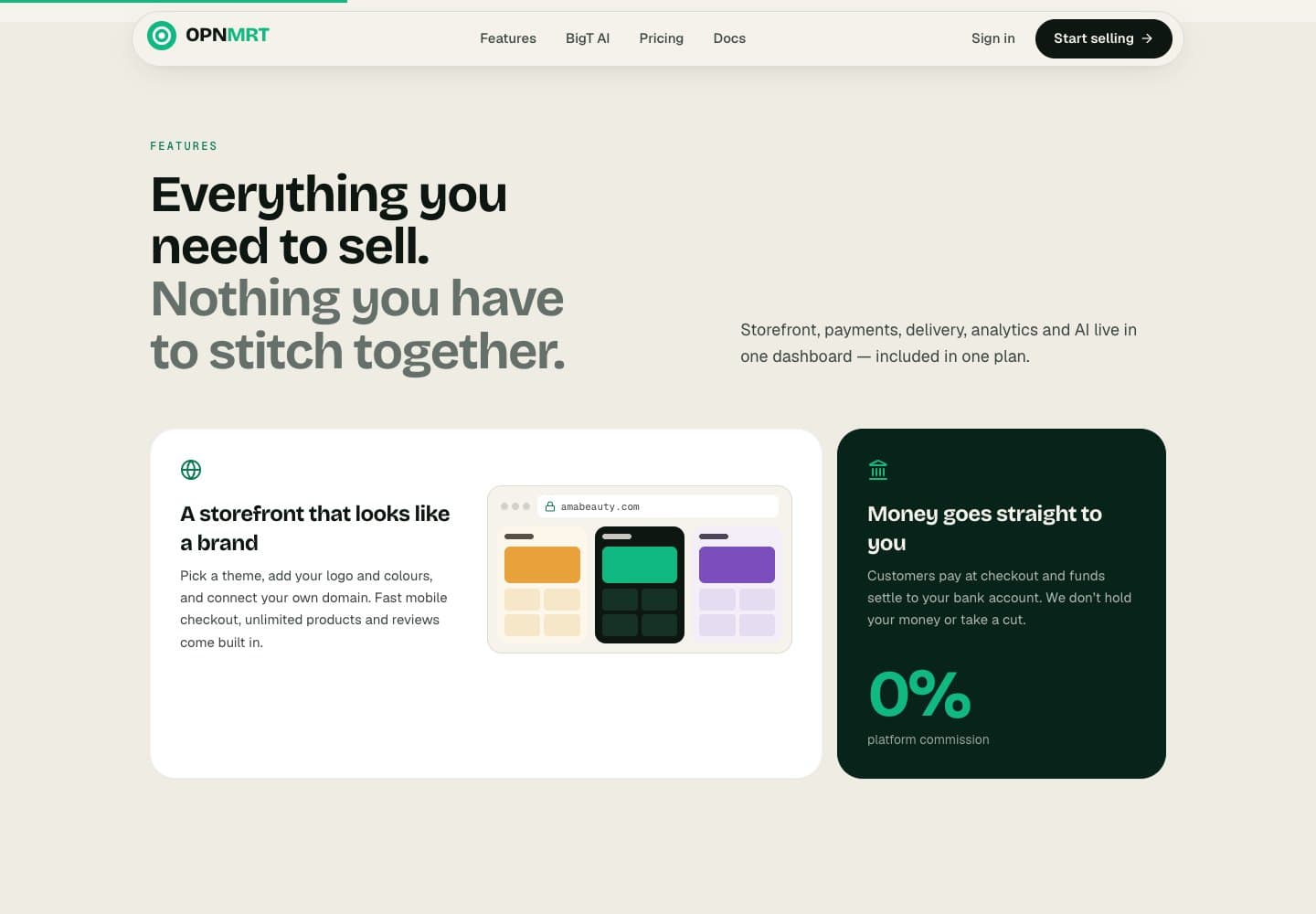
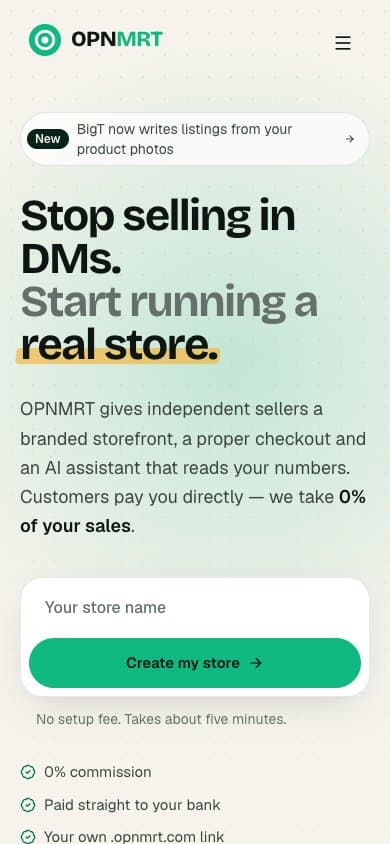
Pick a store name and the link is live immediately; themes, logo, colours, custom domains, unlimited products, reviews and fast mobile checkout come built in.
SaaS · Social-to-Store Commerce
A commerce engine for sellers who run their business in WhatsApp and Instagram DMs. In about five minutes they get a branded store, a proper checkout paid straight to their bank with 0% commission, and BigT, an AI assistant that reads their live sales, stock and orders.
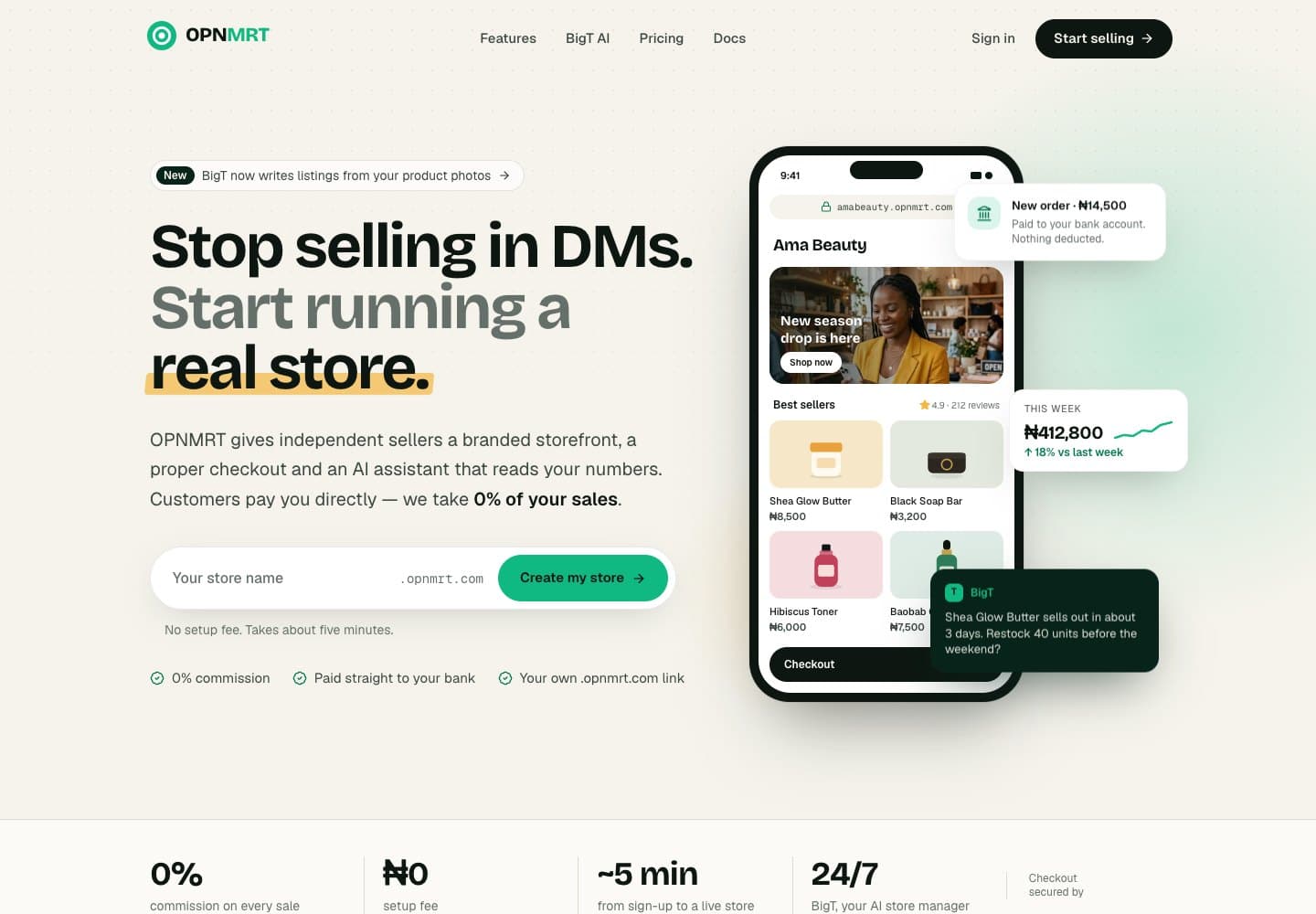
Customers pay sellers directly; the platform takes no cut
A shareable store link the moment the account is created
One monthly subscription with every feature, instead of a cut of every sale
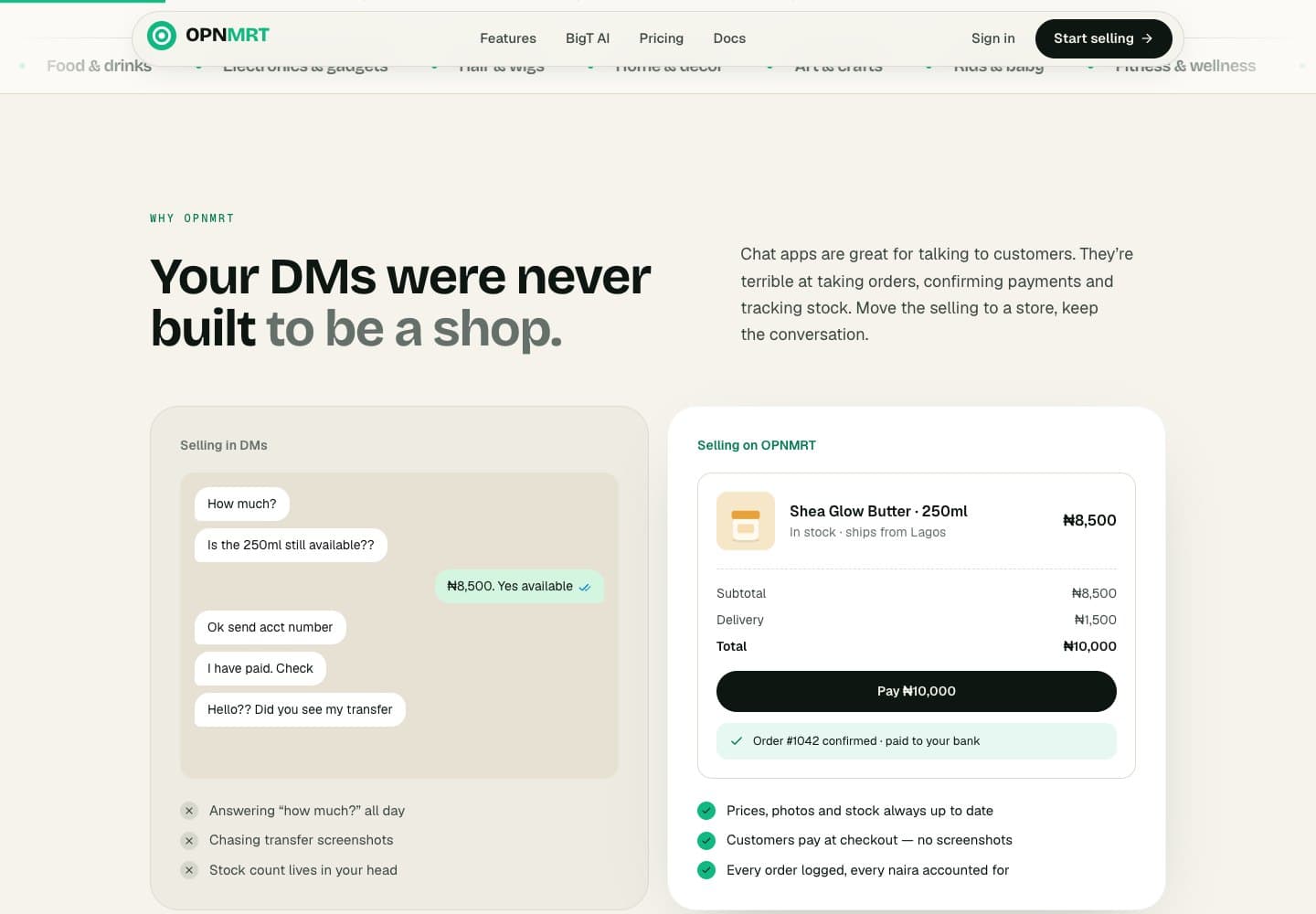
Thousands of independent sellers run their whole business in chat apps: answering "how much?" all day, chasing transfer screenshots and keeping stock counts in their heads. The marketplaces that offer an alternative take a slice of every sale and keep the customer relationship for themselves.
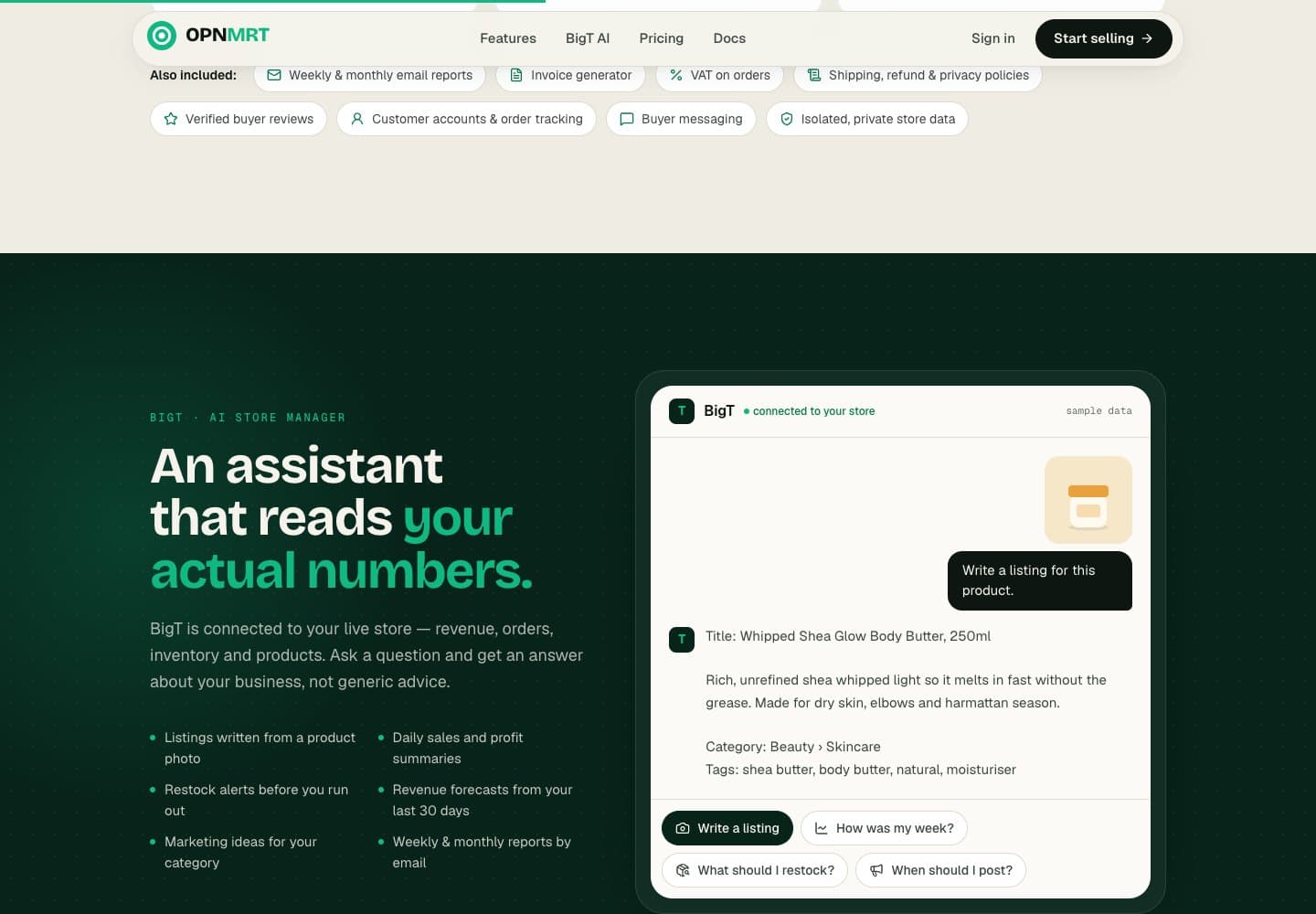
OPNMRT moves the selling into a real store and keeps the conversation. Each seller gets an isolated storefront on their own .opnmrt.com link or custom domain, customers pay at checkout straight into the seller's bank, and one flat monthly plan replaces commission. BigT, the built-in AI store manager, is connected to live store data and writes listings from product photos, summarises sales and profit, and warns before stock runs out.
Pick a store name and the link is live immediately; themes, logo, colours, custom domains, unlimited products, reviews and fast mobile checkout come built in.
Sellers connect their own Paystack or Flutterwave account, so customers pay at checkout and funds settle to the seller's bank. The platform never holds the money and takes 0% of sales.
Connected to the store's live revenue, orders and inventory: listings written from a product photo, daily sales and profit summaries, restock alerts, 30-day forecasts and marketing ideas.
Delivery handshake codes so orders are only marked delivered on confirmation, low-stock alerts, invoices, VAT on orders, customer accounts, buyer messaging and verified reviews.
One platform serves every seller with tenant-level data isolation, so each store's customers, orders and numbers stay private to that seller.
Frontend Storefront
Dynamic SSR storefronts rendering product catalogues with React Query server state, Zustand client state, and Radix UI / Framer Motion aesthetics.
Backend Microservices
Segmented REST API (Public, Seller, Buyer, Admin) with Redis Pub/Sub events (ORDER_CREATED, STOCK_UPDATED) and Socket.IO WebSockets.
Shared Workspaces
Unified TypeScript interfaces, Zod validation schemas, and currency utilities shared seamlessly across web and api workspace packages.
Database Layer
Enforces strict row-level tenant isolation using tenant foreign keys, backed by Redis session caching and rate-limiting.
Most sellers start in DMs, so the product doesn't fight chat: the store link goes in the bio and Status, and the conversation continues while checkout, payment and stock tracking happen in the store.
Subdomains and custom domains resolve to the right store at request time, so a single deployment serves every seller.
The platform handles carts, orders and records without sitting between sellers and their revenue, which removes a whole class of payout and trust problems.
Next case study
Logistics · Web + Mobile Platform