01Editorial Planning
Founder Curriculum
Six pillars (strategy, growth, operations, product and tech, team, finance) and dozens of topics, rotated so the blog covers the whole job of running a company rather than the news cycle.
AI Automation · In-House Product
The engine behind this site's blog: on a schedule, it picks a founder topic or reads a new piece from the writers founders trust most, drafts a practical article in my voice, puts it through an editorial review, and publishes it — with no manual steps.
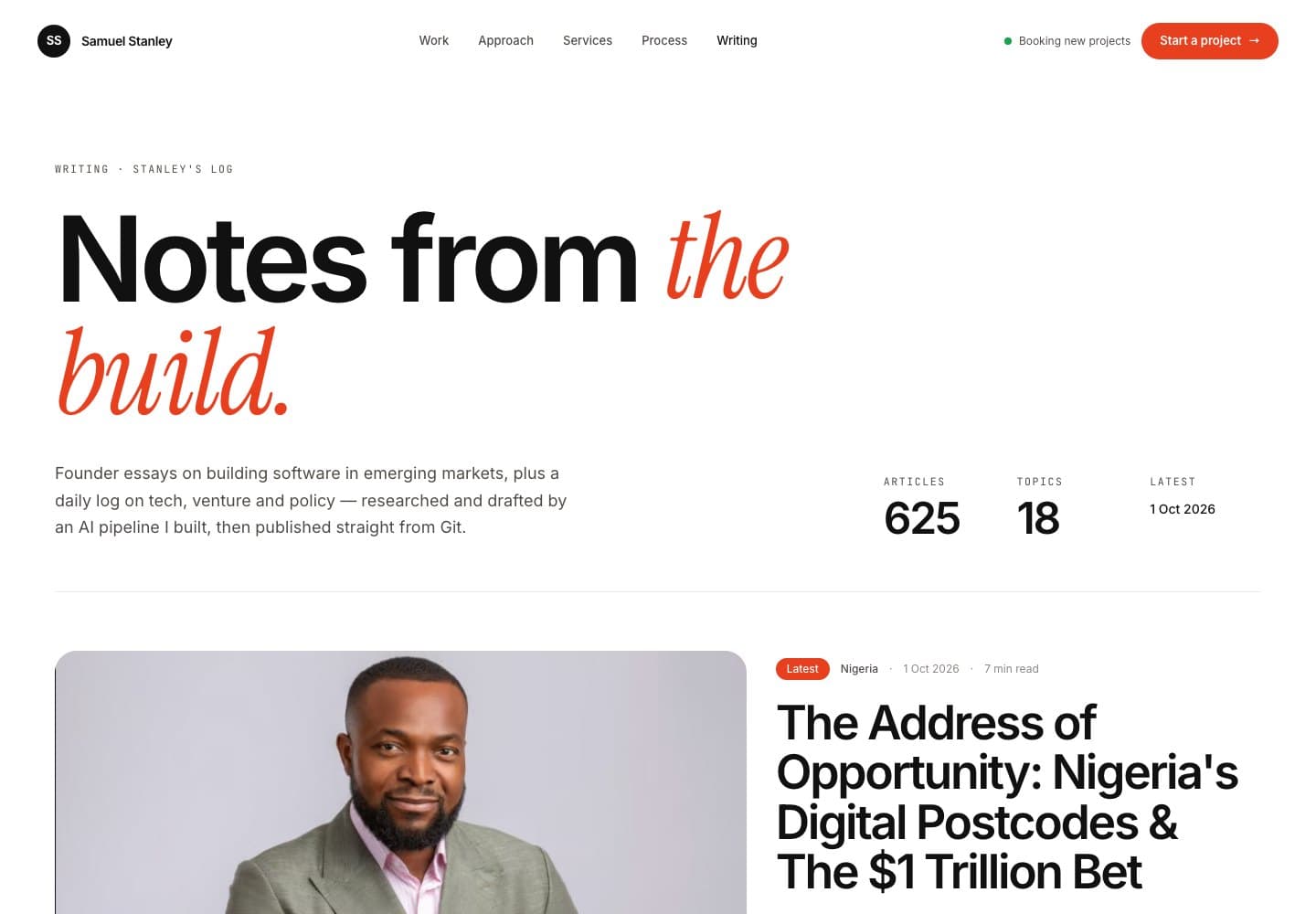
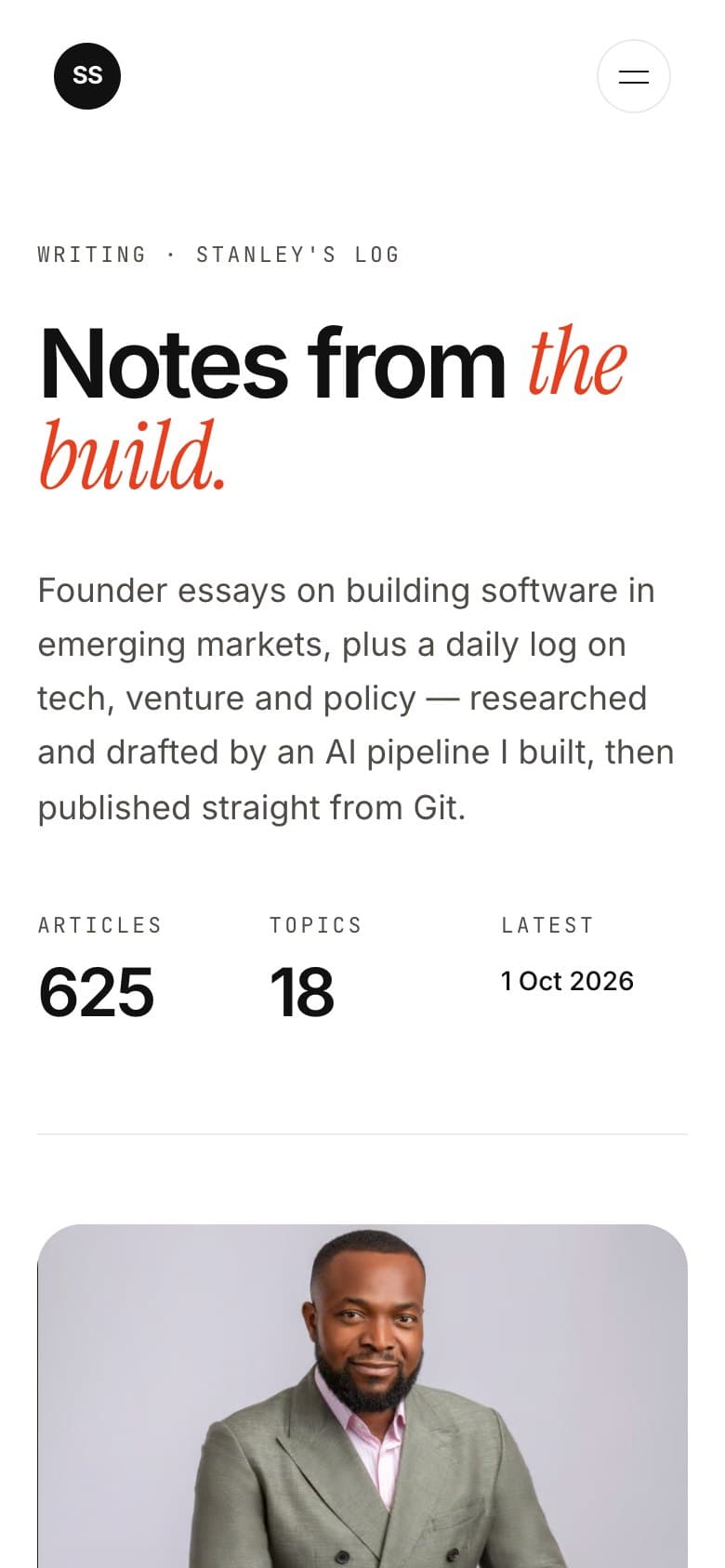
Playbooks, essays and earlier dispatches, all generated and committed by the pipeline
Across six pillars of running a company
From research to a live page, on a schedule
Writing genuinely useful material for founders every week takes research and editing time that client work can't spare, and generic AI content reads like filler that costs more trust than it earns.
A scheduled pipeline that treats writing like a product. It works through a curriculum of founder problems, reads recent essays from Paul Graham, First Round Review, Lenny Rachitsky, YC and African operators, drafts with Gemini against a strict voice and evidence guide grounded in real project history, then runs a second editorial pass and a quality gate before committing Markdown that the site publishes automatically.
Six pillars (strategy, growth, operations, product and tech, team, finance) and dozens of topics, rotated so the blog covers the whole job of running a company rather than the news cycle.
Pulls recent pieces from eleven trusted sources, skips announcements and podcast promos, and writes a response that credits the original as further reading.
A second model pass acts as editor: it removes invented evidence and client claims, turns listicles into prose and enforces the house voice.
Drafts that are too short, badly structured or full of filler are rejected; rate limits and unavailable models fall through to the next model automatically.
Each post is a typed Markdown file committed to the repository, so every article has history, review and rollback for free.
An admin can point the engine at any article or video URL, or run a dry run that previews a post without publishing it.

Scheduling
Two cron workflows: practical playbooks twice a week and a weekly essay. Each run commits its post and its history file so topics never repeat.
Research
RSS feeds and page scraping turn recent essays into clean text, with dedupe history so the same source is never answered twice.
Writing
A voice guide built from real portfolio data drafts the post; an editor pass enforces evidence and style rules; a parser builds the frontmatter in code so it is always valid.
Publishing
Committed posts trigger a deploy; Next.js renders the archive, search, topic filters and article pages, and refreshes hourly.
The writing guide is built from real project data, so stories about my own work stay true and specific instead of invented.
First drafts bend rules — invented benchmarks, listicles, name-dropping. A second pass with one job, enforcing the rules, fixed more than any amount of prompt tuning.
The model returns plain fields; code writes the YAML, so a stray quote can never break a page.
Next case study
Logistics · Web + Mobile Platform