Your 'Power Bank' is a 'Flight Risk': Why Battery Tech Isn't Just About mAh for Founders in 2026
The truth about portable chargers in 2026 isn't just about bigger numbers. It's about navigating unseen regulations, the cold logic of physics, and the rising cost of disconnectivity for any founder trying to build on the move.
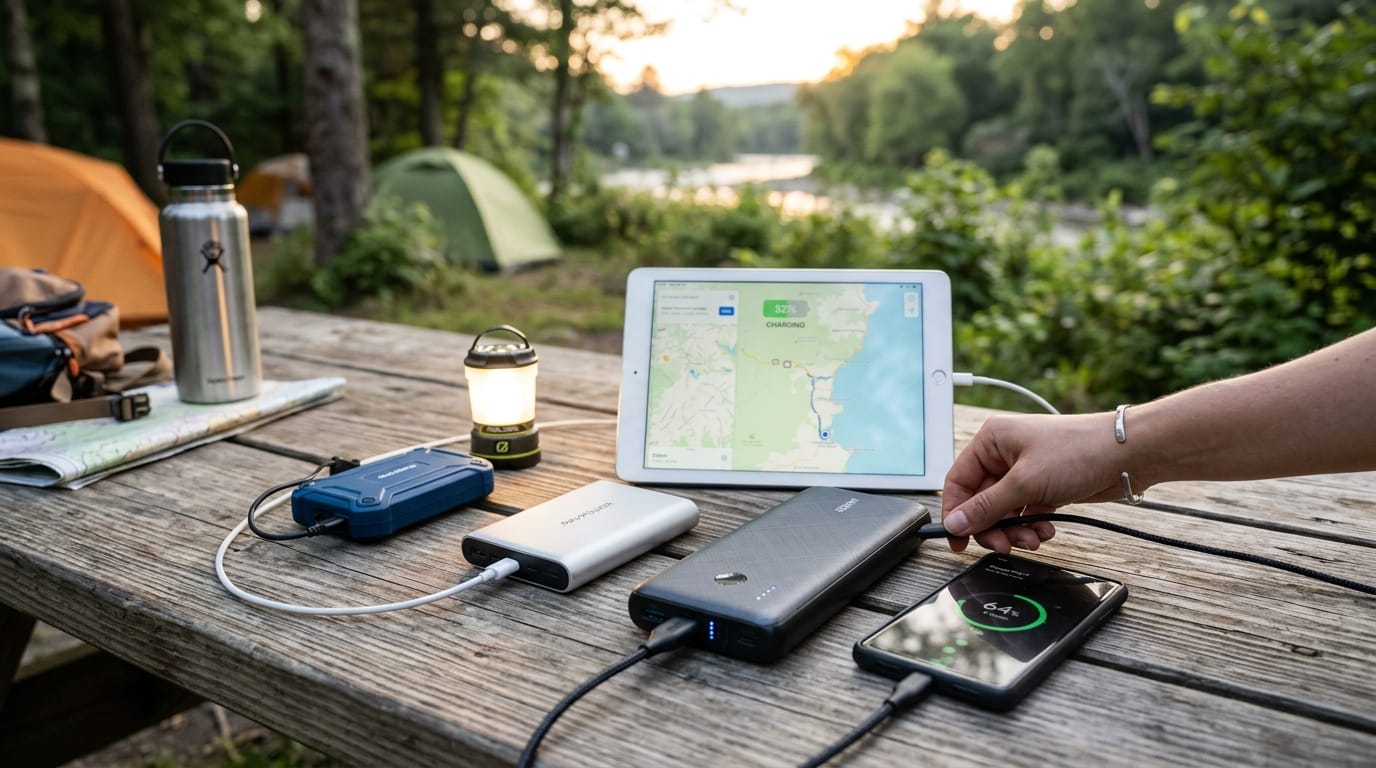
"A dead phone is inconvenient at home. It can become a serious problem when you’re travelling." That's how TechCityNG kicks off their 2026 review of portable chargers, and honestly, for any founder, builder, or developer trying to make things happen in this continent, that's not just an inconvenience—it's a catastrophe waiting to happen.
Your phone isn't just a phone anymore. It's your mobile office, your banking app, your payment terminal for that quick lunch at a roadside buka, your navigation through the chaos of Lagos traffic, and your lifeline to team members scattered from Akure to Accra. When that battery dips into the red, it's not just personal stress; it's a direct threat to your operations, your cash flow, and your ability to "no gree for anybody" in your hustle.
So, when a new review drops detailing the "Best Portable Charger in 2026," most founders eye the biggest mAh number and the fastest W output. But here's the thing: the interesting story here isn't merely which gadget has the most juice. It's actually about the invisible web of physics, safety regulations, and operational realities that dictate what you can and should carry, and how those constraints fundamentally shape your ability to operate effectively.

The Cold, Hard Facts of Power on the Go
Let's cut through the marketing fluff. The TechCityNG piece lays out the key metrics for power banks in 2026:
- Capacity (mAh): 5,000mAh for emergency top-ups, 10,000mAh for everyday travel, 20,000mAh for longer trips/multiple devices, 25,000mAh+ for laptops.
- Output (W): 20-30W for fast phone charging, 65W+ for laptops.
- Ports: USB-C is king.
- Weight: A critical, often overlooked factor.
- Airline Rules: This is the unsexy, but absolutely crucial detail. Power banks are measured in Watt-hours (Wh), not mAh, for aviation safety. Anything 100Wh or less can generally go in carry-on bags without special approval. Anything above is usually restricted or requires airline approval (which is a headache you don't need). And NEVER in checked luggage. If your carry-on gets gate-checked, pull that power bank out.
The article also highlights that a 10,000mAh power bank won't give you two full charges on a 5,000mAh phone. Why? Energy conversion loss. Expect 1 to 1.5 charges. This is physics, not a manufacturing defect. And while magnetic wireless charging like Anker's MagGo 10K with Qi2 is convenient, wired USB-C is still generally faster and more efficient. Convenience always has a cost.
The Human & Culture Lenses: The Cost of Disconnection
For the average Nigerian founder or developer, especially those operating outside the few truly stable power zones, consistent electricity is a luxury, not a given. Whether you're coding in a Gbagada co-working space, managing inventory from an Onitsha market stall, or pitching investors in Abuja, your reliance on mobile power is absolute.
This isn't just about charging your phone. It's about:
- Maintaining Productivity: Losing power means losing access to your development environment, your communication channels, your banking apps. It means delays, missed opportunities, and the very real threat of "sapa."
- Navigating Logistics: Your phone is your map, your ride-hailing app, your boarding pass. Imagine being stranded at Owerri bus park with a dead phone. That's not just a travel inconvenience; it's an operational breakdown.
- Security & Safety: In unfamiliar territories, a charged phone is a safety net.
The cultural shift towards hyper-connectivity and mobile-first operations means that a power bank isn't just an accessory; it's a fundamental piece of your operational toolkit. Its selection isn't a casual purchase; it's a strategic decision.
The Strategy & Builder Lenses: Why the "Invisible Hand" Matters
Why do so many "travel" power banks hover around 90Wh? Because of the FAA and international aviation regulations. This isn't some arbitrary design choice; it's a mandate dictated by the physics of lithium-ion batteries and the catastrophic risks they pose in a plane's cargo hold.
For manufacturers like Anker, their strategic play isn't just about building the most powerful battery. It's about designing within a very specific set of regulatory constraints. This means:
- Optimisation, not just power: They're optimising for the maximum usable and compliant power, not just raw capacity.
- Safety as a Feature: Their brand reputation, especially in a market where cheap, uncertified electronics are rampant, hinges on reliability and safety.
- Efficiency over everything: The energy conversion loss isn't just a spec; it's an engineering challenge to minimise, because every percentage point means more usable power for the end-user without increasing the Wh rating (and thus, flight risk).
The builder's lesson here is profound: external, often unseen, forces (like airline regulations) can profoundly impact product design, feature sets, and even market adoption. If your startup relies on hardware, or if your team travels extensively, understanding these external constraints is as critical as understanding your customer pain.

FOUNDER DIRECTIVE / ADVISORY SECTION
Alright, let's talk brass tacks. You're a founder, not a gadget reviewer. Your time is money. Here’s what you need to understand and act on.
## The Short Answer
Don't buy the biggest power bank you can find. Buy the right power bank for your actual needs, particularly if you travel by air. Prioritise Watt-hours (Wh) for compliance, USB-C for versatility, and wired charging for efficiency.
## What Is Really Happening
The portable power market has matured to a point where raw capacity isn't the only, or even primary, differentiator. What's driving product innovation and consumer choice are the interwoven demands of regulatory compliance (especially for air travel), charging efficiency (due to physics), and user convenience (balancing weight, size, and ports). Manufacturers are playing a sophisticated game of optimising within hard physical and legal limits.
## The Assumption I'd Challenge
The assumption I'd challenge is that "more mAh is always better" or "wireless charging is the future for everything." This is optimizing for the wrong metric. For a founder on the go, the true metric is "uninterrupted, reliable, and compliant access to power for critical devices." A 25,000mAh power bank is pointless if it gets confiscated at the airport or if its weight makes you skip carrying other essential tools for your trip from Lagos to Jos. Similarly, wireless charging is neat, but if it's significantly slower and wastes more energy, it's a luxury, not a necessity for critical uptime.
## The Strategic Options
- The Minimalist Founder: If your travel is mostly local (e.g., within a city or short drives) and primarily phone-focused, opt for a compact, fast-charging 10,000mAh USB-C power bank. Focus on weight and portability.
- The Digital Nomad / Laptop Warrior: If you absolutely need to power a laptop or multiple devices during flights or extended trips, you need a ~25,000mAh bank with 65W+ output. Crucially, verify its Wh rating is sub-100Wh and understand it's carry-on only. This is a specific tool for a specific, demanding job.
- The Hybrid Hustler: Own both. A smaller, lighter 10,000mAh for everyday carry and quick trips, and a larger, higher-output one for those specific instances where laptop power is non-negotiable and you're flying.
## My Recommendation
For the vast majority of founders navigating the Nigerian and broader African ecosystem, a high-quality 10,000mAh to 20,000mAh USB-C PD (Power Delivery) power bank with at least 20-30W output for phones and potentially up to 45W for smaller laptops is the sweet spot. Always confirm the Watt-hour (Wh) rating is below 100Wh. Prioritise brands with a strong reputation for safety and efficiency, and lean into fast wired charging for your critical devices. This setup provides the best balance of capacity, portability, speed, and, most importantly, airline compliance.
## What I Would Do Next
- Audit Your Current Power Banks: Check the Wh rating on all your existing portable chargers. If any are over 100Wh and you intend to fly with them, prepare for a conversation at security.
- Standardise USB-C: Ensure all your critical devices (phone, earbuds, small laptop, tablet) can charge via USB-C. This simplifies your cable management and maximises compatibility with modern power banks.
- Educate Your Team: If your team travels, especially internationally, make sure they are aware of the 100Wh carry-on rule. A confiscated power bank is a waste of money and a potential operational headache.
- Test Real-World Performance: Don't just trust the box. How many actual charges do you get for your specific phone? How long does it take to fully charge your laptop from the power bank? This tells you its true utility.
## What Would Change My Mind
- Significant regulatory shifts: If global aviation bodies increase the permissible Wh limit for carry-on batteries, or somehow make them safe for checked luggage. (Highly unlikely, safety is paramount).
- Breakthroughs in battery density: If a new battery chemistry emerges that offers vastly higher energy density without increased thermal risk, fundamentally changing the size-to-capacity-to-safety equation.
- Wireless charging parity: If wireless charging (like Qi2) can consistently match or exceed the speed and efficiency of wired USB-C PD, the convenience factor becomes undeniable and worth the switch.

The Unseen Power Play
Ultimately, this isn't just about buying a gadget; it's about making an informed strategic decision for your operational continuity. In a world where power is often sporadic and travel comes with hidden regulatory hurdles, the right portable charger is more than just a convenience—it's a critical piece of infrastructure that allows you, the founder, to keep building, keep connecting, and keep moving forward, no matter where your hustle takes you. Ignore the Watt-hours at your peril.
Related from Nigeria
Let's build your next big product.
Accepting project-based freelance, remote engineering roles, and hybrid positions.