The $1,999 Foldable Trap: Why Apple’s iPhone Duo Is an Expensive Distraction for Builders
Apple wants $1,999 for a folding screen and a downsized camera array. The interesting play isn't hardware novelty—it's how Apple is forcing developers to subsidize its search for growth.
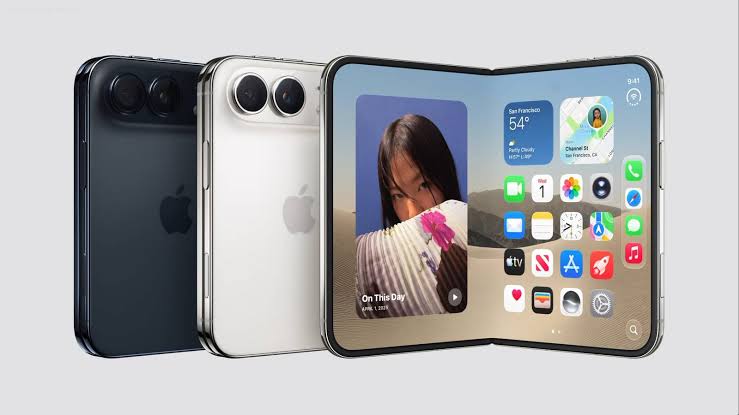
Apple finally took the covers off its first folding phone, the iPhone Duo, slapping a staggering $1,999 starting price tag on the 256GB base model.
For months, tech circles whispered about how Cupertino would solve the crease, fix the hinge friction, and rethink mobile multitasking. What we got on September 9 is a device with a 7.6-inch inner canvas, a 5.4-inch outer cover screen, custom vapor chambers, and an A20 Pro silicon engine. Meanwhile, standard flagship buyers are looking at the iPhone 18 Pro starting at $1,199 and the Pro Max at $1,299.
The immediate debate is whether doubling the price of a standard phone makes sense for consumers. But that is the wrong debate entirely.
The interesting thing about this story is not merely that Apple shipped an ultra-luxury foldable to extract absurd hardware margins from high-net-worth enthusiasts. It is actually that Apple has hit the ceiling on smartphone utility, and it is now outsourcing the burden of proving this form factor’s value to product engineers and software developers.

The Hardware Reality Check
Let us look at the raw engineering compromises. To get a 7.6-inch display into your pocket, Apple made direct trade-offs:
- The Camera Downgrade: The Duo drops the triple-sensor array found on the 18 Pro line down to a dual 48MP layout. If you pay $1,999, you are getting inferior glass compared to a device that costs $800 less.
- Thermal and Battery Tax: Folding devices split the chassis. That means two battery cells wired across a physical hinge and complex vapor-chamber thermals to keep the A20 Pro from throttling under sustained loads.
- The Viewport Problem: When closed, the 5.4-inch external panel is narrow. When open, the aspect ratio sits in that awkward, square-ish middle ground where 16:9 video leaves massive black bars, and standard responsive mobile layouts look aggressively stretched unless rewritten from scratch.
If you are a founder or product lead running an engineering sprint in a co-working hub in Gbagada or managing cross-platform releases out of an Akure incubator, this launch is not a hardware miracle. It is a maintenance cost.
Every time Apple invents a new screen ratio, product managers scramble to re-test responsive states, responsive web layouts break on odd breakpoints, and designers start dreaming up multi-pane interfaces that only 0.01% of your user base will ever render.
At roughly three million Naira at current exchange dynamics—before import logistics and local retail markups—the iPhone Duo is not penetrating the mass market in Lagos, Nairobi, or Accra. It will sit squarely in the pockets of executive suites, politicians, and Victoria Island tech barons. Building dedicated layout logic for it right now is the fastest way to burn scarce dev cycles on vanity metrics.

The Short Answer
Do not redesign your core mobile product for the iPhone Duo. The $1,999 sticker price keeps this device firmly in luxury territory, and the hardware sacrifices—especially the reduced camera setup and awkward aspect ratios—will keep it as a low-volume prestige item rather than a high-velocity standard. Treat it as an iPad Mini viewport edge case, not a new platform priority.
What Is Really Happening
Smartphones peaked years ago. Incremental chip bumps from the A19 to the A20 Pro do not drive upgrade supercycles anymore. Apple's average selling price (ASP) strategy is running out of room, so the company is borrowing Samsung's playbook from six years ago: create an ultra-premium tier to extract higher revenue per user from the top tier of its base.
By labeling the Duo a "productivity machine," Apple wants software builders to turn iOS into a desktop-grade workflow environment. They are asking you to do the heavy lifting of building dual-pane views, drag-and-drop mechanics, and split-screen data entry, while they take 30% of your App Store gross and pocket the $1,999 hardware profit.
The Assumption I'd Challenge
The dangerous assumption floating through product roadmaps right now is: "Foldables are the new baseline, so we need a dedicated multi-window experience."
The part I would challenge is that users actually want to do heavy spreadsheet wrangling, complex database administration, or deep B2B SaaS workflows on a folded square in their hands. In reality, power users pull out an M-series MacBook when real work needs doing. On mobile, users want fast, low-friction interactions: tap a fintech link, verify an OTP, approve a payout, glance at a dashboard, and close the phone. A 7.6-inch square screen does not magically turn a smartphone into a workstation.
The Strategic Options
If you manage a digital product, you have three distinct paths forward:
- The Vanity Play: Divert two frontend engineers to build bespoke multi-column interfaces specifically tuned for the Duo’s expanded display, hoping for an App Store feature badge from Apple's editorial team.
- The Clean Adaptive Play: Rely strictly on clean Auto Layout (iOS) and solid responsive web standards. If your UI handles an iPad Mini and an iPhone 13 properly, it will render fine on the Duo without a single custom conditional branch.
- The Complete Pass: Explicitly ignore the inner screen’s multitasking affordances. Keep your app locked to single-column, highly optimized flows until local device analytics prove the Duo represents at least 3% of your active session volume.
My Recommendation
Choose Option 2.
Do not write custom code for the iPhone Duo. If your engineering team has built flexible layouts that scale gracefully across standard dynamic viewports, your app will run on the Duo's 7.6-inch canvas without breaking.
Your scarce developer time in this market is far better spent reducing bundle sizes for users on spotty connections, fixing authentication drop-offs, and hardening your background sync for when local telecom networks choke. Let Silicon Valley venture-backed consumer apps burn cash building bespoke dual-screen widgets. You have unit economics to protect.
What I Would Do Next
- Audit Your Breakpoints: Have your frontend lead verify that your current responsive web app and native containers do not clip content when forced into a near-square 4:3 or 1:1 aspect ratio.
- Set an Analytics Trigger: Set up an event property in your tracking tool (Mixpanel, PostHog, or Amplitude) to watch for the
iPhone Duodevice model identifier. - Establish a Threshold: Agree internally that until that device identifier accounts for a statistically meaningful share of your transacting users, no Jira ticket labeled "Foldable-Specific UI" gets moved into an active sprint.
What Would Change My Mind
I would change my stance if two things happen: First, if Apple cuts the entry price below $1,300 within two product cycles, bringing it in line with the standard Pro line and driving true volume adoption. Second, if internal telemetry reveals that users on foldable viewports demonstrate a 3x higher retention or purchase conversion rate that directly justifies the dedicated engineering overhead. Until that data lands on your desk, treat the Duo as a fascinating piece of metal and glass—and keep shipping what actually moves your bottom line.
Related from Nigeria
Let's build your next big product.
Accepting project-based freelance, remote engineering roles, and hybrid positions.