Nigeria's Tech Sovereignty Play: Is 'Ownership' the Moat We Need, or a Costly Distraction?
At GITEX Nigeria 2026, BluDive's CEO championed local tech ownership. But for founders, the real question isn't just 'own or not own,' it's about discerning *which* tech truly matters, and the brutal economics of building it here in Lagos, or Gbagada, or Akure.
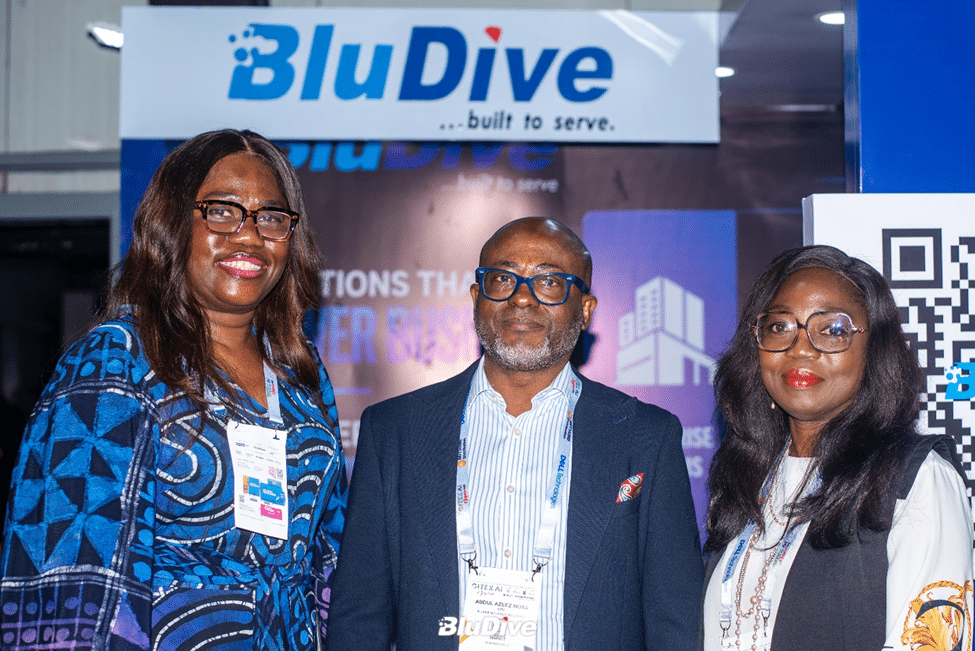
When Abdul-Azeez Musa, CEO of BluDive Technologies, took the stage at GITEX Nigeria 2026, his message wasn't just another tech trend forecast. It was a direct challenge: Nigeria's tech ecosystem needs to shift from "overly dependent on foreign technologies" to actively owning and controlling its critical tech infrastructure. This isn't a new conversation, but coming from a player like BluDive, and amplified at a platform like GITEX, it signals a strategic re-evaluation taking root deep within the local ecosystem.
The interesting thing about this story is not merely a call for nationalism in tech. It is actually about the growing realization that dependency equals vulnerability, and true strategic leverage comes from control. For Nigerian founders and builders, this isn't abstract policy; it’s a question of market access, data sovereignty, long-term cost structures, and ultimately, whether we're building an economy that benefits ourselves or just serving as a lucrative market for others.

The Call for Control: What It Really Means
Musa's statement, "The more control we have, the stronger our position becomes in building partnerships," cuts to the core. This isn't about closing borders to foreign tech. It's about shifting the power dynamics in those partnerships. Imagine negotiating a deal from a position where your core infrastructure, your data, your fundamental operating systems are yours. That's a different conversation than one where you're beholden to a global giant's roadmap, pricing whims, or even geopolitical shifts.
BluDive, in this context, positions itself as the sherpa for this journey, guiding businesses to invest in tech "in tranches so that those investments do not scuttle their growth." This speaks volumes about the inherent challenges. Building and owning complex technology isn't cheap, nor is it simple. Many businesses in Nigeria, facing tight margins and volatile markets, often default to off-the-shelf foreign solutions for good reason: perceived lower upfront cost and reduced operational complexity. The real cost, however, often hides in data egress fees, vendor lock-in, and the slow drain of foreign exchange.
This push reflects a cultural sentiment we often hear on the streets – "No gree for anybody." It's about self-determination, applying that same relentless execution to our digital infrastructure. But the practicalities of transitioning from consumer to producer are immense, especially when the global tech giants have decades of head start, massive R&D budgets, and network effects that are incredibly hard to dislodge.
The Geopolitical & Economic Undercurrents
Why is this conversation picking up steam now, in 2026? A few factors are at play:
- Data Sovereignty: With increasing data protection regulations globally and locally, the location and control of data become paramount. Who owns customer data? Who has access? Where is it stored? These are no longer just IT questions, they are national security and competitive advantage questions.
- Economic Realities: The continuous outflow of capital for software licenses, cloud services, and hardware from foreign vendors is a significant drain on our foreign reserves. Investing locally, even if initially more expensive, theoretically keeps capital within the ecosystem, fostering local talent, jobs, and further innovation.
- Talent Maturation: Nigeria's developer ecosystem is growing, reaching a point where the collective skill exists to attempt to build these "critical technologies." The challenge shifts from "can we build it?" to "can we build it sustainably, securely, and at scale, and compete with global behemoths?"

The Founders Advisor Perspective: Ownership in a Sapa Economy
For a founder in Nigeria, especially one battling the daily realities of fluctuating exchange rates, infrastructure gaps, and Sapa, the idea of "owning critical technology" can feel simultaneously empowering and overwhelming. It's a strategic imperative dressed in a hefty price tag.
The Short Answer
The call for greater Nigerian tech ownership isn't just patriotic rhetoric; it's a strategic push for control, leverage, and sustainable economic value capture. However, for founders, the immediate action isn't to rebuild everything. It's to surgically identify and control the few, truly critical layers of your stack that create your unique moat, while intelligently leveraging existing global solutions for the rest.
What Is Really Happening
BluDive, speaking at GITEX Nigeria 2026, is articulating a sentiment that’s been brewing: foreign tech dependency, while convenient, has long-term strategic and economic costs. They are positioning themselves as an enabler for businesses to navigate the complexity and cost of shifting towards greater local tech ownership. This is less about banning foreign tech and more about cultivating a domestic capacity that can negotiate from a position of strength, driving value creation within Nigeria rather than merely consuming foreign-made solutions. It's a market shift they are actively trying to catalyze and capture.
The Assumption I'd Challenge
The assumption I'd challenge is that "greater technology ownership" always translates to greater competitive advantage or cost savings in the short-to-medium term for every business. While the long-term strategic benefits (data sovereignty, local control, economic development) are undeniable, the cost, time, and specialized talent required to truly own and maintain complex, critical infrastructure can crush a startup before it finds its market fit.
Building and maintaining secure, scalable, and resilient core technology is extremely difficult. The total cost of ownership (TCO) often includes unseen costs like security vulnerabilities, maintenance burdens, rapid obsolescence, and the opportunity cost of diverting engineering talent from core product innovation. You may be optimizing for national interest, but scuttling your unit economics and growth in the process.
The Strategic Options
- Full Buy/Leverage: Continue relying heavily on foreign SaaS and cloud providers for most or all of your stack.
- Pros: Low upfront cost, quick deployment, access to global best practices, reduced operational overhead.
- Cons: Vendor lock-in, data sovereignty issues, FX exposure, limited customizability, capital flight.
- Full Build/Own: Develop and host most or all critical technology in-house or with local providers.
- Pros: Complete control, data sovereignty, tailored solutions, local IP retention, fosters local talent.
- Cons: High upfront and ongoing costs, significant talent requirements, slower deployment, greater operational complexity, potential for "reinventing the wheel."
- Strategic Hybrid (My Lean): Identify core differentiators and critical data points where ownership or localized control is paramount. For everything else that isn't core to your unique value proposition, leverage best-in-class foreign or local off-the-shelf solutions.
- Pros: Balances control with efficiency, focuses resources on strategic advantage, reduces overall risk.
- Cons: Requires deep technical and strategic understanding to make the right 'build vs. buy' decisions, still some level of dependency.
My Recommendation
For most Nigerian founders, particularly those not operating in ultra-sensitive sectors like national security or highly regulated financial infrastructure, a strategic hybrid approach is the most pragmatic and sustainable path.
Focus your build efforts, your IP, and your talent investment on the technologies that are core to your unique value proposition, your competitive moat, and your most sensitive data. For everything else – commodity infrastructure, standard tooling, non-differentiating features – leverage robust, reliable existing solutions, whether local or foreign.
The key is to ask: "If this technology or data were compromised, taken away, or suddenly became prohibitively expensive, would my entire business model collapse?" If the answer is yes, that's where you investigate ownership or significant local control.
What I Would Do Next
- Audit Your Stack ruthlessly: Map every piece of technology you use, from database to CRM to payment gateway. For each, ask:
- Is this core to my competitive advantage?
- Does it handle critical, sensitive data?
- What are the switching costs if this vendor changes terms or fails?
- What is the total cost of ownership (TCO) vs. building/localizing?
- Identify Control Points: Pinpoint the few areas where having direct control over the IP, infrastructure, or data storage gives you a strategic edge, reduces risk, or unlocks unique market opportunities. This might be a proprietary AI model, a unique payment orchestration layer, or a specialized data analytics engine.
- Explore Local Alternatives (Critically): For non-core components, research reliable Nigerian/African cloud providers, open-source alternatives, or local SaaS solutions. Evaluate them not just on price, but on uptime, support, security, and scalability. Don't fall for "local" just for the sake of it if it means sacrificing reliability.
- Phased Transition: If building/owning makes sense for a critical component, plan it in "tranches," as BluDive suggests. Start small, iterate, and integrate carefully to avoid disrupting existing operations or burning through capital. This is where a partner like BluDive could actually be valuable, assuming they are truly guiding you, not just selling you.
What Would Change My Mind
My recommendation would shift towards more aggressive "build/own" if:
- Clear, Cost-Effective Local Alternatives Emerge: If a robust, secure, and genuinely competitive local cloud infrastructure or platform-as-a-service (PaaS) ecosystem matures rapidly, significantly reducing the TCO and complexity of building locally.
- Foreign Tech Becomes Unreliable/Prohibitive: If geopolitical pressures, sanctions, or sustained, extreme FX volatility make reliance on foreign tech genuinely unsustainable or impossible for most businesses.
- New Regulatory Mandates: If government regulations mandate local hosting or IP ownership for specific data types or industries, making the "build/own" approach a compliance necessity rather than a strategic choice.
Until then, let's build smart, strategically, and with an eye on both local opportunity and global realities. The goal isn't just to own tech; it's to build successful, resilient, and impactful businesses in Africa.

Related from Nigeria
Let's build your next big product.
Accepting project-based freelance, remote engineering roles, and hybrid positions.