Apple's $1,999 Foldable: The $700 Bet on a Hinge, and What It Doesn't Buy You
Apple just dropped the iPhone Duo, a $1,999 foldable. The real story isn't the folding screen itself, but Apple's strategic gamble on what 'premium' means in a nascent hardware category, while conspicuously omitting critical information on long-term ownership costs.
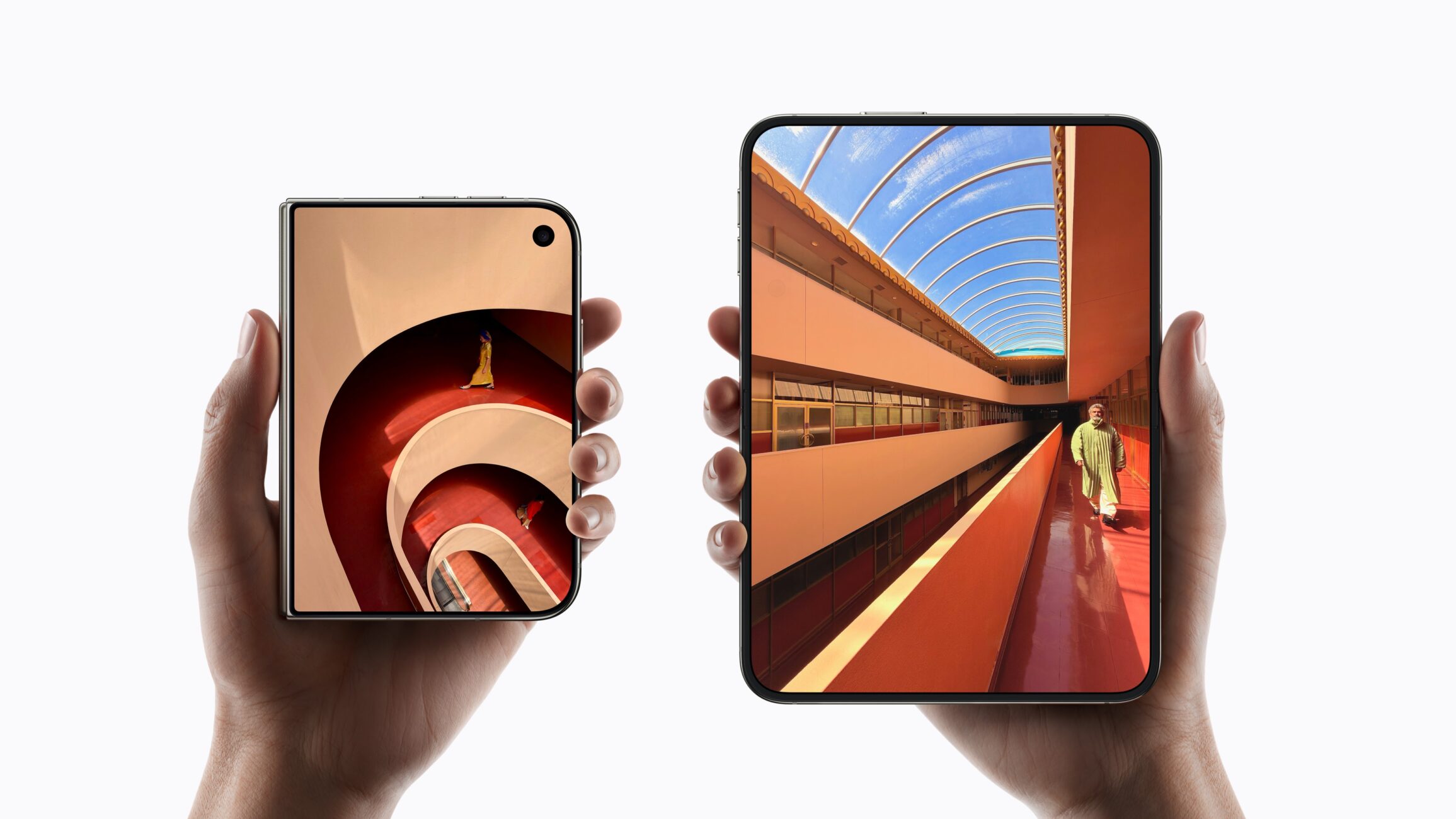
Alright, let's cut through the Apple hype and get to the numbers, because that's where the real story lives for anyone building a business. Apple just announced the iPhone Duo, their first foldable, hitting pre-orders on October 16th starting at a cool $1,999. Now, before you start calculating how many months of 'sapa' relief that could buy, let's dissect what this means from a strategic standpoint, not just a gadget review.
The interesting thing about this story is not merely that Apple finally built a foldable phone. It is actually how Apple is using pricing, feature segmentation, and a notable lack of transparency around crucial ownership costs to strategically define a new high-end in mobile, and what that signals for founders navigating volatile markets.
The Numbers Game: $700 for a Fold?
The first thing that hits you, as Olawale Adeyina at TechCityNG smartly points out, is the price. A base iPhone Duo comes in at $1,999. The cheapest iPhone 18 Pro Max? $1,299. That's a flat $700 difference across all storage tiers – 256GB to a whopping 2TB.

This $700 isn't just about the components; it's the premium Apple is charging for the form factor, for being first (in their own ecosystem, anyway), and for the intangible "wow" factor. It separates two decisions: how much storage you need (which adds up to $1,200 between 256GB and 2TB), and whether the folding screen itself is worth that fixed $700 premium. For most people working out of their Gbagada workstations, that's not pocket change.
What the Extra $700 Does Buy You
So, for that extra $700, what are you getting?
- More Screen Real Estate: A 7.6-inch inner display (50% larger than the 18 Pro Max) and a 5.4-inch outer display that’s 90% the size of the 18 Pro. Both ProMotion, 120Hz, 3,000 nits. Big, bright, beautiful.
- True Multitasking (for iPhone): iOS 27 brings Split View to iPhone, letting you run two apps side-by-side or two windows of the same app. You can even save app pairs. Netflix, Zoom, and Slack are apparently ready on day one. For developers, this is new canvas, new interaction models.
- The Engineering Flex: Grade 5 titanium, a 3D-printed hinge cover, Ceramic Shield 2. Apple says the hinge has over 100 components, and the inner display uses clever adhesives to relieve bend stress.
- The A20 Pro Chip: The same chip as the iPhone 18 Pro, built on a 2nm process with a vapor chamber. Apple claims 35% better sustained performance than the 17 Pro. For intensive tasks, this is significant.
If your day revolves around running two apps simultaneously – say, Slack and your internal CRM, or a coding reference and your IDE – then the Split View and larger screen is a genuine argument for productivity. Otherwise, it's largely a description of a very polished, very expensive new toy.
What $1,999 Does NOT Buy You
Now, this is the part where the initial launch glow starts to fade, and the strategic founder's antennae should perk up. For $1,999, you are not getting:
- A Dedicated Telephoto Lens: The Duo has a 48MP Fusion Main and a 48MP Fusion Ultra Wide. The 2x zoom is digital, from the main sensor. The iPhone 18 Pro Max, at $700 less, still offers a dedicated 48MP camera with 4x telephoto. If you're buying a $2,000 phone for camera prowess, this is a glaring omission.
- Face ID: Authentication is via Touch ID in the side button. Apple dropped Face ID, presumably to free up space (though the article doesn't specify for what exactly, just that it 'freed the space for the FaceT' - leaving us guessing). This is a user experience downgrade for many.
- Transparency on Repair Costs: This is the most critical missing piece of information. The article explicitly states Apple has published no out-of-warranty repair price for the folding screen or hinge. Nor does it appear in Apple’s AppleCare+ eligibility list. This is not a trivial oversight; it's a strategic silence.

Founders Insight: The Strategic Play, Not Just a Product Launch
This isn't just Apple releasing a new phone; it's a carefully orchestrated strategic move.
LENS 5 (THE STRATEGY LENS): Apple is doing a few things here:
- Market Segmentation & Price Anchoring: They're establishing a new, ultra-premium tier for "innovative" hardware. The $700 premium isn't just for the foldable tech; it's for being an early adopter in the Apple ecosystem. This sets an anchor point for future foldable pricing, effectively normalizing higher costs.
- Risk Management: By not publishing repair costs, Apple is implicitly offloading significant long-term risk onto the early adopter. If that folding screen or hinge breaks (and moving parts always break), the cost could be eye-watering, essentially making the device disposable or ridiculously expensive to maintain. This strategy allows them to gauge durability in the real world without committing to consumer-friendly repair pricing from the start.
- Feature Compromise as Strategic Choice: Ditching Face ID and the telephoto lens isn't just about engineering constraints. It's about deciding which features are absolutely essential for a "first-gen foldable" experience versus which can be sacrificed to meet a price point or design goal. For Apple, the folding screen and A20 Pro performance are the stars; camera zoom and biometric convenience take a backseat. This signals a clear focus on what Apple believes defines "innovation" in this category right now.
- Developer Incentives: The push for Split View and native folding layouts is a clear signal to developers. "Here's new screen real estate; build for it." But for founders in places like Akure or Owerri, where users are price-sensitive, the addressable market for these kinds of apps on a $1,999 device is tiny.
LENS 2 (THE HUMAN LENS): For the average user, especially in emerging markets, this isn't a "worth it" calculation based on utility; it's a status play, an aspiration. For developers, it's a new frontier, but one with a very high barrier to entry for users. For founders, it's a case study in how a dominant platform player can introduce new tech, manage perception, and extract value, even with clear compromises.
LENS 4 (THE STORY LENS): The surprising detail is the inversion of value. For $700 less, you get a better camera system and Face ID on the 18 Pro Max. For $700 more, you get a folding screen but lose those established premium features. The core tension is that innovation (the fold) comes with regression in other, already-solved areas. This isn't just progress; it's a trade-off.
The Short Answer
No, for the vast majority of founders, builders, and developers in markets like Nigeria, the foldable iPhone Duo is absolutely not "worth it" today. It’s an expensive experiment designed for a very specific, ultra-premium segment.
What Is Really Happening
Apple is launching a first-generation foldable at an incredibly high price point to achieve several strategic objectives:
- Defining the Premium Ceiling: They're setting a new benchmark for what "premium" means in the foldable space, effectively anchoring high prices for future iterations and competitors.
- Market Testing & Data Collection: They're using early adopters to gather real-world data on durability, usage patterns, and the perceived value of the foldable form factor, all while charging a significant premium for the privilege of participating.
- Hiding the True Cost of Ownership: The lack of transparent repair costs is a massive red flag. This allows Apple to avoid commitments on potentially astronomical repair fees, shifting the financial risk entirely onto the consumer until they've accumulated enough data to set profitable (for them) pricing. This isn't just about product; it's about business model and hidden liabilities.
- Signaling to Developers: They’re clearly pushing for developers to embrace Split View and adaptable layouts, but the adoption curve on the hardware side will be slow and expensive.
The Assumption I'd Challenge
The assumption I would challenge is that the $700 premium is simply for the "innovation" of the folding screen. It’s not. It’s also for being first, for the brand status, and for the privilege of being part of Apple's early-stage R&D in a public, paid beta. Furthermore, I'd challenge the assumption that a foldable screen inherently translates to a productivity boost for every user or every application. For many, it's just a bigger screen, often at the expense of other core features.
The Strategic Options
For founders and developers looking at this:
- The Early Mover (High Risk, Potentially High Reward): Dive deep into iOS 27's Split View and new foldable layouts. Develop innovative apps that only make sense on this form factor. This requires significant investment in design and development, targeting a tiny (but potentially affluent) niche. This is a tough sell when your average user in Onitsha is worried about data costs, not dual-screen multitasking.
- The Observationalist (Moderate Risk, Patient Reward): Monitor adoption rates, Apple's eventual repair cost disclosures, and the overall durability of the device. Watch how competitors react. Learn from others' mistakes and successes before committing significant resources. This aligns better with the realities of building in a lean startup environment.
- The Focus on Fundamentals (Low Risk, Stable Reward): Ignore the foldable hype for now. Double down on building exceptional mobile experiences for the 99% of users who will continue to use standard form factors. Optimize for performance, data efficiency, and accessibility on devices that are widely available and affordable. This is the "no gree for anybody" approach to product development – focus on where your users actually are.
My Recommendation
For most founders in the Nigerian and broader African tech ecosystem: Stay away from building specifically for this device in its current iteration. Your users are not buying a $1,999 phone that compromises on core features and hides its true lifetime cost.
Focus your energy and limited capital on solving real problems for the vast majority of people using standard, affordable smartphones. The market for generic mobile apps in Africa is still enormous, and you'll find far greater ROI and impact there.
What I Would Do Next
If I were a founder, I would:
- Read the fine print (when it appears): Closely watch for Apple’s official out-of-warranty repair costs and AppleCare+ plans for the Duo. This will reveal the true lifetime cost of ownership and inform assumptions about durability.
- Talk to power users (not influencers): Find genuine early adopters of foldables (from any brand) and understand their real-world usage patterns, pain points, and what truly drives their productivity or enjoyment. Are they actually saving app pairs, or is it just a novelty?
- Focus on adaptive UI: If I were to prepare, I’d ensure my apps' UI/UX is already designed to be highly adaptive, gracefully handling various screen sizes, aspect ratios, and multitasking modes, without specifically targeting a foldable. This is good practice for any platform, regardless.
- Monitor competition: How will Samsung, Google, and other OEMs respond to Apple's pricing and feature set? This will shape the overall market direction.
What Would Change My Mind
My mind would shift if:
- Mass Market Adoption: We saw genuinely widespread adoption of foldables (across brands and price points) in key African markets, driven by clear, undeniable productivity gains, not just status.
- Repair Transparency & Affordability: Apple (and competitors) provided transparent, reasonable out-of-warranty repair costs and robust, affordable AppleCare+ for these devices, significantly reducing the hidden ownership risk.
- Developer Ecosystem Maturation: A vibrant, local developer ecosystem emerged that was successfully building and monetizing innovative apps specifically for foldable form factors, indicating a true market opportunity, not just a tech demo.
- Feature Parity/Superiority: The foldable form factor genuinely allowed for features that were unequivocally superior or impossible on standard phones, without compromising on other core capabilities like camera or biometrics.
Related from Nigeria
Let's build your next big product.
Accepting project-based freelance, remote engineering roles, and hybrid positions.