Forget Fancy Hardware: Your Webcam Just Became a Gaze Controller – And That's a Problem for Incumbents
Expensive, specialized eye-tracking hardware just got a rude awakening. A developer proved you can achieve surprisingly robust gaze control with nothing but a regular webcam and smart software – a clear signal for builders on where the real value now lies.
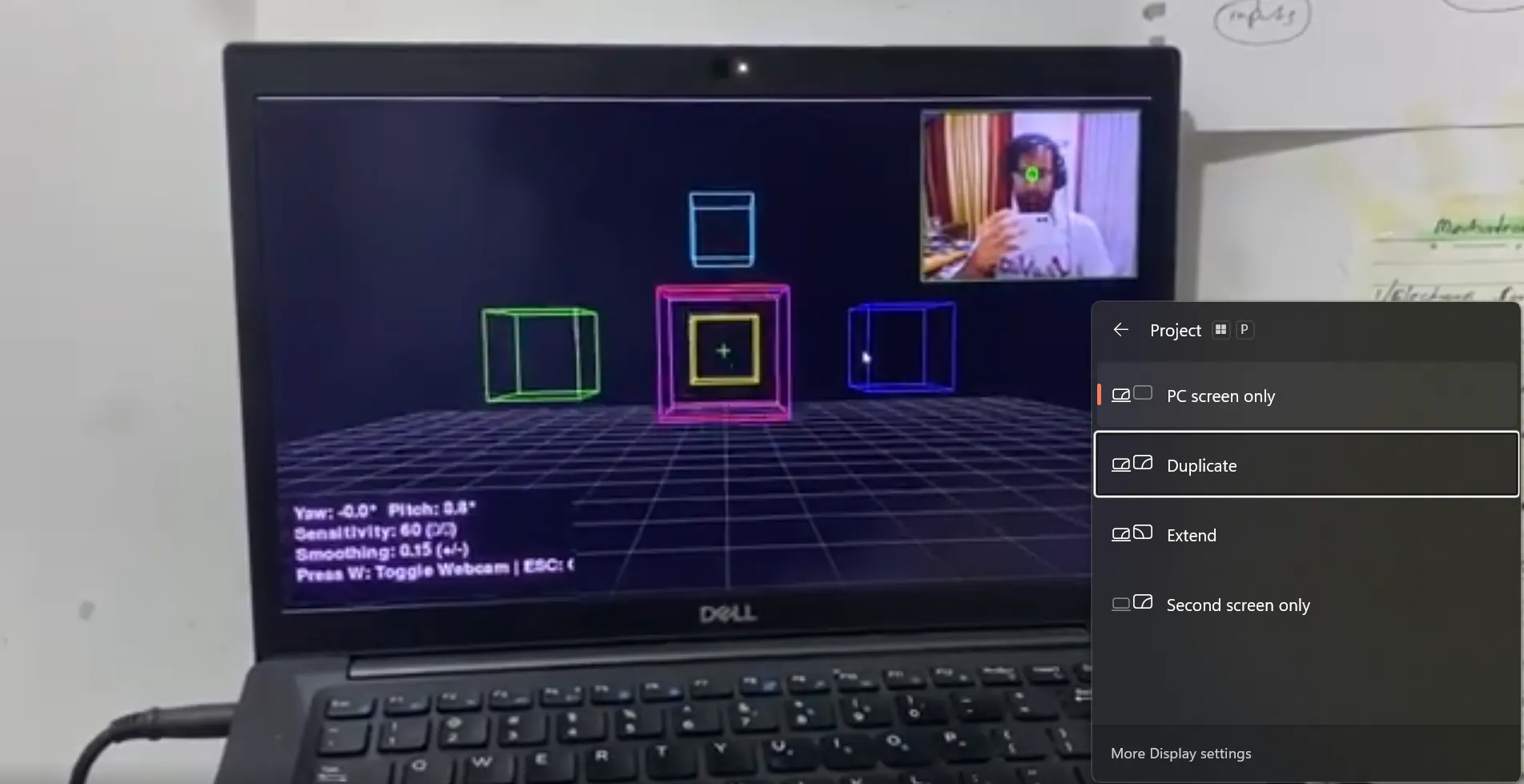
Alright, let's cut through the noise. The interesting thing about this story is not merely that some clever engineer figured out how to control a game with their eyes using just a webcam. No, no. The real story here is how sophisticated, accessible machine learning models, combined with disciplined software engineering, are radically democratizing advanced human-computer interaction, fundamentally shifting the competitive landscape from specialized hardware to clever software. This isn't just about gaming; it's a blueprint for founders looking to disrupt any hardware-dependent niche.
The core finding is simple: a developer, working with standard Python libraries and a run-of-the-mill webcam, built a functional gaze controller. The trick? Leveraging MediaPipe's Face Mesh, specifically the refine_landmarks=True flag, which exposes precise iris coordinates. With these, a few lines of Python can give you raw gaze data.
But here's where the rubber meets the road, and where many a promising tech fizzles out: raw gaze data is garbage. It's jittery, nauseatingly so, prone to micro-saccades and environmental noise. This isn't a failure of the tech; it's a challenge of signal processing. The true engineering genius in this project lies in the conditioning – stacking a moving-average buffer, a dead zone, and exponential smoothing. That's what turns a twitchy stream of numbers into something a human can actually use without wanting to throw up their eba.

The Strategic Tremors for Founders
This isn't just a cool hack; it's a strategic earthquake for several reasons:
Hardware's Crumbling Moat: Historically, high-precision eye tracking was locked behind expensive, dedicated IR trackers like Tobii bars. These companies built their businesses on proprietary hardware and algorithms. This project effectively says, "Your hardware advantage? It's now a software feature." This is a direct shot across the bow for any hardware-first company in the human-computer interaction space. Your physical moat is shrinking, and fast.
Democratization of Advanced UI: Think about the implications beyond gaming. Accessibility tools, hands-free control for industrial applications, novel UX for creative suites, even public kiosk interactions. The barrier to entry for building these sophisticated interfaces just dropped from "invest in R&D and specialized sensors" to "hire a good Python dev and know your signal processing." This is a massive opportunity for founders in places like the Akure tech scene, where leveraging existing, affordable hardware for innovative solutions is the name of the game.
The Power of Platform "Picks and Shovels": Google's MediaPipe, by providing robust, pre-trained computer vision models (especially with features like
refine_landmarks), is playing the ultimate "picks and shovels" game. They aren't building the applications; they're providing the foundational tools that empower thousands of developers and founders to build their applications. This is why paying close attention to open-source ML libraries is paramount for any builder. They determine where the next wave of innovation will break.The Unsung Hero: Signal Conditioning: This entire project is a powerful reminder that raw data, no matter how precise, is often useless. The real value is extracted through intelligent processing. For founders, this means don't just chase the latest AI model or sensor; understand the dirty work of data cleaning, filtering, and making the output actually usable for a human. It's often the less glamorous part of the engineering process, but it's where products become delightful instead of frustrating.
FOUNDERS ADVISOR
The Short Answer
The ability to achieve robust eye-tracking with just a webcam and off-the-shelf ML libraries fundamentally shifts the value proposition from specialized hardware to sophisticated software, creating massive opportunities for accessible, hands-free interfaces and disrupting hardware-centric incumbents.
What Is Really Happening
What we're seeing is the continued "software-ization" of capabilities previously thought to be hardware-bound. Google, through MediaPipe, is effectively productizing cutting-edge computer vision research and packaging it into accessible libraries. This empowers any developer with a webcam and a basic understanding of Python to build interfaces that, just a few years ago, required significant investment in specialized hardware.
The core of the "magic" isn't just detection (getting those iris landmarks), but the diligent, unsexy work of signal processing (moving average, dead zones, exponential smoothing). This is crucial for real-world application. Without it, the "innovation" is just a jittery proof-of-concept. This combination of powerful, free ML models and smart, practical engineering is a force multiplier for innovation, particularly in markets where specialized hardware costs are prohibitive. Think about the Sapa realities many founders face – making a high-end feature accessible with existing, cheap resources is a game-changer.

The Assumption I'd Challenge
The assumption I'd challenge is that advanced human-computer interaction (HCI) always requires custom, high-fidelity hardware. Many founders still default to thinking that if they want truly novel input methods – gaze, gesture, subtle bio-signals – they need to either build bespoke sensors or integrate prohibitively expensive existing solutions. This project unequivocally proves that a significant portion of that "high-fidelity" experience can now be engineered through software interpreting readily available, lower-fidelity sensor input (like a standard webcam). The bigger risk isn't that you won't find the right hardware; it's that you'll overspend on it when a software-first approach could deliver 80% of the value at 10% of the cost.
The Strategic Options
For a founder observing this, you have a few clear paths:
- Disrupt Existing Hardware Markets: Target niche markets currently served by expensive, dedicated eye-tracking or gaze control hardware (e.g., accessibility tech, industrial automation, specialized gaming peripherals). Build a software-first solution that drastically undercuts their price point and simplifies deployment.
- Unlock New Accessible UI/UX Categories: Explore entirely new product categories or augment existing ones where hands-free or gaze interaction was previously too expensive or complex. This could be anything from educational tools, telemedicine interfaces, creative software, or even novel public display interactions.
- Integrate as a Feature, Not a Product: For existing products, consider how gaze control could enhance user experience. Imagine navigating a dashboard in an Owerri bus park logistics application with just your eyes, freeing up hands for other tasks. This becomes a premium feature you can add without significant hardware investment.
- Develop "Picks and Shovels" for Gaze Control: If the market for gaze control applications explodes, there will be a need for better development tools, robust SDKs, cross-platform libraries, or specialized analytics built on top of the core MediaPipe capability.
My Recommendation
My recommendation, high confidence, is to pursue Option 2: Unlock New Accessible UI/UX Categories. The market for replacing existing niche hardware is tempting, but incumbents will eventually catch up on the software side, or at least drive prices down. The bigger greenfield opportunity lies in creating new value by making advanced interaction accessible to a mass market that was previously excluded by cost. This leverages the ubiquity of webcams and the power of ML to address customer pain points that couldn't be solved economically before.
What I Would Do Next
- Prototype Relentlessly: Pick a specific, underserved user group or industry where hands-free interaction provides a clear, measurable benefit. This could be people with motor impairments, surgeons needing to control screens without touching, or artists wanting new input methods. Build a minimum viable prototype using this webcam-based approach. The quicker you test, the quicker you learn.
- Focus on Latency and Robustness: While the article notes signal conditioning, real-world deployment requires rigorous testing of latency, accuracy, and robustness across varied lighting conditions and user demographics. This is where your engineering team in Gbagada workstations needs to shine.
- Identify a "Sticky" Use Case: The initial gaming application is great for proof-of-concept, but what's a non-gaming application that users would integrate into their daily workflow and find difficult to switch away from? Where does gaze control solve a frequent, high-pain problem?
- "No Gree For Anybody" on Distribution: Once you have a compelling use case, focus intensely on how to get this into the hands of your target users. Is it a browser extension? A desktop app? An SDK for other developers? Distribution often separates a cool project from a sustainable business.
What Would Change My Mind
My mind would shift if:
- Significant Technical Limitations Emerge: If, upon deeper testing, the webcam-based approach proves fundamentally incapable of achieving the necessary precision, speed, or robustness for any commercially viable application, then the opportunity shrinks dramatically. This would imply that the hardware moat is indeed thicker than initially perceived.
- A Major Platform Blocks Access: If Google or similar large tech companies decide to heavily restrict or commercialize access to the underlying ML models (
refine_landmarks=True), effectively recreating a proprietary barrier. - Hardware Prices Plummet Unexpectedly: If specialized eye-tracking hardware costs drop by an order of magnitude, making dedicated devices competitive with software-only solutions and negating the cost advantage. This is unlikely to happen overnight, but platform shifts can be brutal.
For now, the signals are clear: software continues its march, eating hardware's lunch piece by piece. Founders, pay attention to the crumbs.
Related from Tech
Let's build your next big product.
Accepting project-based freelance, remote engineering roles, and hybrid positions.