Seevcash's Stellar Play: The $333K Bet on Ecosystems and Hybrid FinTech for African Remittances
This isn't just another small seed round. Seevcash's continued reliance on the Stellar ecosystem, paired with a new Visa card, reveals a potent playbook for African fintechs navigating the complex remittance market.
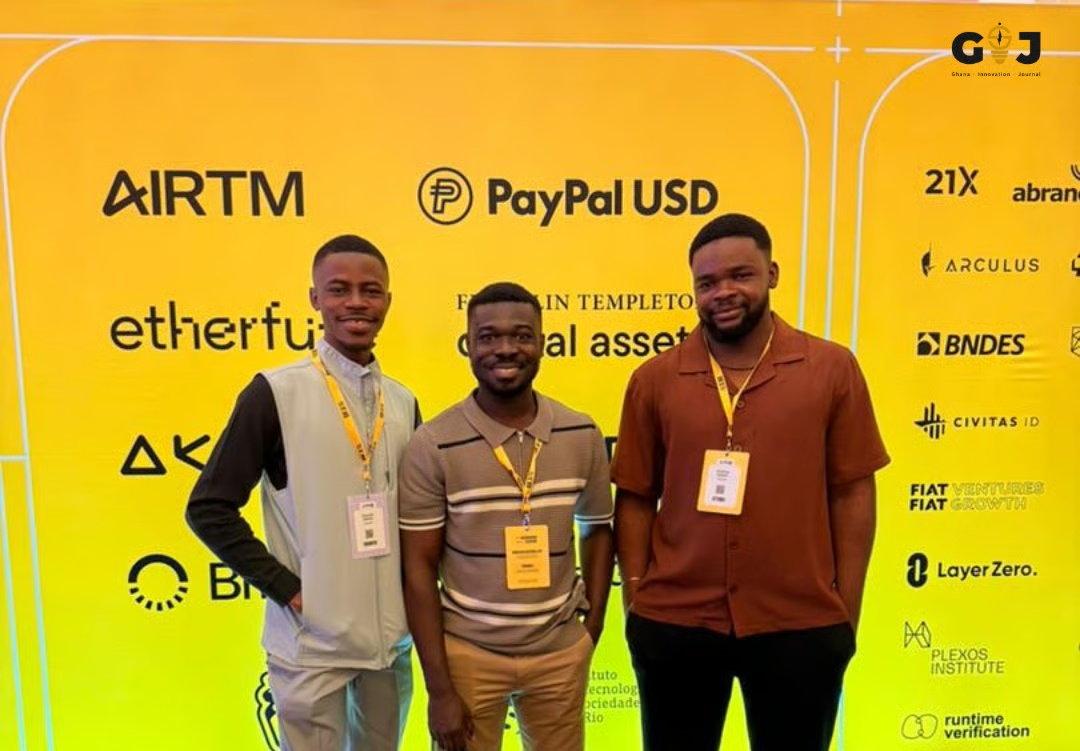
When you see a relatively modest $333K raise in the African tech ecosystem, the temptation is to scroll past, label it "another small round," and move on. But that's exactly where many miss the strategic gold hidden in plain sight. Ghana's Seevcash, co-founded by Dawuda Iddrisu, Charles Owusu, and Cosmos Appiah, just bagged another $333K from the Stellar Community Fund (SCF), bringing their total support from the Stellar ecosystem to four awards. This isn't just a cash injection; it's a masterclass in leveraging platform power and bridging the gap between cutting-edge blockchain and the brutal realities of African cross-border payments.
Seevcash, founded in 2022 with a footprint in Accra and a US incorporation, serves the African diaspora with low-cost cross-border payments and peer-to-peer transfers. They've already amassed over 25,000 users across five countries. The real kicker? Alongside this latest funding, they've launched a Visa card, allowing users to spend their funds online and in person, building on their existing partnership with MoneyGram. This isn't just growth; it's a calculated offensive.

The first story here is simple: a Ghanaian fintech is making progress, securing funds to tackle the enduring problem of expensive diaspora remittances. The second, more compelling story, however, is about the strategic blueprint Seevcash is deploying. They're not just using Stellar; they're embedding themselves within its gravitational pull, transforming the blockchain network from a mere technical backbone into a multi-faceted growth engine—providing capital, technology, and legitimacy.
This hybrid approach—blockchain infrastructure for speed and cost efficiency, combined with traditional finance rails like Visa and MoneyGram for ubiquity and trust—is the nuanced dance required to win in the African remittance market. It acknowledges that while the tech-savvy might appreciate blockchain, the everyday person in an Onitsha market or a Gbagada workstation just wants their money to arrive fast, cheap, and spendable, whether online or offline. This Visa card integration is precisely what bridges that gap, giving blockchain-held funds the real-world utility that users crave, pushing past the crypto-native audience into the broader, sapa-weary masses.
The Short Answer
Seevcash isn't just raising money; they're strategically embedding themselves within the Stellar ecosystem to secure funding and leverage blockchain tech for remittances, while simultaneously bridging to traditional finance (Visa, MoneyGram) to achieve practical, widespread utility for African diaspora and their recipients. This hybrid model is the smart play for scalability and adoption.
What Is Really Happening
The African remittance market is a behemoth, driven by millions of diaspora sending billions home annually. It's also a market notorious for high fees, slow transfers, and opaque processes—a classic pain point that fintechs like Seevcash are built to solve.
LENS 1 (THE NEWS LENS): Seevcash's $333K raise from the Stellar Community Fund is their fourth engagement with the Stellar ecosystem. They're a Ghanaian-founded fintech, incorporated in the US, with 25,000+ users across five countries. Their core offering is low-cost cross-border and P2P payments leveraging the Stellar network. Crucially, they’ve now launched a Visa card, extending the utility of their platform beyond transfers to direct spending, building on an existing MoneyGram partnership.
LENS 5 (THE STRATEGY LENS): What we're seeing here is a calculated strategy:
- Ecosystem Leverage: Seevcash isn't just receiving a grant; they're aligning with a platform that has a vested interest in their success. Stellar wants real-world use cases for its blockchain. By proving out remittances, Seevcash becomes a poster child, securing not just capital but also technical support, developer resources, and potential co-marketing from the Stellar foundation. This is "developer relations" at its most impactful, transforming a technical relationship into a strategic partnership.
- Hybrid Model Dominance: The combination of blockchain for the backend efficiency (lower costs, faster settlement) and traditional financial rails (Visa for spending, MoneyGram for cash-out/inpoints) is key. This isn't a crypto-pure play; it's a pragmatic recognition that mass adoption requires familiar interfaces and trusted brands. The Visa card is a critical piece of this puzzle, moving funds from the "blockchain account" into an instantly spendable format anywhere Visa is accepted. This is how you abstract away the complexity of blockchain from the end-user.
- Distribution Control: While 25,000 users is a good start, the challenge in remittances is always scalable acquisition. Leveraging Stellar's global presence and brand, alongside MoneyGram's physical network, gives Seevcash pathways beyond organic growth. The "low-cost" claim is their initial hook, but the utility of the Visa card is the retention driver.
LENS 6 (THE BUILDER LENS): From an engineering perspective, integrating with a blockchain like Stellar offers defined APIs and network benefits. However, the real operational complexity lies in bridging that to Visa's legacy infrastructure, managing compliance across multiple jurisdictions (Ghana, US, other African nations), liquidity management, and fraud detection. Making this seamless for users, while abstracting away the blockchain specifics, is a significant technical undertaking.
The Assumption I'd Challenge
The part I would challenge is the long-term sustainability of "low-cost" as a primary, defensible competitive moat. While it's an excellent initial draw, especially in markets where every naira, cedi, or dollar counts, it's easily replicable. Competitors, from established players like Western Union aggressively lowering digital fees to other emerging fintechs, can match or even undercut pricing. The bigger risk isn't merely being cheap; it's being indispensable.
The assumption is that low cost alone creates sticky users. I'd argue that the true stickiness comes from the combination of low cost, speed, and unparalleled utility, ease of use, and a deep understanding of the user's entire financial journey. The Visa card is a step in the right direction for utility, but the question is how deeply Seevcash can integrate into the life of the African diaspora beyond just remittances.

The Strategic Options
- Double Down on Ecosystem: Go deeper with Stellar. Explore more SCF grants, co-development initiatives, or even integrating other Stellar ecosystem projects (e.g., specific stablecoins, DeFi protocols) to enhance offerings. This path offers strong technical and financial backing, but ties their fate closely to Stellar's.
- Diversify Blockchain/TradFi Partnerships: While Stellar is a strong partner, explore integrating other blockchains (e.g., Celo, Polygon) or other traditional payment rails. This mitigates single-platform risk and could open up new corridors or user segments, but adds significant technical and operational complexity.
- Expand Product Suite: Leverage the user base and remittance data to offer adjacent financial services (e.g., micro-lending, savings, insurance, bill payments) specifically tailored for diaspora and their families. This moves beyond just transfers to becoming a comprehensive financial partner.
- Hyper-focus on Corridors: Instead of five countries, pick 1-2 corridors where they have the strongest traction or most acute pain points, and dominate those. Optimize pricing, speed, and local integrations specifically for these routes, building an unassailable advantage before expanding.
My Recommendation
My recommendation for Seevcash would be a focused blend of Option 1 (Double Down on Ecosystem) and Option 3 (Expand Product Suite), with a bias towards hyper-local corridor dominance.
For a company at this stage, trying to be everything to everyone across five countries is a recipe for dilution. The Stellar relationship is clearly fruitful, offering capital and tech. Maximizing that relationship for technical infrastructure and some marketing muscle is smart. However, the real differentiator will come from how well they understand and serve their users beyond a transaction.
What I Would Do Next
- Deep Dive on 1-2 Key Corridors: Identify the 1-2 highest-volume, highest-margin corridors out of their existing five. Send teams to live and breathe the user experience in those specific diaspora communities and recipient countries. Understand the full financial journey and pain points, not just the remittance part. How do people in Akure or Owerri receive money and then spend it? What are their daily financial struggles? This is how you build a product that transcends "low-cost."
- Integrate Localized Utility: Beyond the Visa card, explore local utility integrations. Can they facilitate mobile money top-ups directly? Pay utility bills? Fund local merchant accounts? The MoneyGram partnership suggests some physical presence, but what about digital local utility that sidesteps cash entirely?
- Optimize for Retention, Not Just Acquisition: With 25,000 users, the focus should heavily shift to retention. Are these users making repeat transactions? What features would make them not consider a competitor? Loyalty programs, personalized financial insights, or even community-building features for the diaspora are worth exploring. "No gree for anybody" execution means ensuring every touchpoint reinforces value.
- Strengthen Compliance and Fraud Prevention: As volumes grow, so do the targets for fraud and regulatory scrutiny. Invest heavily here to build a robust, scalable system that protects users and ensures long-term operational integrity. This isn't glamorous, but it's table stakes.
What Would Change My Mind
My mind would change if compelling evidence emerged that Seevcash had already saturated their core remittance market with current product features, making diversification into new services or corridors an immediate necessity for growth. Or, if Stellar's ecosystem support significantly diminished, forcing Seevcash to immediately seek alternative capital and technical partnerships.
Another factor would be clear data demonstrating that "low-cost" alone is indeed a powerful, sticky, and sustainable differentiator against both traditional players and emerging competitors, and that their 25,000 users have extremely low churn despite multiple alternatives. Until then, the path to true dominance in this space lies in holistic utility, not just a price tag.
Related from Venture
Let's build your next big product.
Accepting project-based freelance, remote engineering roles, and hybrid positions.