Seevcash Bags Stellar $333K: The Remittance Play Is Less About Blockchain, More About Pragmatic Rail-Riding
Ghana's Seevcash secured another $333K from Stellar, but their real genius isn't just in crypto; it's in leveraging the legacy finance giants like Visa and MoneyGram to deliver real-world utility to the diaspora. This ain't your average crypto play.
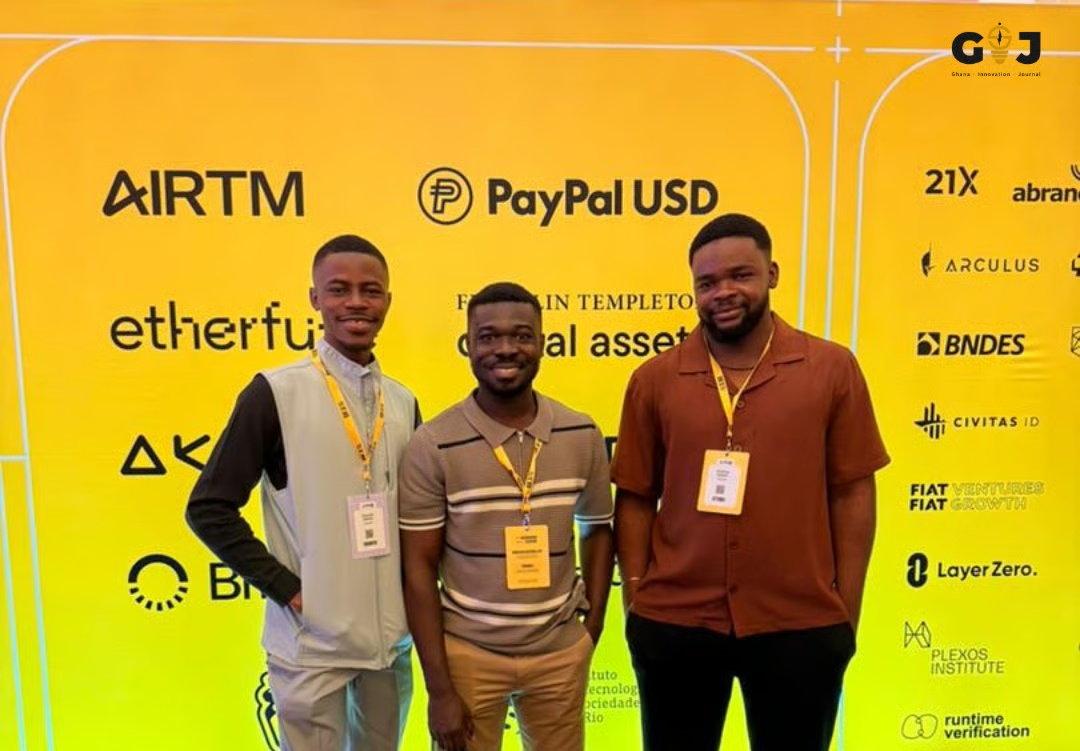
Forget the headlines screaming 'fintech raises crypto funds.' The real story with Ghana’s Seevcash bagging another $333K from the Stellar Community Fund (SCF) isn't about blockchain's inevitable triumph. It’s about a much more pragmatic, even audacious, dance between the future and the deeply entrenched present.
What actually happened? Seevcash, founded in 2022 by Dawuda Iddrisu, Charles Owusu, and Cosmos Appiah, just secured its fourth round of support from the Stellar ecosystem, bringing in $333,000. This Accra-headquartered, US-incorporated fintech specializes in low-cost cross-border payments and peer-to-peer money transfers for African diaspora communities. They claim over 25,000 users across five countries. The kicker? Alongside this funding, they've launched a Visa card, leveraging their existing partnership with MoneyGram, allowing users to spend their funds online and in person.
The Hybrid Hustle: Why This Matters Beyond the Numbers
Most news pieces would stop there, patting Seevcash on the back. But as founders, we need to peel back the layers. The interesting thing about this story is not merely that a Ghanaian fintech got some more cash. It is actually the stark revelation of how early-stage builders in Africa are navigating the treacherous waters of innovation and distribution, embracing a hybrid model that marries the promise of blockchain with the ironclad reality of traditional financial rails.

The human lens here is critical. Who does this affect? The African diaspora, tired of extortionate fees and sluggish transfers. For someone in New York sending money back home to their family in, say, Owerri or Akure, every dollar saved on fees is a dollar more in their loved ones' pockets. The "sapa realities" back home drive this demand. Seevcash is tapping into this fundamental pain point, but they're doing it with a curious blend of high-tech and old-school.
On one hand, you have Stellar, a blockchain network designed for fast, low-cost cross-border transactions. This provides the underlying infrastructure, the digital pipes. On the other hand, you have MoneyGram and Visa – two behemoths of global finance. MoneyGram offers a vast physical payout network, and Visa provides ubiquitous card acceptance. This isn't just a partnership; it's a strategic concession. It acknowledges that for all blockchain's promise, mass adoption requires meeting users where they already are, with trusted brands and familiar interfaces.
The Strategic Contradiction and the Real Moat
The core story here, the tension hiding in plain sight, is this strategic contradiction: a blockchain-native company leveraging the very centralized financial systems that blockchain was meant to disrupt. Why? Because the path to true utility, especially in remittances, isn't about ideological purity; it's about solving real problems for real people, whatever the underlying tech.
The strategy lens suggests Seevcash isn't trying to replace Visa or MoneyGram. They're trying to piggyback on their massive distribution and trust networks while using Stellar to optimize parts of their internal process, potentially lowering their own costs or enabling specific, faster transfer routes. This hybrid approach allows them to offer a "low-cost" solution while ensuring funds can actually be spent—a critical last-mile problem many crypto projects fail to solve. Imagine sending money home only for your mum in Jos to find out she can't easily withdraw it or use it for her daily needs. The Visa card directly addresses this.
But here’s the strategic challenge: If the real value is in the Visa card and MoneyGram partnership, what is Stellar's role beyond being a funding source and a backend rail? Is the "Stellar network" part of the messaging for funding/branding, or is it truly the un-copyable advantage?

For the builders, this means grappling with immense operational complexity. Integrating with Stellar requires specific blockchain expertise. Integrating with Visa and MoneyGram means navigating their extensive APIs, compliance requirements, and regulatory frameworks across multiple jurisdictions (Ghana, US, and the five other countries they operate in). This isn't trivial. It's a testament to the "no gree for anybody" execution spirit that defines African entrepreneurship. They're building a highly regulated, high-trust system on top of a relatively nascent technology, then plugging it into the oldest payment rails. That’s a tightrope walk.
The US incorporation is also a calculated move. It grants legitimacy, eases access to US-based diaspora funds, and positions them closer to major financial markets, albeit with increased regulatory scrutiny.
FOUNDER DIRECTIVE / ADVISORY SECTION
Alright, let's cut to the chase. You're building, you're hustling, and you see Seevcash doing something interesting. Here's my take.
The Short Answer
Seevcash's latest raise isn't just another crypto story. It’s a masterclass in strategic pragmatism: leveraging blockchain for backend efficiency and ecosystem funding, but leaning heavily on established financial giants (Visa, MoneyGram) for mass distribution and real-world utility in the fiercely competitive remittance market. Their future depends on making this hybrid approach truly seamless and cost-effective for the user.
What Is Really Happening
Seevcash is positioning itself as a pragmatic intermediary, not a disruptor in the purest sense. They're using the Stellar network as a technical backbone and a source of capital (SCF support), which is smart. But the real game-changer for their users and their immediate growth trajectory is the integration with Visa and MoneyGram. This provides immediate liquidity and spending power, solving the "last mile" problem that plagues many crypto-only remittance solutions. They’re building an on-ramp and off-ramp system that feels familiar to users, masking the underlying blockchain complexity. The 25,000 users across five countries, while a good start, also indicate the scale of the challenge in a market dominated by giants.
The Assumption I'd Challenge
The assumption I’d challenge is that Stellar, as the underlying blockchain, is Seevcash's primary competitive moat. While Stellar’s ecosystem support is clearly valuable for funding and provides a tech stack, the true moat, if they build one, will likely come from their ability to forge and maintain complex partnerships with traditional financial institutions (like Visa/MoneyGram) and their deep understanding of the diaspora's specific needs and trust networks. The blockchain provides a technical path; the partnerships and user trust provide the distribution and liquidity. If a competitor could replicate the Visa card integration and MoneyGram partnership without Stellar, does Seevcash still have an un-copyable advantage? That's the question.
The Strategic Options
- Deepen Stellar Integration & Differentiation: Focus heavily on unique features enabled only by Stellar that traditional systems can't easily replicate (e.g., fractional ownership, automated micro-payments, smart contract features for remittances). Use Stellar as a core differentiator, not just a funding source.
- Optimize Traditional Rail Leverage: Become the best-in-class integrator of blockchain with traditional rails. Focus on razor-thin margins, operational efficiency, and user experience for the hybrid flow. Your moat becomes the execution of these complex integrations and compliance.
- Community & Network Effects: Double down on building a strong, trusted community within specific diaspora segments. Leverage word-of-mouth and cultural affinity to create defensible user bases, regardless of the underlying tech stack.
- Target Niche Corridors: Instead of broad "African diaspora," focus on specific, high-volume, high-pain corridors where your hybrid model can demonstrate overwhelming superiority in cost/speed/access.
My Recommendation
My recommendation is for Seevcash to double down on Option 2: Optimize Traditional Rail Leverage while strategically building community (Option 3).
The market for "pure blockchain remittances" is still niche and regulatory-heavy. The immediate win is in providing a palpably better, cheaper, and more accessible service today, using whatever tech gets you there. The Visa card is a strong move in this direction. Your competitive edge will be your ability to manage the intricate operational dance between blockchain and traditional finance, offering a "low-cost" solution that feels as robust and reliable as Western Union, but significantly cheaper and faster. Use Stellar to streamline your internal costs, but let the user experience be defined by the ubiquity of Visa and the reach of MoneyGram.
What I Would Do Next
- Unit Economics Deep Dive: Get brutally honest about the true all-in cost per transaction using the hybrid model. How much margin is left after Visa, MoneyGram, and Stellar network fees, plus your own operational overheads (compliance, fraud, customer support)? "Low-cost" for the user needs to still be profitable for Seevcash.
- User Retention & LTV Analysis: With 25,000 users, analyze their behavior. What is their average transaction value? Frequency? What are the churn drivers? The money is in retention, not just acquisition.
- Compliance & Regulatory Roadmapping: With US incorporation and operating in five African countries, the regulatory burden is immense. Proactively map out compliance challenges for future expansion and ensure robust internal controls. One misstep here can sink everything.
- Distribution Channel Expansion (Non-Stellar Specific): While Stellar is a great partner, explore other scalable acquisition channels beyond their ecosystem. What are the most effective digital and offline channels to reach your specific diaspora communities?
What Would Change My Mind
If Seevcash presented compelling data showing that a significant portion of their 25,000 users are primarily attracted to and retained by unique, blockchain-native features of the Stellar network that cannot be replicated by traditional finance or other fintechs integrating with Visa/MoneyGram. If the switching costs for users away from their Stellar integration proved to be exceptionally high, then my view on Stellar as a primary moat would shift. Without that, it’s a smart funding/tech choice, but not the core strategic differentiator.

Related from Venture
Let's build your next big product.
Accepting project-based freelance, remote engineering roles, and hybrid positions.