Apple's New Sheriff: It’s Not About the iPhone, It’s About the AI Battleground
Forget the headlines about a new CEO at Apple. The real story is how John Ternus, a hardware veteran, is now steering the ship at a critical juncture where Apple *must* redefine its future in the high-stakes AI game, moving beyond Tim Cook's era of operational mastery.
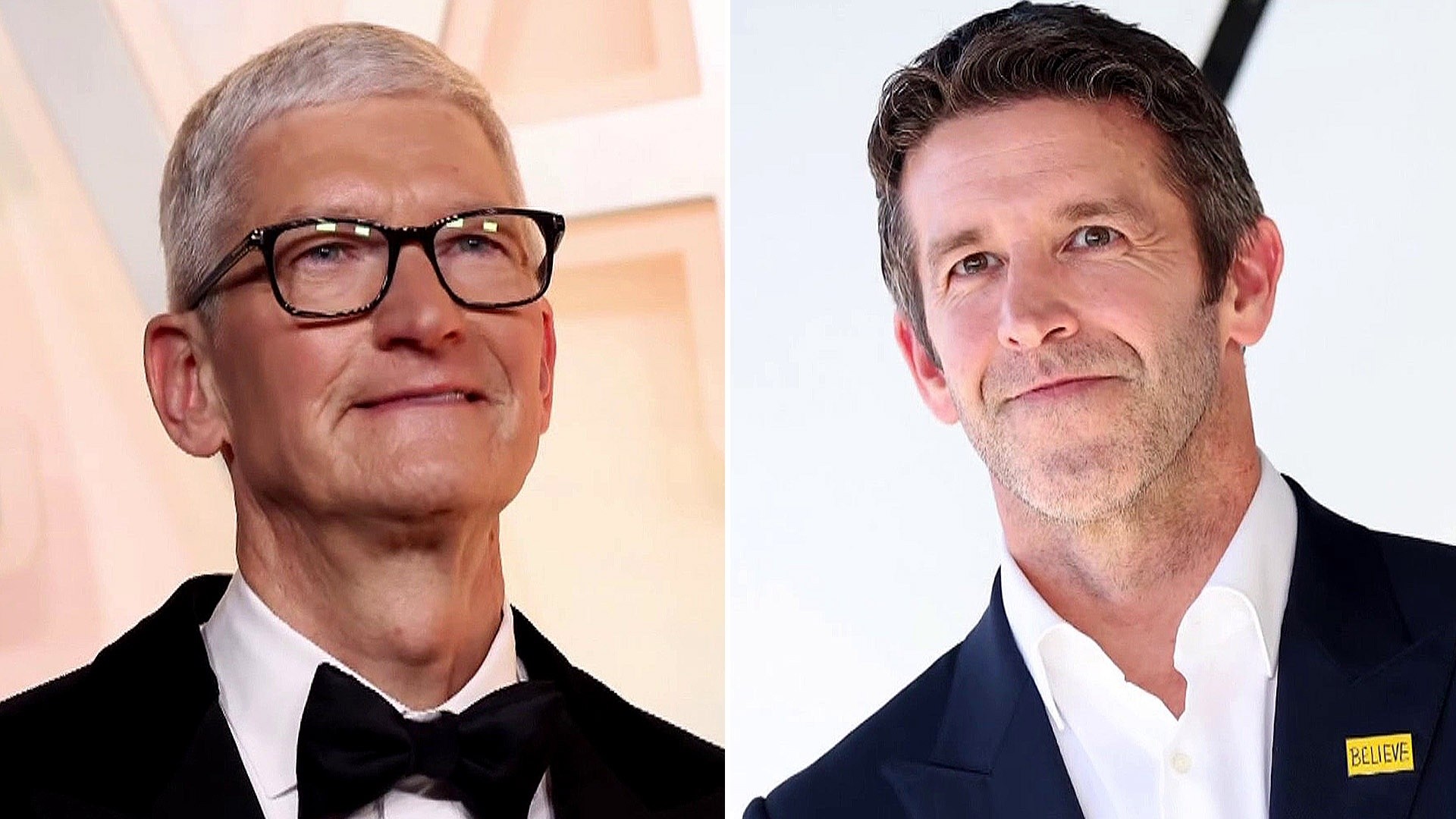
When the news hit on September 1, 2026, that John Ternus had officially taken the reins as Apple’s CEO, replacing the legendary Tim Cook, the initial reaction might have been, “So, what does this mean for my iPhone 18?” For a founder trying to scale a logistics startup from an office in Gbagada, or a developer coding late into the Jos cold mornings, the global tech behemoth's internal shifts often feel distant, yet their ripple effects are undeniable.
But here’s the thing: The interesting story about this change isn’t merely the passing of the CEO torch from Cook to Ternus. It is actually the profound, almost existential, strategic pivot Apple is now forced to make. This isn't just about a change of name on an org chart; it's a declaration of Apple's next battleground, and for founders, it’s a masterclass in strategic evolution.
Cook, who now moves into the Executive Chairman role, transformed Apple into an operational marvel. He inherited a company that revolutionized personal computing and music, and under his almost 15-year tenure, he perfected its supply chain, scaled its services, and turned existing products into an economic powerhouse. We're talking $416 billion in sales in 2025 and a market value exceeding $4.5 trillion. Cook’s genius was in optimization, making the machine run flawlessly and profitably.
The Builder Takes Charge
Enter John Ternus. His profile couldn’t be more different from Cook's. Ternus is a hardware executive, an engineer by trade, with over two decades at Apple. He's been deep in the trenches, shaping the iPhone, iPad, Mac, Apple Watch, and AirPods. Crucially, he oversaw the pivotal transition to Apple silicon in the Mac – a testament to his ability to execute complex, foundational product shifts.
So, what does this actually mean for the products you use? The immediate impact? Minimal. Your iPhone 17 (or whatever iteration you're holding) won’t suddenly develop new superpowers overnight. Apple’s product roadmaps are laid out years in advance, and those dedicated teams will keep churning out updates and support.
The real shift, the second story, is in Apple’s strategic focus, especially in the red-hot arena of Artificial Intelligence.
The AI Imperative: A Sapa Moment Apple Can’t Afford
Apple has been playing a cautious game with AI. While competitors are launching new chatbots and generative AI features at a bewildering pace, Apple’s "Apple Intelligence" rollout has been, as the source notes, "more cautiously" executed. Siri, bless its heart, has often felt like that one well-meaning relative who struggles with context and simple tasks. It's an opportunity that has, for too long, felt like a perpetual challenge.
Ternus takes over at a moment where Apple can no longer afford to be merely 'cautious' or 'deliberate' in AI. The market is a hungry lion, and consumers' expectations for truly intelligent, integrated experiences are skyrocketing. For a developer in Akure building an AI-powered agricultural solution, or a fintech founder in Lagos leveraging machine learning for credit scoring, the message from Silicon Valley is clear: AI isn't a feature; it's the foundation.
Apple’s approach, as the article suggests, isn't just about slapping another chatbot onto iOS. It’s about deeply embedding AI into the operating system, connecting it to the apps and devices you already use, all while steadfastly holding onto its privacy-first stance. This is a formidable engineering and architectural challenge. Imagine Siri, not just setting a timer, but understanding your schedule, messages, and preferences to proactively manage multi-step tasks – like booking a ride to an event based on your calendar and current traffic, all without you explicitly asking for each step.
This is where Ternus's hardware and engineering background becomes critical. Building deeply integrated, privacy-preserving AI requires an understanding of the entire stack – from silicon to software, from user interface to cloud services. Cook optimized the present; Ternus must now define Apple's future in an AI-dominated world. This is about ensuring Apple isn't left behind, watching competitors build the next generation of user experiences.

The big question isn't whether your next iPhone will have more AI – it almost certainly will. The real strategic inquiry, for Apple and for every ambitious founder out there, is: What will that AI actually do? How will it fundamentally change user behavior and create new value, not just add another gimmick?
For any Nigerian founder operating in a competitive, fast-moving market, this Apple leadership transition is a stark reminder: you may inherit a functional machine, but the relentless pace of innovation means you must constantly be asking, "What comes next? What's the real problem we're solving, and how will technology fundamentally shift how we solve it?" It's a "no gree for anybody" mindset applied to core product strategy.
The Short Answer
John Ternus as Apple's new CEO signals an urgent, product-led strategic pivot towards deeply integrated, privacy-centric AI, moving beyond Tim Cook's era of operational perfection to define Apple's next phase of innovation.
What Is Really Happening
This isn't just a leadership change; it's a strategic realignment by Apple to address the most critical technological shift of our decade: Artificial Intelligence. Tim Cook’s incredible run focused on refining existing products, expanding services, and optimizing an unparalleled supply chain, turning Apple into a financial juggernaut. Ternus, a deeply technical hardware and product leader, is now tasked with pivoting this massive ship towards an AI-driven future, where Apple's long-standing strengths – hardware-software integration and a fierce commitment to privacy – are leveraged to deliver a distinct and defensible AI experience. The goal is to move Siri and "Apple Intelligence" from incremental improvements to foundational, context-aware, multi-step assistance built directly into the OS.
The Assumption I'd Challenge
The assumption I'd challenge, both for Apple and for founders, is that existing strengths automatically translate to future dominance. While Apple's operational efficiency and ecosystem lock-in under Cook were formidable, the rise of powerful, accessible AI tools from competitors presents a genuine threat to its perceived innovation leadership. For founders, merely optimizing what you have might feel productive, but if the market fundamentally shifts due to a new technology (like AI), those optimizations can become irrelevant. The bigger risk for Apple wasn't that Cook would fail, but that his operational genius might inadvertently mask the need for a radical, product-led reinvention in AI.
The Strategic Options
- Double Down on Integrated, Privacy-First AI (Current Path): Continue Apple's measured, internal development of AI deeply integrated into iOS/macOS, leveraging their silicon and privacy controls. This is Ternus's apparent mandate. Pros: Differentiates Apple, maintains control, builds on core strengths. Cons: Potentially slower to market, risks being outpaced by more agile, less privacy-constrained competitors.
- Aggressive AI Acquisitions & Partnerships: Accelerate AI capabilities by acquiring leading AI startups or forming significant partnerships. Pros: Rapid injection of talent and tech, reduces time to market. Cons: High acquisition costs, integration challenges, potential dilution of Apple's unique privacy stance or brand.
- Open Up the AI Ecosystem: Provide more hooks and APIs for third-party developers to integrate their advanced AI models and services directly into Apple devices/Siri. Pros: Faster scaling of AI functionality, leverages external innovation. Cons: Risks diluting control over user experience, potential security/privacy concerns, surrenders some strategic control.
My Recommendation
My recommendation for Apple is to pursue Option 1 (Double Down on Integrated, Privacy-First AI) but with a significantly accelerated internal velocity and a radically transparent communication strategy. Ternus's technical background makes him uniquely suited for this. Apple's moat has always been its seamless hardware-software integration and user trust around privacy. Abandoning this for a quick, generic AI play would be a strategic blunder. The challenge is not if to do it, but how fast and how effectively to execute on this vision without falling behind the industry's rapid pace.
What I Would Do Next
If I were John Ternus:
- Define the "Apple AI" North Star: Articulate 3-5 specific, game-changing AI capabilities that only Apple, with its integrated stack and privacy controls, can deliver. This vision needs to go beyond "smarter Siri" and into fundamental shifts in how users interact with their devices and digital lives.
- Accelerate Internal R&D: Funnel significant resources and empower specific "tiger teams" with direct access to me to develop these core AI capabilities. Cut through internal bureaucracy.
- Proactive Communication: Clearly communicate Apple's unique AI vision to developers and consumers. This isn't just about marketing; it's about signaling confidence and providing a roadmap.
- Embrace Incremental Wins, Plan for Leaps: While the long-term goal is foundational AI, deliver noticeable, useful AI improvements with each major software release to build momentum and user confidence.
If I were a founder in Nigeria (e.g., in the Akure tech scene):
- Study Apple's Integration Strategy: How does Apple plan to integrate AI into its entire ecosystem, rather than as a standalone feature? This "system-level thinking" is crucial for any product.
- Privacy as a Differentiator: If Apple is betting on privacy-first AI, can my startup leverage local nuances around data privacy and trust as a competitive advantage in the Nigerian market?
- Focus on "What Comes Next": Regularly challenge my team on "What's the next big shift that could disrupt our current offering?" and "Are we building for the present or the inevitable future?" Don't get comfortable.
What Would Change My Mind
My recommendation for Apple to lean into its unique, privacy-first integrated AI would change if:
- A competitor demonstrates a truly ubiquitous, context-aware, and provably private AI experience that achieves mass adoption before Apple, thereby eroding Apple's key differentiator and trust.
- Apple's internal AI development continues to be perceived as incremental and lagging, indicating an inability to execute on the ambitious integrated vision, forcing a re-evaluation towards more aggressive external strategies like major acquisitions.
- User sentiment shifts dramatically away from privacy concerns in favor of raw AI capability, regardless of data usage, which would fundamentally alter the market's priorities. This is a hypothesis, not a fact, but one to watch closely.
Related from Nigeria
Let's build your next big product.
Accepting project-based freelance, remote engineering roles, and hybrid positions.