The Industrialization of Infallible Code: Why Your Protocol Security Needs a Platform, Not a Lab Coat
Forget static security audits. A new wave of tools is dragging formal protocol verification from academic labs into your CI/CD pipeline and real-time operations, fundamentally shifting how we build trust into our systems.
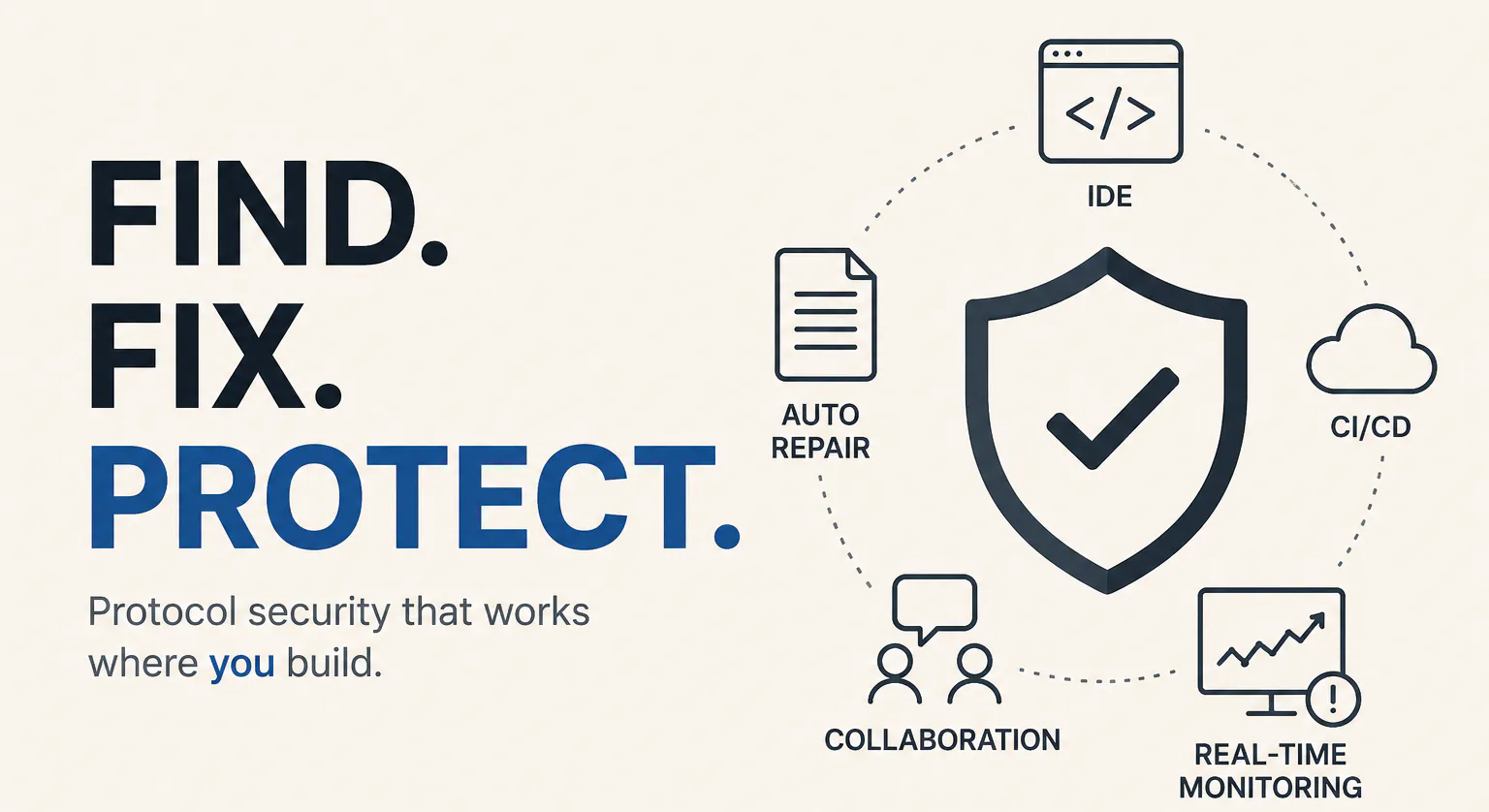
Alright, founders, builders, and developers. Listen up. Ivan Luzgin, a young founder, is talking about something that sounds a bit like an academic pipe dream: making formal protocol verification — the kind that proves a system is mathematically secure — actually usable in the wild. But this isn't just about a new tool; it’s about a seismic shift in how we approach security engineering itself.
The interesting thing about this story is not merely that someone built a faster security analyzer. It is actually that this project, and others like it, are forcing the industrialization of deep, theoretical security methods, moving them from the ivory tower into the trenches of daily development and even into live production environments. This isn't just "shift left" for security; it's embedding an entirely new security intelligence layer directly into the nervous system of your applications.
The Lab Coat Problem in Your Pipeline
For too long, the most rigorous security tools — like ProVerif or Tamarin for formal protocol verification — have been locked away. They're like those incredibly powerful, but finicky, machines you only see in university labs. PhD students, bless their hearts, can spend days crafting models in arcane DSLs, running analyses, and poring over terminal outputs. That's fine for a thesis. It's completely useless when your payment gateway needs to ship securely by end of quarter, and your security engineer is juggling five other fire drills.
The core problem, as Luzgin points out, isn't that these tools can't prove security properties; it's that they don't live where you live. They sit outside your CI/CD, outside your IDE, outside your deployment workflows. They're an afterthought, a manual check, an audit that happens after the design, before shipping, and almost never during development or, God forbid, after deployment. This is the equivalent of building a whole high-rise in Onitsha, then bringing in a structural engineer to check the foundations after the first tenants move in. Madness.
From Instrument to Industrial Platform: The Mechanics
Luzgin’s team is building an analyzer aiming for a 10x to 50x speedup, targeting sub-ten-minute analysis times for real-world protocols. That's not just an improvement; that’s a step change that makes integration possible. Imagine a tool that takes six hours to run; it’s a non-starter for CI. One that takes six minutes? That’s another test suite.
Here’s how they're pulling these advanced academic concepts into your daily workflow:
CI/CD Integration: Verification on Every Commit. This isn't just a static analysis tool bolted on; it's a formal verifier running as a GitHub Action. Every time your protocol description changes – a new message, a modified key exchange – it runs. If it finds a vulnerability, the action fails. You get a concrete attack trace and a proposed fix. This isn't some theoretical "may have a bug"; it's "here's how your system breaks, and here's how to patch it." This is crucial for founders who understand that prevention is always cheaper than a post-breach fire sale.
IDE Integration: Find Vulnerabilities While You Write. This is where developer experience (DX) truly shines. An LSP (Language Server Protocol) implementation means your VS Code editor understands your protocol DSL. Syntax highlighting, inline error reporting as you type, hover documentation for security properties, one-click analysis. Think
rust-analyzerfor your security protocols. The system is telling you, "Hey, that key exchange step you just defined? Not authenticated properly. Fix it now." This flags vulnerabilities before you even commit the code, not after it's baked into your Git history. This is like a second brain, ensuring you don't even think about building a door without a lock.Real-Time Analysis: The Daemon and the Sniffer. This is the part that moves beyond "tool" and screams "platform." The analyzer runs as a background daemon with a gRPC API. Any service can query it. But it goes deeper: a sniffer module captures live network traffic (PCAP), reconstructs protocol sessions, and feeds them to the analyzer. This means it can detect deviations from your defined secure protocol in real-time production traffic. It's no longer just verifying your design; it's verifying your actual deployed behavior. This is like having eyes and ears in every Owerri bus park, making sure every package delivery follows the strict manifest.

Why This Matters for Founders
This isn't just about faster bug hunting. This is about establishing an unbreakable chain of security verification from design, through development, to deployment, and into live operations.
- Market: The pain of protocol-level vulnerabilities is immense. Think TLS, authentication, key exchange. These are foundational. A platform that reduces this risk dramatically reshapes trust.
- Product: The frequency of security issues is high. Existing alternatives are either manual, slow, or less rigorous. The real-time sniffer is a game-changer, offering continuous validation.
- Business Model: This isn't a one-off consultancy gig. This lends itself to a SaaS model – per-developer, per-repo, or usage-based, with premium features for advanced analysis, compliance, or deeper operational insights.
- Competition: Competitors will be the traditional formal methods tools (too academic), generic SAST tools (not deep enough), and manual audits (too slow, error-prone). The un-copyable advantage here is the combination of formal rigor + speed + full lifecycle integration + real-time monitoring.
- Distribution: Smart move. GitHub Actions and IDE extensions are direct taps into developer workflows.
- Operations: Running and managing such a system – both the high-performance analyzer and the distributed sniffer daemons – is no small feat. It requires robust engineering.
- Technology: Leaning on GNNs for speed and modular crate design (likely Rust, given the
rust-analyzercomparison) means a focus on performance and correctness, which is non-negotiable for security.
FOUNDER DIRECTIVE / ADVISORY SECTION
Alright, let's cut to the chase. If you're building anything that relies on secure protocols – fintech, Web3, IoT, critical infrastructure, or even just robust authentication for your SaaS – this isn't a "nice to have."
The Short Answer
Ivan Luzgin is dragging advanced formal verification out of academia and into your daily dev pipeline and live ops, offering unprecedented, continuous protocol security assurance. It's a fundamental shift from auditing for security to building security in.
What Is Really Happening
We're witnessing the industrialization of complex security science. The gap between theoretical robustness (what formal methods can prove) and practical applicability (what developers can use daily) is rapidly closing. This move means security isn't just a gate at the end, but an intelligent co-pilot through every stage of development and deployment. This is the maturation of "security by design" into a tangible, executable strategy. No more "I hope this works" — it's "I know this works, because the math proves it."
The Assumption I'd Challenge
The article assumes that the operational overhead of deploying and managing a background daemon with a sniffer for live traffic will be easily accepted by all companies. While highly desirable, integrating a system that captures and analyzes live PCAP data raises serious questions about data privacy, compliance (GDPR, NDPR, etc.), performance impact on production systems, and the trust required to run such a deep-level monitoring tool. For many companies, especially those dealing with sensitive customer data, this is not a trivial decision and will require a robust story around data handling, minimal performance impact, and enterprise-grade operational stability. The security engineer in Gbagada wants the insights, but the compliance officer won't just wave it through without serious questions.
The Strategic Options
- Early Adopter / Integrator: If your product's security relies heavily on correct protocol implementation (e.g., payment systems, blockchain, secure messaging), be an early adopter. Integrate this type of platform aggressively to differentiate on security. This makes your "security story" truly evidence-based.
- Wait and See / Fast Follower: For less security-critical applications, or if you have limited dev resources, monitor the space. Once these tools mature and become more standardized, integrate. The key here is not to be too late.
- Build Your Own (Cautiously): If you have extremely unique protocol needs and deep in-house formal methods expertise, you could try to replicate this. But given the complexity of GNNs, formal methods, and building a full lifecycle platform, this is a very high-risk, high-cost option. In Sapa realities, building your own here is almost certainly a fool's errand.
- Influence the Standard: For platform builders (e.g., cloud providers, large enterprises), engage with these developers. Help shape the APIs, integrations, and operational requirements so that such tools seamlessly fit into existing enterprise security frameworks.
My Recommendation
For any founder building a product where trust and data integrity are paramount, you need to lean into this platform shift immediately. This isn't just about finding bugs; it’s about architecting systems that are provably secure. The cost of a breach, both financial and reputational, far outweighs the investment in adopting these new-generation tools. This allows you to stand firm and say "No gree for anybody" when it comes to protocol vulnerabilities.
What I Would Do Next
- Deep Dive into Use Cases: Understand exactly which protocols within your stack are most critical and could benefit from this level of rigorous, continuous verification.
- Pilot Program: Identify a high-value, high-risk protocol within your system for a pilot. Work with your engineering and security teams to evaluate the tool's impact on development speed, bug detection rates, and overall security posture.
- Address Operational & Compliance Concerns: Before widespread deployment of the real-time sniffer, have clear answers on data handling, performance overhead, privacy implications, and how it aligns with your regulatory obligations. This is the biggest hurdle to full adoption.
- Budget for Security Culture Change: Implementing a tool like this means a shift in how developers interact with security. Budget for training and internal advocacy to ensure widespread adoption and understanding.

What Would Change My Mind
If the claimed 10x-50x speedup proves to be theoretical in real-world, complex protocols (e.g., running hours, not minutes). Or if the operational complexity and performance overhead of the real-time daemon are too high for production environments, making it more of a theoretical platform than a practical one. Additionally, if the cost of integration (learning curve, model creation) remains prohibitively high despite the DX improvements, it risks remaining a niche tool. But from the looks of it, Ivan Luzgin is on the right track here, closing a critical gap in the security lifecycle.
Related from Tech
Let's build your next big product.
Accepting project-based freelance, remote engineering roles, and hybrid positions.