The Invisible Tax: Why Nigerian Phone Privacy Isn't Just a User Problem, It's Your Startup's Biggest Security Debt
Forget just telling users to lock their phones. If you're building in Nigeria, the widespread privacy vulnerabilities of your customers aren't just *their* problem—they're an active threat to your product's trust, growth, and very survival.
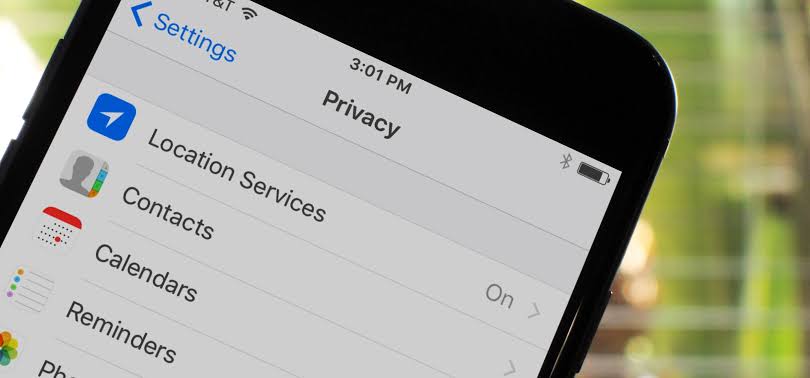
When TechCityNG drops an article titled "Phone Privacy Settings in Nigeria: 12 Settings You Should Turn On in 2026," most people probably skim it, nod along, and maybe adjust a setting or two. Good for them. As a founder, however, you should read this not as a tech support checklist for your auntie, but as a strategic alarm bell.
The interesting thing about this story is not merely that Nigerian smartphone users need to be more careful with their data. It is actually how the widespread, almost systemic, vulnerability of the average user to cybercrime—from phishing to SIM-related fraud—creates an invisible tax on every single tech founder and builder in this market. This isn't just about individual security; it's about the foundational trust required for any digital product to thrive.
Think about it: Your users, from the spirited entrepreneur in Onitsha to the young developer hustling in Gbagada, are carrying around devices that, for many, are digital open secrets. The article points out basics like strong screen locks, "Find My Device" enabled, and carefully vetting app permissions for location, mic, and camera. It also hits on the absolutely non-negotiable two-factor authentication (2FA) and hiding sensitive lock screen notifications. These aren't advanced cyber ops; these are "digital hygiene 101." Yet, the very fact that these need to be explicitly listed in 2026 for a savvy tech audience tells you everything you need to know about the current state of affairs.

The Asymmetry of Risk and the Founder's Burden
Here's the rub: While a user's failure to enable a strong PIN or 2FA might seem like their problem, it quickly becomes your problem.
LENS: THE HUMAN LENS Who does this affect?
- Users: They bear the immediate brunt of lost funds, identity theft, and the deep, unsettling feeling of violation. The "sapa realities" hit harder when it's your hard-earned cash gone due to a sloppy PIN.
- Founders & Developers: This creates a pervasive atmosphere of mistrust in digital services. Every time someone gets scammed, it's not just a blow to that individual; it's a chip off the collective trust in the digital ecosystem. Your carefully crafted fintech solution, your innovative e-commerce platform, or your productivity app—they all suffer from this ambient skepticism. Users become hyper-vigilant, often to the point of being risk-averse, making onboarding harder and increasing churn.
LENS: THE STRATEGY LENS Why is this happening? The incentives are stark. Scammers are highly motivated by the lucrative returns of digital fraud, often leveraging social engineering tactics that exploit human trust and digital illiteracy. For users, the incentive for convenience often outweighs the perceived immediate need for robust security. For founders, the incentive is to grow, but this growth is now happening on a battlefield riddled with landmines laid by opportunistic cybercriminals. This isn't just about user data; it's about the very economic viability of your business in a high-fraud environment. Your unit economics are silently eroded by the costs of fraud detection, customer support for compromised accounts, and the indirect cost of slower user acquisition due to a general lack of digital trust.
Consider the explicit mention of 2FA and the advice to favor authentication apps over SMS codes because "phone-number-based authentication can have weaknesses." This is a direct shot across the bow for any service relying solely on SMS OTPs. It's a reminder that even "better than nothing" security often isn't good enough against sophisticated Nigerian cybercriminals who are adept at SIM-swap attacks and social engineering to intercept codes.
LENS: THE BUILDER LENS How does this actually work in the real world? This report should force you to re-evaluate your security architecture and user onboarding flows.
- Are you making 2FA not just optional, but default or highly encouraged with minimal friction?
- Are your error messages and security prompts clear enough for someone who might not understand what "phishing" means, but understands "your money is at risk"?
- How do you educate users on the necessity of these basic phone settings without sounding patronizing or creating an onboarding barrier?
- What's your plan for account recovery when a user's phone itself is compromised, not just their password? This is an operational nightmare.
Building tech in Nigeria means building for resilience against a unique, highly evolved threat landscape. It means assuming your users might click on that dodgy link, reuse passwords, or not understand the difference between 'Always' and 'While using the app' for location access. It means "no gree for anybody" also applies to the sophisticated scammers trying to compromise your customers' devices.

The solution isn't just about technical fixes; it's about product design, user education, and embedding security as a core value, not just a feature or a compliance checkbox. The faster you confront this invisible tax, the stronger your foundation will be.
The Short Answer
Widespread user vulnerability to phone-based cybercrime in Nigeria is not just a personal privacy issue; it's a foundational challenge that actively erodes trust, increases operational costs, and hinders growth for every founder and digital product in the market.
What Is Really Happening
Nigerian users are operating smartphones with basic privacy settings often neglected or misunderstood, leaving them exposed to sophisticated local cybercriminals. The TechCityNG article outlines critical, yet elementary, protections (like strong locks, 2FA, careful app permissions) that are frequently ignored. This translates into a high incidence of fraud, account takeovers, and data breaches at the individual level. For founders, this user-level insecurity directly impacts your business by creating a market-wide trust deficit, complicating customer acquisition, increasing fraud-related operational overheads, and devaluing the digital economy. It's an externality you cannot afford to ignore.
The Assumption I'd Challenge
The assumption I'd challenge is that "security is the user's responsibility" or "security is purely a backend technical problem." You may be optimizing for the wrong metric if you're only focused on preventing breaches within your own system while ignoring the porous perimeter of your users' personal devices. The bigger risk isn't just your database getting hacked; it's your user's entire digital life being compromised, leading directly to their account on your platform being taken over. This demands a holistic view of security that extends beyond your app's code.
The Strategic Options
- Passive Reliance: Continue to rely on users to manage their own device security and only react to incidents. (High risk, low cost, unsustainable.)
- Product-Embedded Security: Design your product to actively guide, educate, and even enforce higher security standards for your users, regardless of their device settings. (Moderate risk, moderate cost, builds trust.)
- Ecosystem-Level Advocacy & Education: Beyond your product, invest in broader digital literacy and security education campaigns, perhaps collaboratively with other founders or industry bodies. (Lower direct risk, higher indirect cost, strengthens entire market.)
My Recommendation
Product-Embedded Security (Option 2) with elements of Ecosystem-Level Advocacy (Option 3). You cannot wait for users to become cybersecurity experts. Your product must be designed to be resilient to the realities of the Nigerian digital user. Make security simple, explain its importance in local context, and push defaults that protect your users from themselves (and from the determined scammers). Proactively educate, simplify 2FA, and build robust account recovery processes that anticipate device-level compromises. This builds a defensible moat of trust.
What I Would Do Next
- Audit User Security Friction: Map out your entire user journey, from onboarding to daily use, specifically looking for points where security is optional, complex, or easily bypassed. Prioritize simplifying and strengthening 2FA implementation.
- Run User Research on Security Behavior: Conduct interviews and surveys with your target users in their natural environment (e.g., Gbagada workstations, Owerri bus parks) to understand their actual security practices, common pitfalls, and their perceptions of risk. Ask them about their experiences with fraud.
- Integrate Contextual Security Education: Instead of generic security tips, embed small, hyper-local, and highly relevant security nudges within your product. For example, when they set a PIN, show examples of weak PINs common in Nigeria (birth years, 0000). When requesting location, explain why and what value it provides.
- Review Incident Response Protocols: Ensure your team is fully prepared for account takeovers resulting from user device compromises (e.g., SIM swaps, stolen phones, phishing that gives access to their entire device). This goes beyond password resets.
What Would Change My Mind
If robust, device-level security became a default, enforced by mobile OS vendors and telecom providers, significantly reducing the surface area for common attacks like SIM swaps and basic data exfiltration. Or, if there was a dramatic, measurable increase in nationwide digital literacy and adherence to basic privacy settings, backed by solid, unbiased data. Until then, assume the user is vulnerable, and bake that into your strategy.
Related from Nigeria
Let's build your next big product.
Accepting project-based freelance, remote engineering roles, and hybrid positions.