Nigeria's Keke EV Revolution: A 100,000-Vehicle Waitlist, Or A 100,000-Vehicle Bottleneck?
Nigeria's EV conversion startups are swamped with demand from drivers escaping crippling petrol costs. But the yawning gap between a 100,000-strong waitlist and barely 300 conversions reveals a far deeper strategic puzzle: scale.
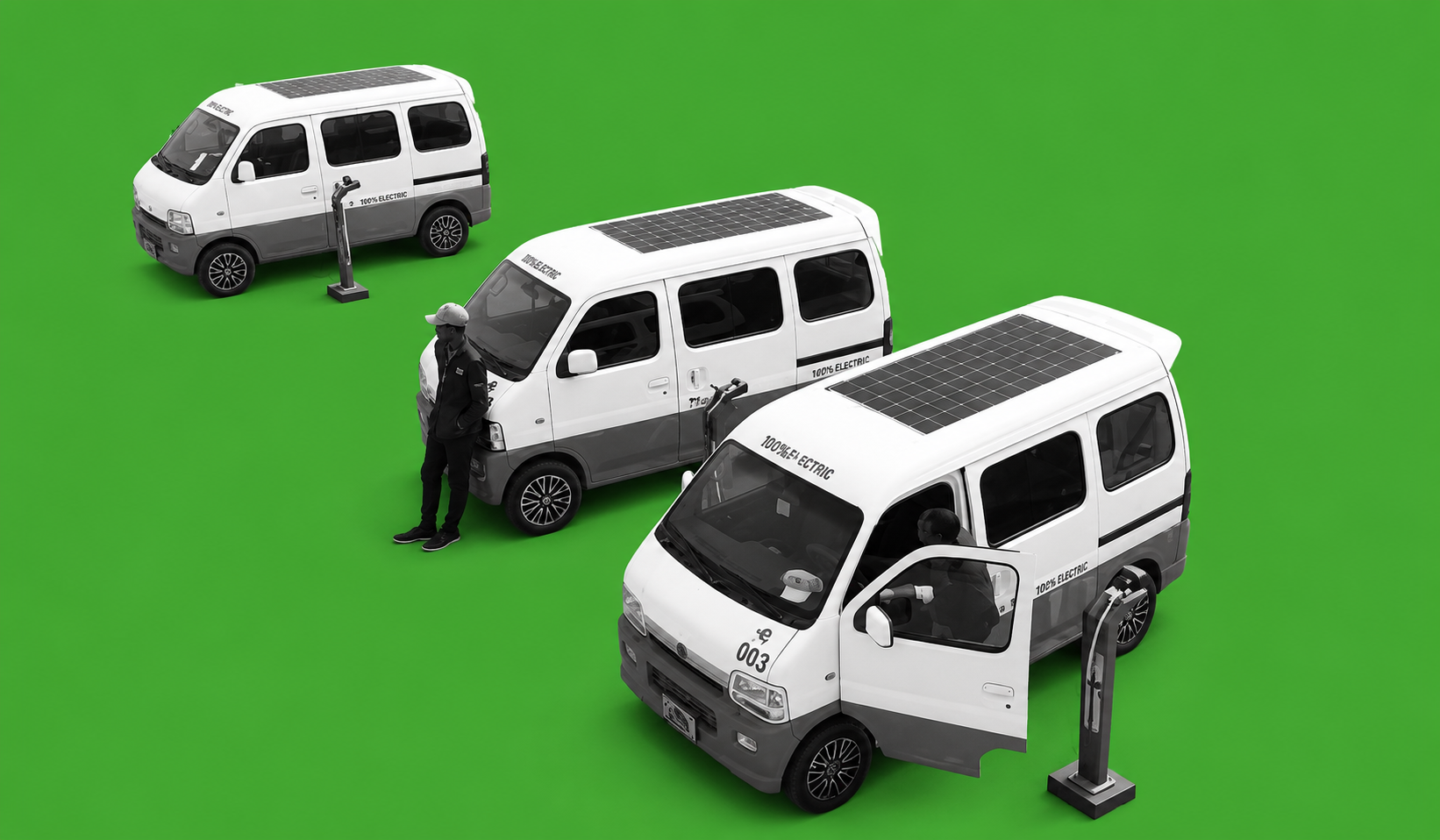
The most interesting thing about Nigeria's nascent EV conversion scene isn't the ingenuity of turning petrol kekes into electric ones. It's the stark, brutal tension between a reported 100,000-vehicle waitlist and a mere 300 actual conversions. That isn't just an opportunity; it's a flashing red light on the operational complexity and capital intensity of truly scaling this model.
The Problem: When Fuel Prices Punch Above the Belt
Let's not mince words: for Nigeria's commercial transport operators, the mid-2023 fuel subsidy removal was a gut punch. Petrol prices shot from NGN 185 to NGN 1.3K per litre. For a keke driver in Lagos, buying fuel every single day, this wasn't an inconvenience; it was a threat to their livelihood, their very ability to put food on the table. This isn't just about economic models; it's about survival.
This creates a massive market pain (LENS 1: NEWS, LENS 2: HUMAN). The average driver is experiencing 'sapa' (hardship) directly tied to operational costs. This immediate, persistent pain is the rocket fuel for demand for any viable alternative.
The Promise: EV Conversions as an Escape Hatch
Enter the startups: Swap, Ecowaka, Mataji Express. Their pitch is simple and compelling: convert your petrol-guzzling keke to electric, slash your running costs by 30-45%, eliminate engine maintenance, and boost your daily profit. Swap reports a driver generating NGN 16K profit after 14 trips, with battery swaps costing NGN 3K. These are numbers that make a commercial operator's ears perk up.
The appeal is undeniable. A Lagos driver, freed from persistent engine problems and exorbitant fuel costs by Swap's free conversion, now simply swaps a dead battery for a charged one in under two minutes, twice a day. This is a powerful, tangible benefit.

The Puzzle: Demand vs. Delivery
Here's where the rubber meets the road, or rather, where the rubber can't meet the road because there aren't enough converted kekes. Swap claims 300 conversions, but a 100,000-vehicle waitlist. This isn't just a gap; it's a chasm (LENS 4: STORY). Why? Because converting old fuel vehicles to EVs, while simple on paper ("ripped out the old piece of junk and replaced the engine with an electric motor"), is "brutally complicated in practice."
This "brutally complicated" aspect is where our strategic understanding must deepen (LENS 6: BUILDER, LENS 5: STRATEGY).
- Operational Bottleneck: Each conversion requires skilled labor, sourcing specific components (motors, batteries, controllers, wiring harnesses), quality control, and testing. It's a bespoke engineering job, not a commodity assembly line, at least not yet. Scaling from 300 to 100,000 means building an industrial-grade conversion facility, training thousands of technicians, and managing a complex supply chain – often for parts that might be imported.
- Capital Intensity: "Free conversions" like Swap's are unsustainable without massive, continuous funding. Even paid conversions (NGN 1.6M-2.3M) are significant investments for drivers, requiring flexible financing. Startups like Ecowaka partnering with Rivy (a climate-finance firm leveraging BNPL) directly address this, signaling that the upfront cost is a major barrier.
- Infrastructure: Battery swapping stations are key to the operational efficiency for drivers. Building out a robust network (like Swap's in Magodo) requires land, charging infrastructure, battery inventory, and operational staff. This is a network effect play, demanding significant upfront investment before critical mass is reached.
- Standardization & Local Content: Mataji Express, partnering with NADDC and aiming for 40% local content, is attempting to tackle the long-term scalability and cost reduction challenge. Importing and assembling is a good start, but true scale and cost efficiency will come from robust local manufacturing and standardization, reducing reliance on volatile global supply chains.
The Different Plays in the Game (LENS 5: STRATEGY)
Each startup is trying to carve out a strategic advantage:
- Swap: Focus on free conversions (customer acquisition at any cost?) and a nascent battery swapping network. This feels like a land grab for market share, betting on future monetization.
- Ecowaka: A hybrid approach – selling new electric tricycles (NGN 2.6M) and offering conversions (NGN 2.3M). Their partnership with SiAECOSYS (powertrain solutions) and Rivy (flexible financing) shows a comprehensive strategy to tackle both technology and accessibility. This is about building a full ecosystem.
- Mataji Express: Leaning into government partnerships (NADDC), import/assembly, and a strong local content push. Their current conversion cost (NGN 1.6M) is lower, driven by a focus on localizing production. This could give them a long-term cost advantage and regulatory goodwill.
What's clear is that the "product" isn't just the converted vehicle; it's the entire ecosystem of conversion, financing, charging, maintenance, and reliable energy supply. This is a holistic problem.
FOUNDER DIRECTIVE / ADVISORY
The Short Answer
The Nigerian EV conversion market is booming with demand fueled by crippling petrol prices, but the actual conversion rate lags massively due to severe operational, technical, and capital bottlenecks. The 100,000-vehicle waitlist is a siren song, but also a stark warning about the current inability to scale.
What Is Really Happening
We're witnessing a perfect storm of immense market pain meeting emerging technological solutions. Drivers are desperate, and these startups are offering a tangible way out. However, the conversion process itself is a complex manufacturing and engineering challenge, not a simple swap. Scaling requires establishing industrial-grade facilities, securing reliable supply chains for components (many still imported), building charging/swapping infrastructure, and solving the financing hurdle for individual owners. The "brutally complicated" reality means each successful conversion is a small victory, not yet a repeatable, highly scalable process.
The Assumption I'd Challenge
The assumption I'd challenge is that the demand for conversions equates to validated market readiness for scaled supply. The 100,000 waitlist looks like pure market validation, but it doesn't account for the current systemic inability of the supply side to meet it. It's like having a million people wanting to buy iPhones, but only a hand-built boutique can produce ten a month. The challenge isn't demand generation; it's industrializing a complex retrofit operation in a low-margin, high-volume market.
The Strategic Options
- Industrialize the Conversion Process: Focus heavily on process engineering, modular design for conversion kits, lean manufacturing principles, and training a specialized workforce. This means investing heavily in facilities and standardizing the retrofit.
- Vertical Integration (or Deep Partnerships): Control more of the supply chain, especially battery production/management and critical motor components. Mataji's local content push and Ecowaka's partnership with SiAECOSYS are steps here. This reduces dependency and cost.
- Finance as a Service: Make financing the cornerstone. Ecowaka's Rivy partnership is smart. For this market, the asset (the converted keke) needs to be the collateral. This could even evolve into a 'Vehicle-as-a-Service' model where drivers lease, not own, the converted vehicle and batteries.
- Specialization: Instead of doing everything, one player could focus solely on financing, another on component supply, another on battery swapping infrastructure, and others on conversion itself. This would require ecosystem coordination, which is difficult.
My Recommendation
For any founder in this space, my recommendation is to ruthlessly focus on unit economics and operational scalability, with financing as a core, integrated offering.
- Standardize and Modularize: Break down the conversion into repeatable, modular steps. Can you pre-assemble certain components? Can you design kits that fit a range of keke models with minimal customization?
- Own the Energy: The battery is the heart of the EV. Whether through direct ownership of battery swapping stations or deep partnerships, control the energy flow and its cost. This is where recurring revenue and customer lock-in truly live.
- Build a Financing Engine: The NGN 1.6M-2.3M cost is a hurdle. Integrate a robust, flexible financing solution that understands the daily cash flow realities of keke drivers. This means collateralizing the asset, managing repayments effectively, and understanding the credit risk of this segment.
What I Would Do Next
If I were leading one of these startups, my immediate next steps would be:
- Pilot Factory/Conversion Hub: Set up a single, highly optimized conversion hub in a strategic location (e.g., a major transport hub in Lagos or Onitsha) that can demonstrably scale from current numbers to, say, 100 conversions a month. Document every step, identify bottlenecks, and develop SOPs.
- Supply Chain Lock-In: Secure agreements with component suppliers (both foreign and local) for consistent quality and predictable pricing at scale. Explore local manufacturing partnerships for simple parts.
- Refine Financing Model: Run a small, controlled pilot with 50-100 drivers to test repayment structures, collection mechanisms, and default rates for the financing component. Understand what makes a driver a good credit risk in the Gbagada workstations or Owerri bus parks.
- Data Collection: Every conversion, every battery swap, every repair, every financial transaction – capture it. This data will be invaluable for optimizing operations, managing risk, and attracting future investment.
What Would Change My Mind
My current view is that the operational complexity of scaling conversions is the primary bottleneck, not just capital or demand. What would change my mind is demonstrable evidence of a team successfully scaling conversion rates by an order of magnitude (e.g., 10x) with consistent quality and acceptable unit economics, without a corresponding massive increase in cost per conversion. Or, a breakthrough in highly modular, universally adaptable conversion kits that drastically simplify the engineering effort, reducing the "brutally complicated" aspect to mere assembly. Essentially, I'd need to see that the builder's lens challenges are being systematically solved at scale.
Related from Venture
Let's build your next big product.
Accepting project-based freelance, remote engineering roles, and hybrid positions.