The Death of the Single-Feature African Fintech
Africans didn't just go global because they wanted multicurrency wallets; they did it to survive local currency erosion. Here is why the single-feature fintech model is evaporating.
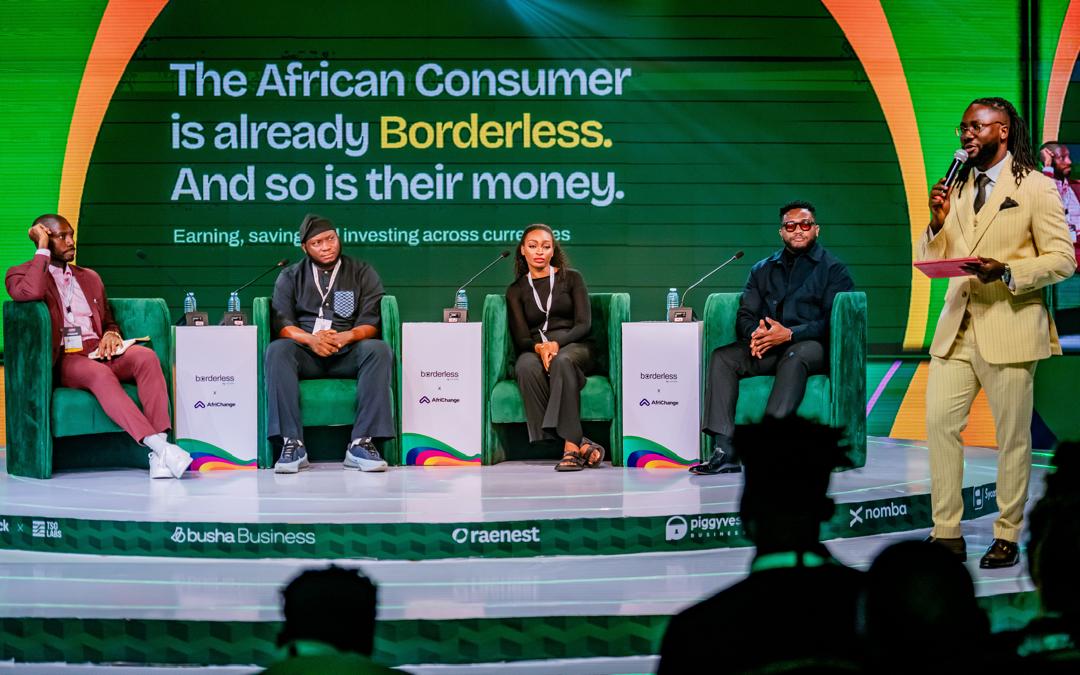
The interesting thing about the recent panel at Condia’s The Borderless Experience is not merely that African consumers are moving money across borders. It is that the original wedges African fintechs used to acquire their first million users—automated pocket-change savings, peer-to-peer transfers, and freelancer USD virtual cards—have exhausted their novelty.
When Joshua Chibueze of PiggyVest points out that users who used to stash ₦20,000 monthly now routinely park ₦2 million to ₦3 million, he isn't just celebrating customer lifetime value. He is pointing out a structural shift: the African consumer is growing up, their capital is compounding, and their economic lives no longer fit cleanly within geographic or single-currency boxes.

At the same time, Richard Oyome of Raenest noted that demand for cross-border rails is spilling out of the remote-worker bubble and directly into mainstream consumer life—from the family in London paying school fees in Ibadan to an Onitsha trader clearing supplier invoices in Guangzhou.
Here is the strategic breakdown of what this means for builders in the trenches.
The Short Answer
The era of the narrow, feature-only fintech app in Africa is closing. Building an app that only does micro-savings in local currency or only provides a virtual card leaves you exposed to currency depreciation, customer churn, and commoditization.
If your platform cannot handle the full lifecycle of a user's capital—earning in foreign currency, saving in inflation-hedged assets or stablecoins, spending locally, and investing for real yield—your customer will graduate to a platform that can.
What Is Really Happening
Three distinct forces are converging on African consumer finance:
- Upward Mobility Meets Currency Erosion: A junior developer or remote designer in Gbagada who joined a savings app in 2019 has seen their nominal income 10x, while the purchasing power of the local currency shrank. The problem is no longer "help me cultivate a savings habit." The problem is "protect my capital from double-digit inflation and help me earn global yields."
- The "Japa" Economic Web: Migration is no longer a clean break where someone leaves Nigeria and cuts financial ties. People in London, Toronto, and Dallas still pay mortgages, fund family businesses in Owerri, and buy local retail goods. Remittance is no longer an occasional Western Union holiday gift; it is continuous bilateral trade.
- The Unbundling Reversal: Look at Brass winding down its independent operations into Paystack MFB. Pure-play niche financial products with high customer acquisition costs and thin fee margins eventually run out of runway. The market is aggressively rebundling.
+-------------------------------------------------------------+
|               THE AFRICAN FINTECH EVOLUTION                 |
+-------------------------------------------------------------+
| PHASE 1 (2016-2020)  | Single-Feature / Local Currency      |
|                      | (Micro-savings, P2P transfers)       |
+----------------------+--------------------------------------+
| PHASE 2 (2020-2024)  | Freelancer & Remote Work Utility     |
|                      | (USD virtual cards, simple FX rails) |
+----------------------+--------------------------------------+
| PHASE 3 (2024+)      | Full-Stack Borderless Capital Engine |
|                      | (Multi-currency, Stablecoin treasury,|
|                      |  Real yield, Global merchant rails)  |
+-------------------------------------------------------------+
The Assumption I'd Challenge
The primary assumption I challenge among founders right now is this: "If we build a slicker UI for cross-border payments or stablecoin swaps, we will win market share."
You won't. FX spreads and payment routing are becoming commoditized infrastructure. A consumer does not care whether you route their transfer through local rails, correspondent banks, or a stablecoin liquidity pool on Solana or Base. They care about three metrics:
- Settlement speed
- Net realized rate
- Reliability under regulatory pressure
If your entire value proposition is a 50-basis-point discount on an exchange rate, you do not have a defensible moat. You have a temporary marketing promotion.

The Strategic Options
Founders running multi-currency or consumer finance platforms face three clear paths forward:
Option A: The Complete Capital Stack (PiggyVest Model)
Grow with your cohort. When users have larger balances, transition them from cash-holding to wealth management, real estate, and fixed-income assets that outpace macro indices, echoing Dr. Ola Brown's point that capital allocators simply want to beat the baseline market return.
- Upside: High retention, massive balance-sheet stickiness.
- Downside: Complex regulatory exposure and heavier compliance overhead.
Option B: The Cross-Border B2B / Merchant Rail (Raenest / Oneremit Model)
Move down the stack. Instead of fighting for fickle retail eyeballs, power the payment orchestration for global payroll, merchant settlement, and high-volume trade.
- Upside: Higher transaction values, durable enterprise contracts, defensible unit economics.
- Downside: Long sales cycles, intense enterprise support requirements.
Option C: The Pure Stablecoin Neobank
Build natively on crypto rails from day one, targeting users who want sovereign, cross-border accounts without relying on traditional correspondent banking relationships.
- Upside: Frictionless international clearing, lower infrastructure setup costs.
- Downside: On-and-off-ramp regulatory risk, user trust barriers outside tech-native demographics.
My Recommendation
If you are a founder running a fintech product aimed at the modern African consumer or business:
- Stop building isolated wallets. A wallet is a feature, not a business. If a user cannot route money from an international client straight into a yield-bearing instrument, and spend out of it via a physical or virtual card without jumping through four intermediary apps, you are losing them.
- Anchor your yield in real economic activity. Dr. Ola Brown pointed out that investors are hungry for returns of 8% or 9% against lower baseline returns. Do not invent synthetic yields. Provide access to verified assets—treasury bills, trade financing, credit-backed infrastructure—that allow ordinary users to preserve wealth.
- Solve the settlement edge cases. Anyone can build an API wrapper to transfer money when banking switches are green. The winners are built in the dark: handling dispute resolutions, failing gracefully when settlement partners stall, and maintaining transparent FX rates during extreme volatility.

What I Would Do Next
- Audit Customer Balance Trajectories: Look at your 2022 and 2023 cohorts. Are their balances growing, flatlining, or leaving your platform for tier-one commercial banks once they cross certain wealth thresholds? If they leave when they get rich, your product has an identity crisis.
- Map Your Off-Ramps: Review how many hops it takes for a diaspora user or international employer to settle money into a merchant's local bank account. Every hop is a point of failure and churn.
- Harden Compliance Architecture: As cross-border volume grows, scrutiny from central banks and international AML monitors increases exponentially. Fix your compliance pipelines before transaction scale forces a regulator to fix them for you.
What Would Change My Mind
- Aggressive Regulatory Crackdowns on Foreign Asset Access: If central banks implement severe restrictions on domestic platforms offering multi-currency or stablecoin holdings, the full-stack model will face headwinds, favoring licensed traditional tier-one banks.
- Hyper-Stable Local Currencies: If macroeconomic conditions across major African markets stabilize completely and local yields consistently outpace inflation over a 3- to 5-year cycle, consumer urgency for borderless financial rails could slow down. (Confidence level on this occurring in the near term: Low).
Related from Nigeria
Let's build your next big product.
Accepting project-based freelance, remote engineering roles, and hybrid positions.