Pouchers' $500K Pre-Seed: The Digital Dollar's Grip on Nigeria's Global Workforce
A new pre-seed for Pouchers isn't just another fintech raise; it's a stark reminder that when local currencies falter, digital dollars become the de facto lifeline for a generation building wealth globally.
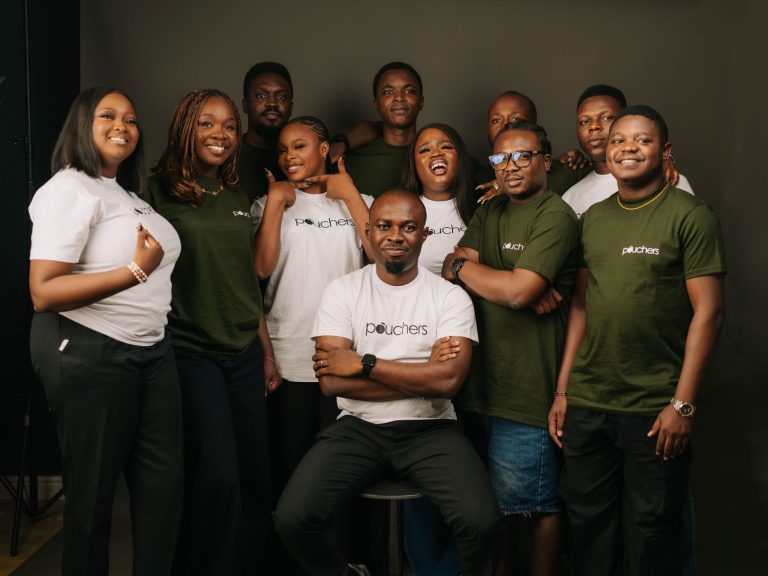
Alright, let's cut through the noise. Nigerian fintech Pouchers just bagged $500K in pre-seed funding, led by Dubai-based Stack Directory LLC with some strategic angel participation. On the surface, it's another African startup raise, a testament to the continent's growing tech scene, blah, blah. But that's the first story. The second story here is far more potent: Pouchers isn't just building a payment platform; it's formalizing a crucial, bottom-up workaround for millions grappling with a financial system that simply isn't serving their global aspirations.
This isn't about the speculative thrill of crypto. This is about survival, stability, and access. When your local currency performs worse than a leaky bucket, and traditional banking locks you out of global commerce with painful exchange rates and glacial transfer times, you build your own pipes. Pouchers, founded by Ayo Adewuyi, is doing exactly that: offering digital dollar wallets (USDT, USDC) and virtual dollar cards. Their target market—freelancers, remote workers, entrepreneurs earning internationally—isn't just a niche; it's a vibrant, expanding segment of Nigeria's workforce, often located everywhere from the buzzing co-working spaces in Gbagada to the quiet hustle of an Akure dorm room. They're trying to earn, save, and spend in a currency that holds its value. The $500K isn't just capital; it's an investment in the necessity of digital dollars as the practical, everyday currency for a generation that refuses to let local economic headwinds derail their global ambitions.

The Human & Culture Lenses: Bypassing the Bureaucracy
Think about the human impact here. You're a Nigerian developer, a graphic designer in Enugu, or a virtual assistant in Port Harcourt. You land a gig with a client in London or New York. Payment comes in USD. How do you get it? Traditional banks hit you with insane fees, unfavorable rates, and days of waiting. PayPal is often restricted. Western Union is for remittances, not daily business. The black market offers better rates but is risky and informal.
Enter Pouchers. Suddenly, you receive your earnings in stablecoins, held as digital dollars. You can spend them internationally with a virtual card or convert a portion to Naira when you decide the rate is favorable, rather than being forced to at whatever a bank dictates. This shifts power directly to the user. It's a manifestation of the "No gree for anybody" spirit—Nigerians finding ingenious ways to navigate structural obstacles. The culture here isn't just adopting tech; it's demanding it as an alternative to broken systems. It's about empowering individuals to circumvent capital controls and currency volatility that hamstring their economic progress.
The Strategic & Builder Lenses: Solving a Deep Pain
Pouchers isn't creating a new problem; it's providing a crucial solution to a very old, very painful one. The strategy is clear: target those for whom cross-border payments, currency conversion, and foreign account access are daily headaches. These aren't just pain points; they're deal-breakers for many global opportunities.
From a builder's perspective, this means integrating stablecoin infrastructure (USDT, USDC) with fiat on/off-ramps, virtual card issuing APIs, and robust KYC/AML protocols. The complexity isn't trivial. You need bulletproof security for digital assets, reliable liquidity for conversions, and a user experience so seamless that someone comfortable with traditional banking can adapt. The biggest challenge isn't the tech itself, but navigating the unpredictable regulatory landscape around crypto in Nigeria, a country that has, at times, blown hot and cold on digital assets.
This pre-seed funding, as Pouchers exits beta, is slated for expanding cross-border payment infrastructure, launching foreign currency accounts, strengthening partnerships, and reaching more users. This signals a doubling down on their core value proposition: being the bridge to the global economy for Nigerians who refuse to be limited by local financial friction.

FOUNDER DIRECTIVE / ADVISORY SECTION
The Short Answer
Pouchers' $500K pre-seed isn't just a win for them; it's validation that stablecoin-powered fintechs are becoming indispensable infrastructure for Nigeria's global workforce. They're solving a deep, frequent, and painful problem: access to stable currency and seamless global payments in an environment of local economic instability. This raise recognizes a market demand that goes beyond simple convenience; it’s about economic necessity.
What Is Really Happening
The story here is the ongoing financial disintermediation driven by currency instability and inefficient traditional banking. For many Nigerians earning globally, traditional financial institutions offer friction, not fluidity. Stablecoins like USDT and USDC are effectively becoming the default digital dollar—a parallel, more efficient financial rail. This isn't just about sending money home; it's about receiving salaries, paying for SaaS tools, making international purchases, and saving in a currency that doesn't evaporate overnight. Pouchers is formalizing a solution that consumers already desperately need and are finding through informal channels. The market isn't just ready for this; it's actively seeking it out.
The Assumption I'd Challenge
The biggest assumption I'd challenge for Pouchers, or any similar venture, is that the current laissez-faire or inconsistently applied regulatory environment around stablecoins in Nigeria will persist, or that future regulations will be uniformly favorable. The bigger risk isn't just competition from other fintechs or crypto exchanges; it's the potential for a sudden, unpredictable regulatory crackdown or policy shift that could disrupt their entire operational model overnight. Optimizing solely for user acquisition without a robust, adaptable regulatory strategy is like building a beautiful house on quicksand.
The Strategic Options
- Regulator-First, Compliance-Driven Growth: Prioritize proactive engagement with the CBN and SEC. Invest heavily in compliance, KYC/AML, and build a reputation as the "most compliant" stablecoin payment platform. This might slow initial hyper-growth but builds a more resilient, defensible business against future regulatory shocks. It makes them an easier partner for larger financial institutions if regulations ever formalize.
- Aggressive User Acquisition, Pivot-Ready: Focus on rapid user acquisition and network effects, assuming that if the user base is large enough, regulators will have to engage rather than simply ban. This strategy is faster but carries higher risk and requires constant monitoring of the political and regulatory climate, with a clear exit or pivot strategy if the hammer drops.
- Expand Product Suite into DeFi: Leverage the stablecoin rails to offer more advanced financial services beyond payments, such as yield generation, micro-lending, or more complex treasury management for SMEs, venturing deeper into decentralized finance. This diversifies revenue but significantly increases technical and regulatory complexity.
My Recommendation
My recommendation for Pouchers would be to pursue a calibrated version of Option 1: Regulator-First, Compliance-Driven Growth, but with aggressive product delivery. In the Nigerian context, building trust and a defensible position through compliance is paramount. The "No gree for anybody" spirit also extends to the government, which can be unpredictable. Being perceived as a responsible, value-adding player who understands and even anticipates regulatory concerns can provide a crucial shield. This path also makes you a more attractive partner for traditional financial players in the long run, should they ever embrace stablecoins. Don't be naive about regulation; engage it strategically.
What I Would Do Next
- Deep Dive on Regulatory Scenarios: Assemble a small, expert legal and compliance team to model various regulatory outcomes (e.g., outright ban, licensing regime, specific stablecoin rules) and draft contingency plans for each. This includes engaging with regulatory bodies (even informally) to understand their evolving stance.
- Fortify Security & Liquidity: With digital assets, security is non-negotiable. Invest in top-tier cybersecurity audits and insurance. Simultaneously, establish robust, redundant liquidity pools to ensure seamless on/off-ramps for users, even during market volatility.
- Strategic Partnerships for Distribution: Look beyond direct customer acquisition. Explore partnerships with global remote work platforms, payroll providers, or even local fintechs in complementary niches to gain rapid access to their user bases and build a more defensible distribution moat.
- Educate the Market: Beyond selling the product, educate users on the benefits and risks of stablecoins, responsible digital asset management, and the importance of KYC. This builds a more informed, loyal user base and can indirectly influence public and regulatory perception positively.
What Would Change My Mind
- A sudden, explicit, and consistently enforced national regulatory framework that fully embraces stablecoin payments with clear, achievable licensing requirements. This would de-risk aggressive expansion.
- A major, sustained de-pegging event of a dominant stablecoin (like USDT or USDC) that erodes user trust globally and validates regulatory fears about systemic risk. This would necessitate a fundamental re-evaluation of the product's core asset.
- Overwhelming evidence that the target demographic explicitly prioritizes complete anonymity or fully decentralized solutions over ease of use, stability, and regulatory compliance, making a regulated approach commercially unviable.
Related from Venture
Let's build your next big product.
Accepting project-based freelance, remote engineering roles, and hybrid positions.