The Internet's Ghost Town Vibe: Are We Building for Bots or Humans?
Just when I thought I understood the internet, Cloudflare drops a bombshell: bots now outnumber us. It makes you wonder who exactly we're building products for these days.
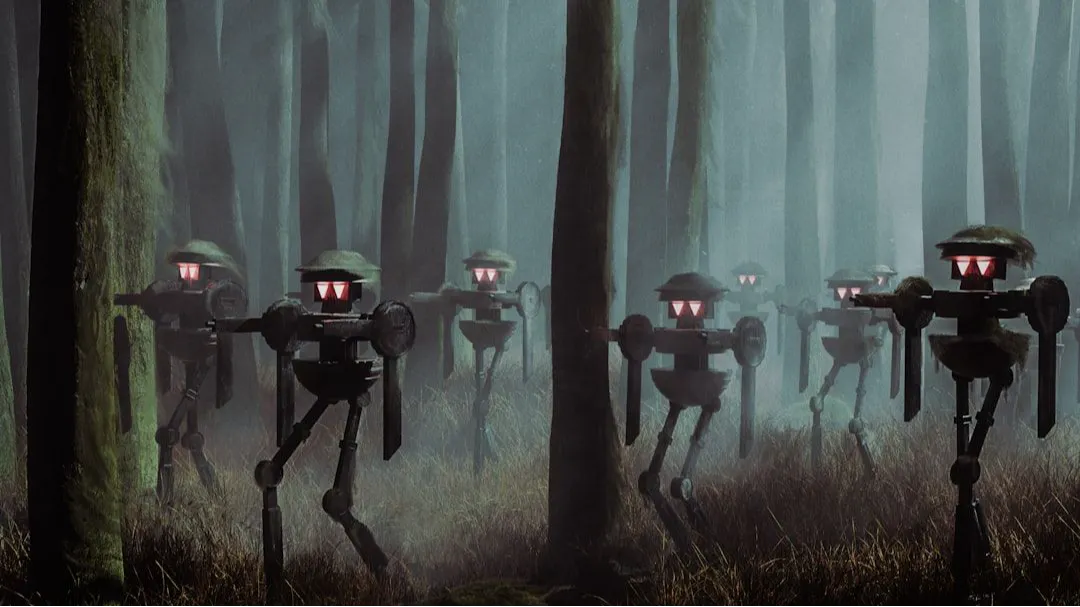
Woke up this morning, coffee brewing, staring at the screen and thinking about the latest data. Bots. Everywhere. More of them than us. For real, it hit me like a splash of cold water in a Jos morning. Cloudflare's report says bots are 57.5% of web traffic now. Officially outnumbering human interactions. This isn't some far-off sci-fi plot anymore; it's happening right now, in 2026.

The "Slop" Economy and Our Hustle
My first thought went straight to the grind. As developers, we're out here building, iterating, trying to get real eyes on our products. But if half the traffic is bots, what does that mean for discoverability? Ahrefs found 74.2% of new web pages have AI-generated content. That's a lot of "slop," as one commenter put it.
Think about a small e-commerce store in Onitsha trying to rank their unique handcrafted goods. Or a new fintech startup in Akure trying to get their app discovered. Are they fighting against other humans, or are they just drowning in a sea of AI-generated articles and fake reviews that bots consume?
The "Too SLOPPY to FAIL" comment really stuck with me. It’s like a whole economy has sprung up around this: making AI content, detecting AI content, and then making AI content that bypasses those detectors. It feels like a self-sustaining loop, and it makes you wonder if our hustle for genuine user engagement is getting lost in the noise.
Bots Doing Good? Or Just More Noise?
Now, Matthew Prince from Cloudflare argued that this surge in bot traffic isn't necessarily a bad thing. He says these are agents doing useful work on humans' behalf. And I get that. I mean, we build automation tools all the time. Think about customer support chatbots, data scraping tools that help us monitor market trends, or even those internal scripts that save us hours of manual work. That's the good kind of bot.
For us, as founders and developers here in Nigeria, this presents an interesting challenge and opportunity. How do we ensure the bots we're building and interacting with are genuinely adding value? If I'm creating a tool to help small businesses manage inventory, I want its automation features to be robust and truly helpful, not just another source of noise.
The key here is intent. Are these bots helping real people solve real problems, or are they just inflating vanity metrics and polluting the web with low-quality content? When I'm thinking about the user experience for an app in Gbagada, I'm thinking about a human being, with their own specific pain points, not an algorithm.

The Human Touch Becomes Gold
Google says 86% of articles it surfaces are still human-written. That gives me some hope. It means that quality, authentic human content still breaks through. And honestly, it makes me feel like our work as creators and developers is even more important.
In a world increasingly filled with automated noise, the human touch becomes incredibly valuable. When you're trying to stand out in a chaotic market – whether you're building a new social platform or a localized service app – focusing on genuine connection, solving a real problem with robust engineering, and crafting an authentic user experience is no longer a nice-to-have. It’s a core competitive advantage.
It's the "no gree for anybody" mindset applied to quality. We can't just build; we have to build with purpose, ensuring our tech serves the humans at the other end. Because if we don't, we're just contributing to the ghost town. And who wants to live in a ghost town, even if it's digital?

Related from Tech
Let's build your next big product.
Accepting project-based freelance, remote engineering roles, and hybrid positions.