Jumia's $50M Lifeline and the Brutal Math of Staying Alive
$50 million sounds like massive money until your operating burn sits at $12 million every single quarter. Here is my take on Jumia's latest runway extension.
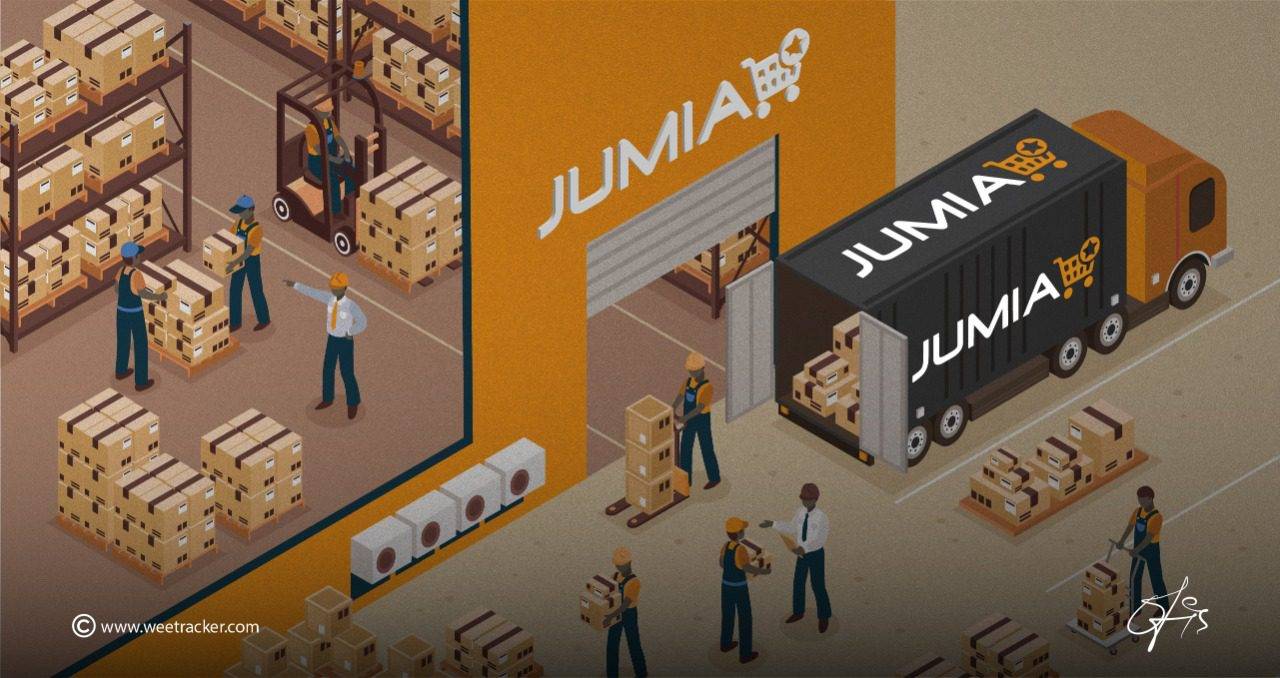
When you build software for a living, you learn pretty quickly that vanity metrics can kill you faster than bad code. You can have a dashboard showing a million requests hitting your API endpoints, but if every single request is burning through costly unoptimized cloud compute without generating a kobo in value, you are just engineering your own funeral.
That was Jumia for almost a decade.
They chased Gross Merchandise Volume (GMV) like it was the Holy Grail, subsidizing deliveries across terrible roads, throwing discount vouchers at anyone with a phone, and praying that scale alone would fix broken unit economics.
Now, they just raised a fresh $50 million from the IFC and Axian Group. And while headline writers are celebrating, anyone who actually builds products and manages operational burn knows the real score: this isn't a victory lap. It is a breathing tube.

The $12 Million-a-Quarter Stopwatch
Let's do the basic math that every technical founder stares at when checking their bank dashboard at 2 AM.
In Q2, Jumia burned roughly $11.8 million in operating cash. Their liquid reserves sat at $48.3 million by the end of June. If you drop a fresh $50 million into that tank, it sounds like an ocean of cash. But at a ~ $12 million quarterly burn rate, you have basically bought yourself roughly four to five quarters of runway. That is about a year to completely plug the leaking pipes.
CEO Francis Dufay is targeting EBITDA breakeven by late 2026 and actual full-year profitability in 2027. That means this $50M isn't growth capital—it is the bridge to keep the servers running and the delivery vans fueled while they try to reach the other side of the river before the money dries up.

Why I Actually Respect the Pivot
To give credit where it's due, the changes under the hood are real. Dufay stopped the madness of subsidizing every tiny transaction. Gross profit climbed 28% to $30.7 million, and their adjusted EBITDA loss narrowed by over a third.
In software terms, this is like taking down high-latency, expensive microservices and rewriting the core business logic into a tight, efficient monolith. They stopped trying to sell cheap plastic phone covers with free delivery to the outskirts of town where bike riders spend more on fuel than the product is worth. They are finally defending take rates and margin.
Building commerce infrastructure across Africa is absurdly difficult. It is not just about writing clean React interfaces and snappy checkout flows. It is about:
- Dispatch riders navigating unmarked streets and potholes in places like Akure or Benin City after heavy rainfall.
- Dealing with intermittent payment gateway timeouts while customers wait impatiently at pickup points.
- Managing inventory discrepancies with third-party merchants who also run physical shops in Alaba or Onitsha Main Market.
When you factor in fuel prices, power costs, and currency devaluations, squeezing out an actual operating profit from a physical logistics network in this environment is one of the hardest engineering and operations problems on the continent.

The Real Clock Is Ticking
This fresh cash gives them a fighting chance, but zero room for sloppy execution.
If they can get their unit economics tight enough that positive free cash flow kicks in before this $50 million depletes, we will look back at this IFC cheque as the moment Jumia transformed from a venture-fueled cash incinerator into a real, durable marketplace.
If they can't, it will just be another expensive lesson in how hard it is to make e-commerce math work when the ground reality refuses to behave like a Silicon Valley spreadsheet. For now, the timer is set, the runway is visible, and the only metric that matters is getting to cash flow positive before the tank hits empty.
Related from Venture
Let's build your next big product.
Accepting project-based freelance, remote engineering roles, and hybrid positions.