Beyond the $1B IPO Numbers: How OPay and PalmPay Built an Unshakeable Engine
While Wall Street and Hong Kong eye billion-dollar valuations, the real story of PalmPay and OPay is written in two-second transaction times and low-end Android optimization.
Try sending money at 7 PM on a payday Friday using a traditional bank app. You'll spend half your night staring at a spinning wheel, praying the debit hit doesn't go through twice while you're standing in front of a point-of-sale vendor who is already losing patience.
That single, daily frustration is why PalmPay is aiming for a $200 million raise at a $1 billion valuation in Hong Kong, and why OPay is eyeing a massive $4 billion listing in the US.
Forget the fancy financial headlines for a second. As someone who spends his days looking at system architecture, error rates, and API response times, these IPO rumors aren't just about big venture money finding an exit. They're proof that superior engineering and relentless distribution win every single time.

The Invisible Tech Stack That Won the Streets
A few years ago, traditional banks treated mobile apps like secondary side projects. Their backends were clunky legacy systems tied to core banking software that whimpered whenever transfer volumes spiked.
OPay and PalmPay came in with a completely different technical mindset. They didn't build for pristine Wi-Fi connections in high-brow offices; they optimized for 3G networks in Akure, spotty connections in Onitsha, and cheap Android phones running low memory.
When your app bundle is lightweight, your network calls are heavily cached, and your core transfer engine can resolve webhooks in under two seconds, word gets around.
People didn't switch to these apps because of slick billboards. They switched because when Sapa is knocking and you need to pay for spare parts in a crowded market in Owerri, you can't afford a transfer delay that lasts three hours. Reliability is the growth hack.

Distribution Trumps Everything
Let's talk about PalmPay's early playbook, because it's a distribution masterclass every product founder should study.
Getting people to open the Play Store, spend precious mobile data, and download a new financial app is a massive funnel drop-off point. PalmPay bypassed that entirely by getting early backing from Transsion—the parent company behind Tecno, Infinix, and iTel.
Having your app pre-installed at the OS level on millions of devices shipped straight into the Nigerian market is practically a cheat code. When a user buys a fresh phone, turns it on, and sees the app icon right there on their home screen, your acquisition cost plummets to near zero.
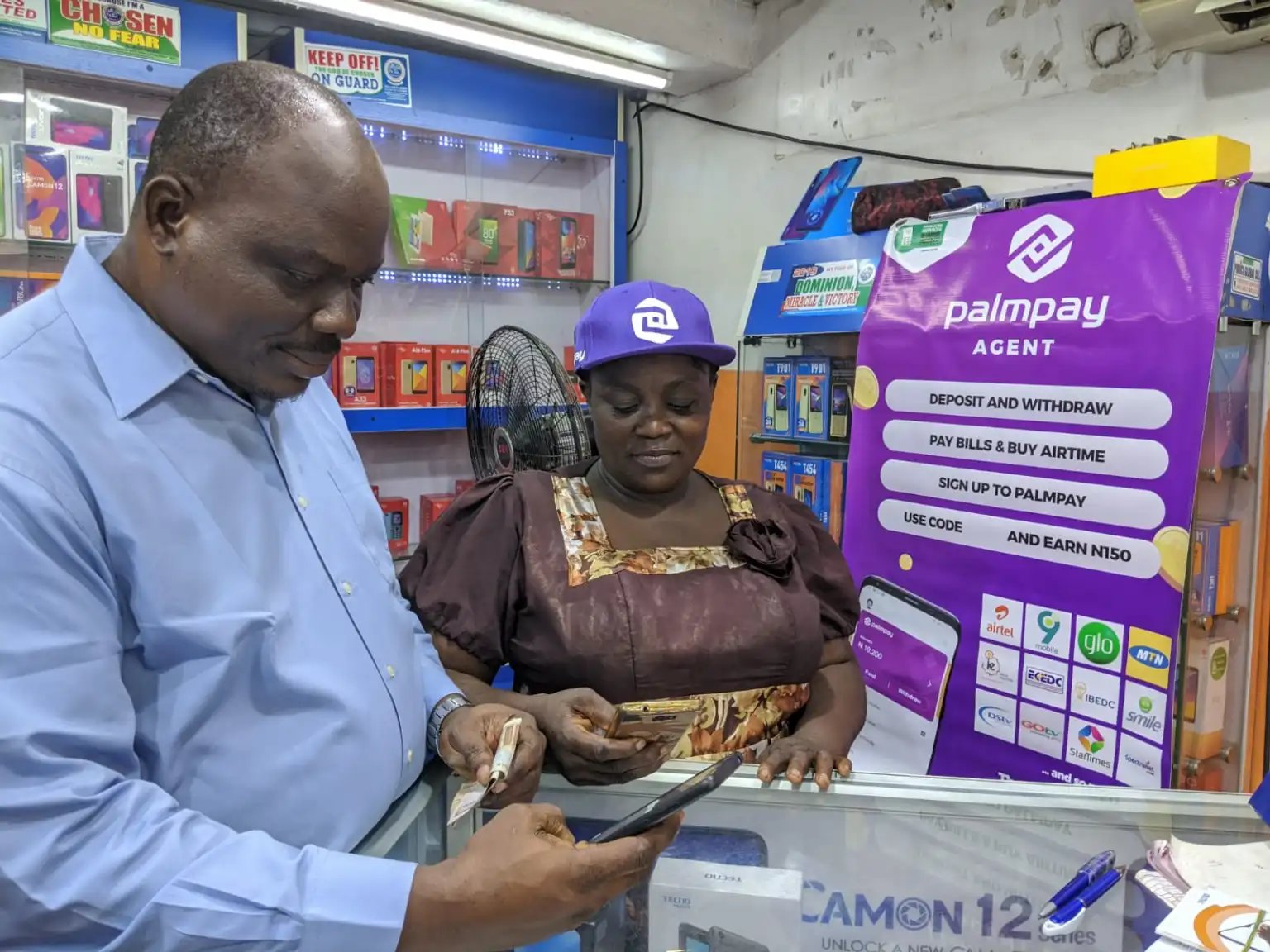
OPay took a different, equally aggressive route: sheer physical presence. They flooded every street corner with blue POS terminals, built out an army of agents, and turned every mom-and-pop shop into a bank branch. By the time they pivoted away from ride-hailing and food delivery to focus squarely on payments, the distribution network was already untouchable.
The New CBN Rules and the Scale Wall
Now, the Central Bank of Nigeria is mandating that POS agents can only work with one financial institution.
If you're an early-stage fintech dev building a payments startup in a co-working space right now, that directive should make you pause. It effectively locks down the physical agent network. Small players won't have the leverage to compete for exclusive agent loyalty when OPay is processing over $12 billion monthly and can afford to heavily subsidize hardware costs.
The wall is getting taller. The game has shifted from "can you build a sleek payment UI?" to "can your infrastructure handle tens of thousands of concurrent transactions per second without dropping a single packet?"

What This Means for Builders
It's easy to look at Flutterwave pausing its IPO plans and get skeptical about African tech exits. But seeing PalmPay and OPay push toward public listings in Hong Kong and New York tells a clearer story: the market rewards infrastructure that actually works under pressure.
If there's any lesson to take back to the IDE tonight, it's that shiny features don't build defensibility. Bulletproof uptime, ultra-low latency, and clever distribution do.
The public markets will value these companies at billions because they solved a very unglamorous problem: making sure five thousand Naira leaves Account A and arrives in Account B instantly, even on a cold, rainy morning when the network is struggling. That's the real product. Everything else is just detail.
Related from Nigeria
Let's build your next big product.
Accepting project-based freelance, remote engineering roles, and hybrid positions.