Cards Can't Win Africa Alone: What Visa Hiring Airtel's Money Chief Means for Builders
Visa snagging Airtel Money Kenya's MD isn't just corporate musical chairs. It's proof that plastic cards are taking a backseat to mobile money and custom rails.
Nothing breaks your spirit faster than watching a payment gateway throw a 500 error right when a user is trying to check out. I spent half of last night tailing logs on a staging server in Gbagada, trying to figure out why bank transfer webhooks were dropping silently. When you build software on this continent, payment infrastructure isn't abstract theory—it’s a daily battle against latency, dropped sessions, and network timeouts.
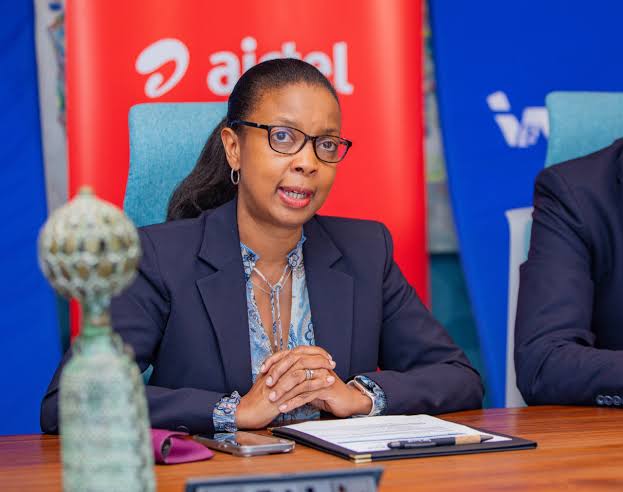
So when news dropped that Visa poached Anne Kinuthia-Otieno from Airtel Money Kenya to run their East Africa operations, my engineer brain immediately bypassed the press release fluff and looked straight at the numbers.
At Airtel Money, Anne pushed their Kenyan market share from 3.1% in late 2021 to nearly 11% earlier this year. In a market dominated by the giant that is M-Pesa, grabbing almost 8% of market share isn't done through glossy billboards. It happens down in the trenches of execution: fixing agent liquidity, tightening backend integration uptime, making USSD flows less painful, and convincing local vendors to accept your code over someone else's.

The Hard Truth About Plastic Cards
Visa bringing in someone who built telecommunication money rails tells you everything you need to know about where digital payments are actually going across Africa.
Let's be real for a minute. If you travel outside the immediate bubbles of Victoria Island or Sandton, nobody is itching to swipe a piece of plastic. Go to a spares market in Onitsha, buy produce in Jos, or hire a contractor in Akure—people want transfers that hit immediately, or mobile wallets that don't depend on whether a POS terminal has network signal.
For years, the global card networks tried to fit round pegs into square holes, expecting African consumers to adopt card-first checkout experiences designed for suburban US malls. But building for Africa means accepting that telco infrastructure and light-footprint digital rails were always going to win the distribution game.
When a card giant hires a telco payment operator, they aren't trying to sell more plastic. They are trying to figure out how to pipe their backend networks into the USSD menus, mobile wallets, and direct account rails that people actually use.

Stablecoins and the Next Layer of Infrastructure
The report also casually mentioned two things that caught my eye: Visa opening a data center in Johannesburg and quietly experimenting with stablecoin-based settlements.
Now that gets interesting for those of us who actually write code for a living.
Sourcing foreign exchange and dealing with cross-border liquidity across different African currencies is a total nightmare. If you’ve ever tried to settle cross-border transactions using standard banking rails, you know the pain of money getting trapped in settlement limbo for three business days while currency rates fluctuate wildly underneath you.
If Visa starts routing settlements through stablecoins while leveraging localized data infrastructure, the cross-border developer experience changes drastically. Lower fee overhead, faster settlement finality, and fewer middleman banking hops mean our apps don't have to absorb ridiculous FX margins just to move money across East or West Africa.
What This Means for Product Teams
If you're building products today, the lesson here isn't about Visa or Airtel. It's about respecting local distribution networks.
- Build for failure modes: If your app only supports standard card checkout, you're bleeding conversions. Fallbacks to bank transfers, mobile wallets, or instant transfer channels aren't "nice to have"—they are baseline requirements.
- Abstract the complexity: Users don't care whether their transaction routes through a telco USSD gateway, a Visa network, or a crypto rail. They care that the success screen pops up in under two seconds without swallowing their cash.
- Distribution beats pedigree: The best technical architecture in the world loses to the rail that has the highest uptime on low-tier mobile networks.
It’s easy to get distracted by corporate musical chairs, but watch where the talent moves. When traditional payment giants start hiring operators who know how to scale non-card infrastructure in tough markets, it’s proof that the shift to hyper-localized, alternative payment rails isn't a trend—it's the default.
Back to fixing these webhooks before my laptop battery gives up.
Related from Nigeria
Let's build your next big product.
Accepting project-based freelance, remote engineering roles, and hybrid positions.