Why Banks Don't Trust Farmers (And How We Code Our Way Out of It)
Traditional banks aren't necessarily evil; they're just terrified of data voids. Here is what happens when you treat farm performance like an API endpoint.
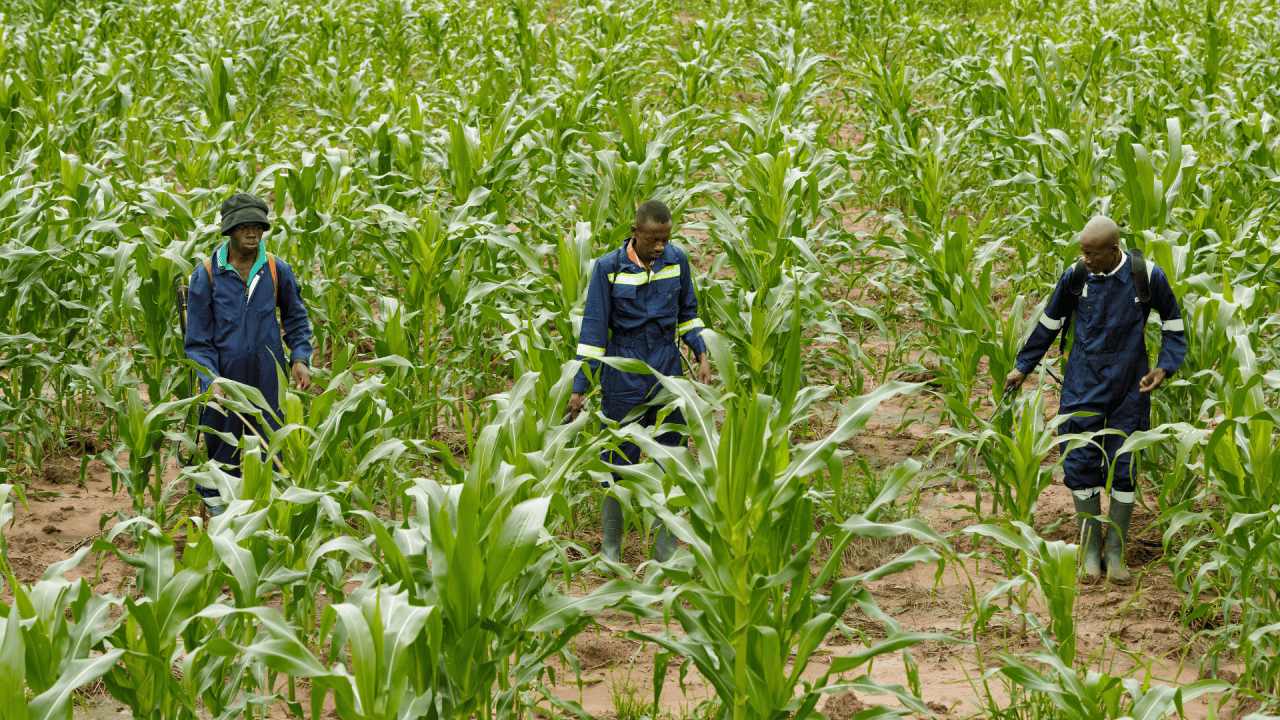
A developer friend in Akure once built an offline-first app for local cocoa farmers, only to hit a wall that had nothing to do with code. The app worked fine—SQLite synced smoothly whenever the phone hit a 3G patch—but the farmers refused to log their crop yields. Why? Because they saw zero connection between putting numbers into a screen and getting the credit they needed to buy fertilizer for the next planting season.
That disconnect is the exact reason why only 1% of bank lending across Africa goes to agriculture, even though the sector hires more than half our workforce and drops 17% into the continent’s GDP.
Desmond Koney, the CEO of Complete Farmer, put out a piece today breaking down this precise issue. When you stripped away the polite executive phrasing, his point was blunt: financial institutions aren't withholding capital because they hate farming; they're holding back because operating without structured data feels like flying blind in a thunderstorm.

The "Thin File" Issue is a Schema Failure
In traditional banking, if you don't have a landed property in commercial hubs or a five-year paper trail audited by a top firm, you are a "thin file" borrower. You don't exist in their risk matrix.
So when an onion farmer outside Jos or a cassava planter in Ogun state walks into a bank asking for working capital, the risk assessment algorithm immediately throws an exception. The default reaction from risk officers is to demand collateral the farmer obviously doesn't have.
This is fundamentally a data collection and pipeline problem.
When Complete Farmer talks about their CF Grower platform, what catches my attention as a product guy isn't the high-level vision—it's the actual infrastructure required to capture messy, real-world field events and turn them into clean data points.
If you want a bank to lend money to a farm, you have to track the lifecycle in real time:
- Which seed batch went into the ground on Day 1?
- What was the exact fertilizer mix applied on Day 14?
- What do satellite imagery or drone scans say about leaf health on Day 45?
- What is the projected harvest metric based on local weather data?
Once you capture those metrics in a structured schema, you turn an unpredictable rural plot into something a risk engineer can actually model.

Building for the Mud, Not Just the Cloud
It’s easy to write about data platforms while sitting in a air-conditioned desk setup in Gbagada, sipping cold brew and staring at clean GraphQL dashboards. It's a completely different story when you're designing for the actual field.
If your field management tool requires 4G connectivity to log input usage, it will fail. If the UI requires a master's degree to navigate, extension agents will bypass it and use paper notebooks that end up lost in the back of a pickup truck.
The engineering challenge here is building low-friction, fault-tolerant collection systems. We need:
- Aggressive offline persistence: Local database writes with background queue workers that sync silently when a signal appears near an urban park in Onitsha or Benue.
- Simplified input UX: Minimal typing, heavy reliance on image processing, barcode scanning for input packages, and voice inputs where applicable.
- Automated verification: Cross-referencing field reports with remote sensing data so no single human agent can fake progress updates to trigger a loan payout.
Data as Collateral
The IFC pointed out a $117 billion financing shortfall for African SMEs back in 2024. A huge chunk of that Sapa belongs to agtech and smallholders.
We cannot bridge that gap by waiting for traditional commercial banks to suddenly become adventurous. They won't. Banks are risk-averse by design. The only way forward is for software engineers and product teams to build the middleware—the digital paper trail that converts actual farm work into verified credit scores.
When data becomes reliable enough to serve as collateral, the entire equation changes. You stop asking a mid-scale farmer for a property title they'll never own, and start looking at their digital track record of verifiable yield cycles. That's how we move from speculative grants to actual tech-driven underwriting.
Related from Venture
Let's build your next big product.
Accepting project-based freelance, remote engineering roles, and hybrid positions.