Offline AI and Local Languages: What We Can Learn from the Women in Tech Finalists
We talk a lot about AI and cloud architecture, but the real magic is building things that actually work when the network drops in the middle of a market.
I spent three hours yesterday trying to debug an API integration because my local internet provider decided to take an unscheduled holiday. Sitting in my workspace, sweating through a power cut while waiting for a single npm package to install, reminded me of a harsh reality: we often build software for a Nigeria that only exists in our dreams.
We write code on fast fiber connections, test on high-end MacBooks, and assume everyone has 4G LTE. But the moment your app leaves Lagos and travels to a trader in Onitsha or a farmer outside Jos, it falls apart.
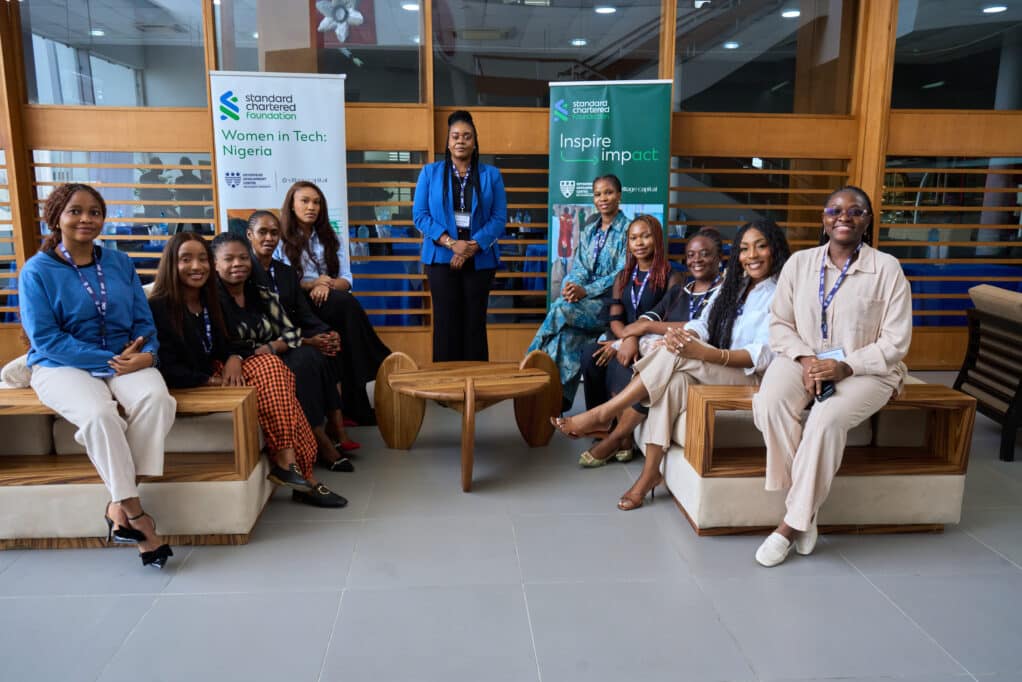
That is why the recent announcement of the top 11 finalists for the Women in Tech Accelerator Nigeria program got my attention. While looking through the list of these female-led startups, a couple of them felt like a masterclass in building for the actual environment we live in.

The Offline Chasm: Why Mariam Grey is a Masterclass
Let’s talk about Jennifer Esiaba’s startup, Mariam Grey Pharmacy. She is building an AI-powered telepharmacy platform. Now, on paper, "AI-powered pharmacy" sounds like standard pitch deck fluff.
But look at the execution detail: it delivers verified medications and chronic care support across Nigeria, accessible on any phone, in over 30 local languages, without requiring internet access.
Read that again. No internet access. Accessible on any phone. Over 30 local languages.
As a developer, this makes me sit up. Building an LLM or an AI flow that runs on a high-end cloud server is easy. What is incredibly difficult is translating that intelligence into a lightweight pipeline that can interact with a user over USSD or basic SMS.
You have to deal with character limits, state management over stateless protocols, and translation engines that actually understand local nuances—not just direct Google Translate outputs that sound robotic.
If you have ever stood at a noisy bus park in Owerri trying to get a stable connection just to check a bank balance, you know that USSD is still the undisputed king of accessibility. Building a medical assistant that leverages this infrastructure is a massive technical challenge, but it is exactly what solving local problems looks like.
Bridging the Trust Gap in Trade
Then you have Ejiro Enaohwo with Ginger Technologies, tackling the trade and credit infrastructure gap.
If you have ever tried to build fintech products for informal traders, you know the biggest hurdle is not the code. It is trust. The average market woman in Balogun or Ariaria does not trust a shiny dashboard with purple and teal gradients. She trusts cash, immediate settlement, and people she can verify.

To build credit infrastructure that works for these micro-businesses, you cannot just plug in a standard credit scoring API. You have to look at alternative data: transaction histories via SMS alerts, airtime top-ups, and relationship-based supply chain movements. It requires writing backend logic that adapts to messy, non-standardized data. It is unsexy, heavy-lifting backend work, but it is the only way to build something that lasts.
Stop Building for the Gbagada Bubble
Those of us building products in comfortable tech hubs need to step out of our bubbles. It is easy to design interfaces for people who look like us, talk like us, and have the latest iPhones. But that market is incredibly small, and we are all fighting over the same few thousand users.
The real opportunity—and the real engineering challenge—lies in building for the millions who are constantly battling network fluctuations, device storage limits, and high data costs.
If your app cannot survive a sudden MTN network drop, or if it requires a 50MB download just to register an account, you are excluding the vast majority of the country.
We need to adopt a "No gree for anybody" mindset when it comes to system optimization. We need to write cleaner code, optimize our payloads, embrace offline-first database architectures like RxDB or SQLite, and think deeply about how our systems behave when the user has zero bars of signal.
I am rooting for these 11 finalists as they go through their 12-week accelerator. They are tackling the hard, frustrating, boots-on-the-ground problems that actually matter. It is time we developers followed their lead and started writing code that works in the real world.
Related from Nigeria
Let's build your next big product.
Accepting project-based freelance, remote engineering roles, and hybrid positions.