The 'Japa' API: Why Craydel’s Multi-Country Scale is a Tough Engineering Flex
Craydel just launched in Ghana, making it eight markets. But behind the PR of 'regional expansion' lies a massive engineering headache of localized data, payments, and UX.
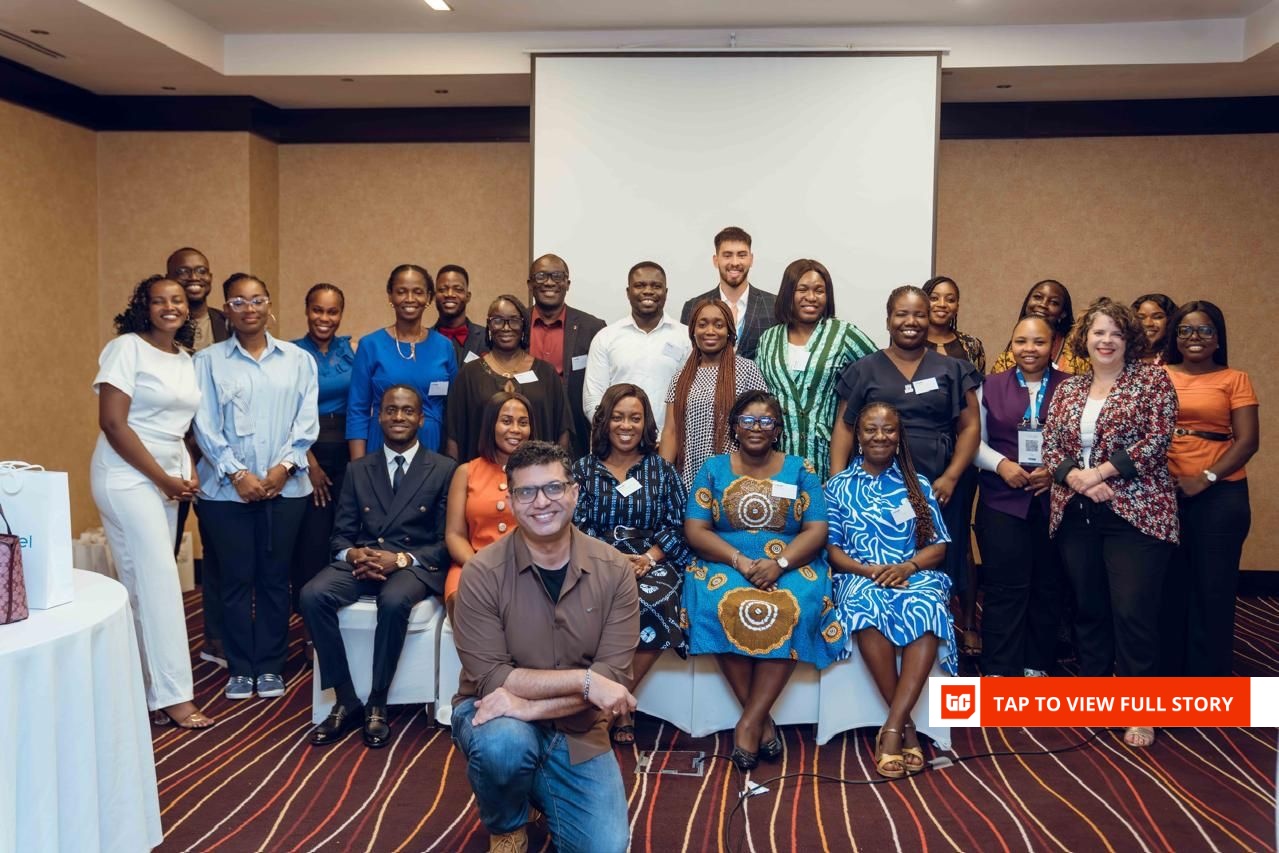
I’m sitting here in my Gbagada workspace, staring at a half-broken payment integration and nursing a cold cup of instant coffee, when the news about Craydel expanding into Ghana hit my feed. Eight markets. Let that sink in. For anyone who has tried to scale a simple web app from Lagos to just Akure or Ibadan, you know that "crossing borders" in Africa is not a simple copy-paste job of your codebase.
Everyone talks about the "Japa" wave as a social trend or a macroeconomic brain drain. But as a developer, I look at Craydel and see a massive, complex data pipeline.
How do you build a platform that actually helps a kid in Owerri, Kumasi, or Nairobi find and apply to 600+ universities globally without the system breaking under the weight of localized messiness?
The "AI Matchmaking" is actually a massive database mapping problem
When tech startups launch in new markets, the PR always leads with buzzwords like "AI-powered matchmaking." But let’s look at the actual stack.
To match a student from West Africa with a university in the UK or Canada, you aren't just running some fancy neural network. You are mapping wildly different grading systems into a single, clean database schema.

Think about it:
- A student in Kenya has KCSE results.
- A student in Nigeria or Ghana has WAEC or NECO.
- A student in Rwanda has the Advanced General Certificate of Secondary Education.
If your database can’t instantly translate a B3 in WAEC Agricultural Science into something an admissions officer in Munich or Toronto can evaluate, your platform is useless. Building that translation engine—and keeping it updated as national curriculums shift—is a grueling, manual mapping job. It’s writing endless switch cases, handling edge cases where transcripts are missing half their pages, and building OCR tools that don't choke on poorly scanned PDFs uploaded from a dusty cybercafé.
The silent killer: Payment rails and identity
Then there's the payment problem. Craydel makes money on commissions from universities, but they also have to handle local student advisory and processing touchpoints.
In Kenya, M-Pesa is king. In Ghana, if you don't support Mobile Money (MoMo) wallets across MTN and Telecel, you don't exist. In Nigeria, cards fail half the time, so you absolutely need a bulletproof pay-with-transfer flow.

Managing these localized checkout flows without letting your codebase turn into spaghetti is a real art. If you've ever had to handle refund loops across different African fiat currencies with fluctuating exchange rates, you know the pain. You’re constantly fighting with API timeouts, reconciling ledger balances at 3 AM, and dealing with angry users whose money has left their bank account but hasn't registered on your dashboard.
Optimizing for the local environment
The real test of Craydel's tech in Ghana won't be their algorithm; it will be their UX optimization for the average African internet connection.
When a student in Kumasi is trying to upload a 15MB scanned copy of their high school transcript using a patchy 3G connection on a cheap Android phone, does your app crash? Or do you have background workers handling chunked uploads, compressing the files client-side before they even touch your AWS buckets?
Building for Africa means realizing that high-end MacBooks and fiber-optic internet are the exception, not the rule. The startups that scale across eight markets are the ones that write efficient, lightweight code, minimize JavaScript payloads, and design forms that save state locally so a user doesn't lose their progress when NEPA takes the light or their mobile data cuts out.
Craydel’s aggressive expansion is a massive bet. But as someone who builds tools for this ecosystem, I’m less interested in their next funding round and way more interested in how their engineering team handles the sheer chaos of localized user behavior across eight different African borders.
Now, back to debugging this payment gateway. No gree for anybody today.
Related from Nigeria
Let's build your next big product.
Accepting project-based freelance, remote engineering roles, and hybrid positions.