When Financial Stability Hits the Dev's Workbench
Another day, another tech headline. But Payaza scoring upgraded credit ratings? That's not just big for investors; it's a big deal for us building things, especially when every payment matters here in Nigeria.
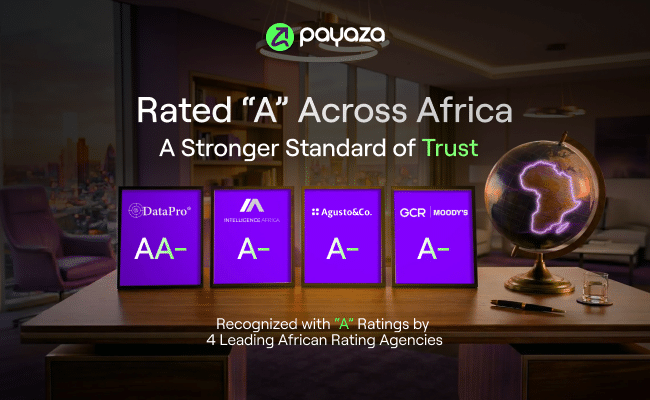
Woke up this morning, coffee in hand, ready for the usual Monday battle against whatever decided to break over the weekend. Then I scrolled past that Techpoint headline about Payaza getting these upgraded credit ratings from GCR (Moody’s), Agusto, DataPro, and Intelligence Africa. My first thought? "Huh. 'A' rating. What does that even mean for my code?"
Honestly, it’s easy to gloss over financial news when you’re elbow-deep in a backend bug or trying to get that stubborn API integration to finally play nice. Credit ratings sound like something for suits in glass offices. But then, you dig a little, and you realize this stuff actually matters on the ground.
Beyond the Buzzwords: What "A" Means for Builders
The article talks about "financial strength" and "ability to meet debt obligations." Okay, fine. But for me, the guy trying to ensure transactions don't hang, that's code for "less panic attacks on Friday evenings."
Think about it. When you're building an e-commerce platform for someone selling handmade sandals from their shop in Onitsha, or a SaaS product for small businesses in Akure, payment gateways are literally the lifeblood. A stable, reputable payment partner means:
- Less Downtime, More Uptime: If a payment processor is financially sound, they can invest in robust infrastructure. Less chance of their servers going kaput during peak hours, which means fewer "payment failed" emails for me to debug.
- Trust, Plain and Simple: We talk about "trustless systems" in crypto, but in traditional finance, trust is everything. For a Nigerian business owner, seeing that their payment partner has been vetted by multiple agencies and rated highly? That’s a massive confidence booster. It means they're not just a fly-by-night operation that might disappear with funds.
- Smoother Integrations (Hopefully!): When a company is stable and growing, they're more likely to have mature APIs, good documentation, and decent developer support. Because they're not constantly fighting to survive, they can actually invest in their developer ecosystem. This translates to less hair-pulling for me when I'm integrating their SDK.

Building in Nigeria: Where Stability is Gold
Here in Nigeria, where the tech ecosystem is vibrant but also, let's be real, a bit wild, stability isn't just a bonus; it’s a necessity. Businesses, especially those just starting, operate on razor-thin margins. Every failed transaction, every delayed settlement, can mean the difference between making payroll or having to dip into personal funds.
When Seyi Ebenezer, Payaza's CEO, talks about "disciplined growth trajectory" and "long-term value creation," I hear the echo of countless late-night coding sessions, meticulous testing, and rigorous operational frameworks. It’s not just about a fancy certificate; it’s about the underlying engineering and process control that makes a platform resilient.
This kind of news gives me hope. It shows that Nigerian companies can build systems that aren't just functional, but dependable. It makes the vision of building world-class products right here in a gbagada workstation feel less like a dream and more like a reachable goal.

The Ripple Effect for the Rest of Us
For me, for you, for anyone building on a payment gateway or even just considering one, this is good news. It raises the bar. It pushes other players in the ecosystem to double down on reliability and transparency. It means less "sapa" for our users when payments go through without a hitch, and frankly, less "sapa" for us developers trying to keep everything running smoothly.
It's a strong reminder that even the most innovative tech needs a rock-solid foundation. And in a country where "no gree for anybody" is a lifestyle, having a payment partner you can truly depend on? That's a serious competitive advantage.
This isn’t just good for Payaza; it’s good for every developer, every small business owner, every entrepreneur pushing the boundaries of what’s possible in this crazy, beautiful Nigerian market. Now, if you'll excuse me, I still have that backend bug to squash.

Related from Nigeria
Let's build your next big product.
Accepting project-based freelance, remote engineering roles, and hybrid positions.