Hardware is Hard, but an AI Stethoscope? That’s Next Level.
Building software is one thing, but making a physical device that listens to lungs and predicts TB? That's some heavy lifting.
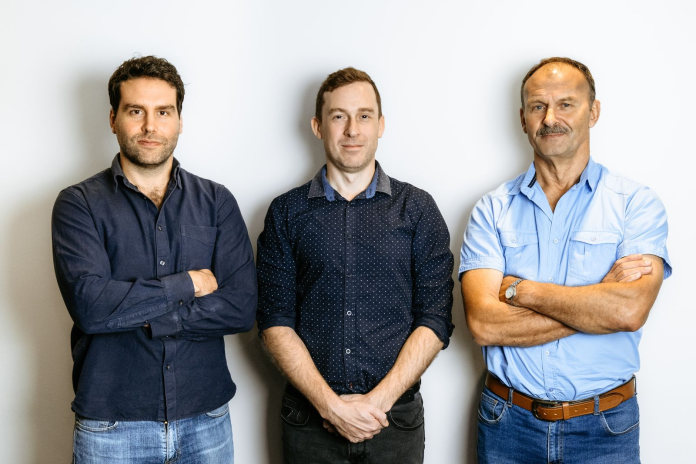
I’ve spent nights staring at a screen trying to debug a simple API, so I can only imagine the madness involved in building a physical device like Ostium. Cape Town’s AI Diagnostics just bagged $5M to scale their AI stethoscope for TB detection, and honestly, it’s refreshing to see tech that actually requires a toolkit and not just another landing page.
Why Hardware Isn't Just for Masochists
Most founders I know in Lagos stay far away from hardware. Between the "Sapa" struggle of exchange rates and the nightmare of clearing components at the ports, building a physical product can finish your seed round before you even have a prototype. But Braden van Breda and his team aren’t just building a gadget; they’re building an edge-computing solution.
They’re using "AI.TB" to analyze lung sounds in real-time. Think about that from a dev perspective. You aren't just processing a clean JSON feed; you're dealing with raw audio signals, filtering out background noise—which is a lot if you're in a crowded clinic in Onitsha or a noisy street in Gbagada—and then running a model locally. You can't always rely on a 5G connection when you're in a rural area, so the tech has to work without "calling home" every five seconds.
The Real-World Deployment
TB is still a massive issue across the continent. Usually, you need a specialist, some heavy equipment, and a lot of waiting. Imagine taking this digital stethoscope to a small primary health center in a place like Akure or a clinic in the cold hills of Jos. You don't need a radiologist on-site. You just need a frontline worker who can hold the device and let the AI do the heavy lifting.

The "No gree for anybody" mindset is what it takes to get regulatory approval for something like this. They’ve already cleared the hurdles in South Africa, which is a big win. You can have the most elegant Python script in the world, but in healthtech, if the regulators don't sign off, you're just a guy with a fancy, expensive paperweight.
That $5 Million Runway
USD 5 million (about ZAR 85 M) is a solid Pre-Series A. In the SaaS world, that’s a massive runway. In the world of hardware and clinical validation, that money can vanish quickly. They are looking to expand across Africa and Asia, and I’m curious to see how the hardware holds up in the wild.
I’m talking about the "Nigeria factor"—the dust, the heat, and the sheer volume of patients. If they can make this work at scale, it’s a massive leap forward. It’s not just about TB; it’s about what else that AI can "hear" in the future.

We need more of this—tech that actually touches the ground and solves problems for people who don't have the luxury of high-speed fiber optics. I'm rooting for them, mostly because I want to see more "Made in Africa" hardware that actually moves the needle.
Now, back to my own terminal. At least my bugs don't require a stethoscope to find.
Related from Venture
Let's build your next big product.
Accepting project-based freelance, remote engineering roles, and hybrid positions.